Shobha Sondhia – författare
4 450 kr
Läs direkt efter köp
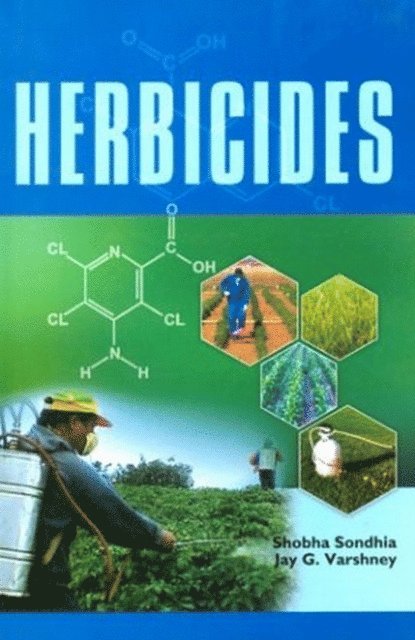
This book is written by Dr. Shobha Sondhia and Dr. Jay G. Varshney who are well-known experts in the field of weed management and herbicide use. The book contains fourteen chapters, beginning with an overview followed by basic information on herbicide chemistry, classification, absorption, transport, mode of action, metabolism in plants, selectivity and resistance, fate and persistence, adjuvants, use of herbicides in major field crops, herbicides residues in soil, food chain, water and its management, effect on soil health, succeeding crop, non target organisms, and herbicide toxicology, which are discussed in detail. In the last two chapters formulations and application techniques and equipments are given with illustrations and figures. At the end of the book, list of herbicides, their common and chemical name along with toxicity class, maximum residue limits, physicochemical properties are also appended. The authors believe that this book will be of immense use as a reference book for the academicians, researchers, students and policy makers for quick reference.
3 507 kr
Läs direkt efter köp
Alike other pesticides, herbicides are chemicals used for controlling weeds and pose toxicity to targeted weed plants as well as potential risk to consumers and environment. Therefore, information on herbicide residues analysis become important for approving a chemical for large scale commercial use with little or no adverse effects on the environment and human health. The analysis of herbicide residues requires sophisticated equipment and specially trained manpower. Precise determination of herbicide residues in various commodities presents a challenge to the chemists in view of the micro-quantities present in soil or plants/other matrix and generally estimated at ppm or ppb level using sensitive methods. This book is written by Dr. Shobha Sondhia, a well known expert in the field of herbicide chemistry and weed science. Dr. Sondhia has acquired excellent skills and knowledge in herbicide residues analysis based on her research work at Directorate of Weed Science, Jabalpur. This book contains five chapters, beginning with general guidelines for herbicide residues analysis, extraction, cleanup, detection methods, determination of herbicide residues and precautions are described in detail. At the end, information on herbicide registered/banned in India, physico-chemical properties of herbicides, toxicology, maximum residue limits (MRL) of herbicides in different commodities, list of major uses of herbicides in crops and membership of CODEX Alimentarius Commission are also provided. Glossary of important terms used in herbicide estimation is also given. Author believes that this practical book will be of immense value to academicians, weed scientists in general and residue chemists in particular.
1 633 kr
Skickas inom 10-15 vardagar
2 049 kr
Läs direkt efter köp
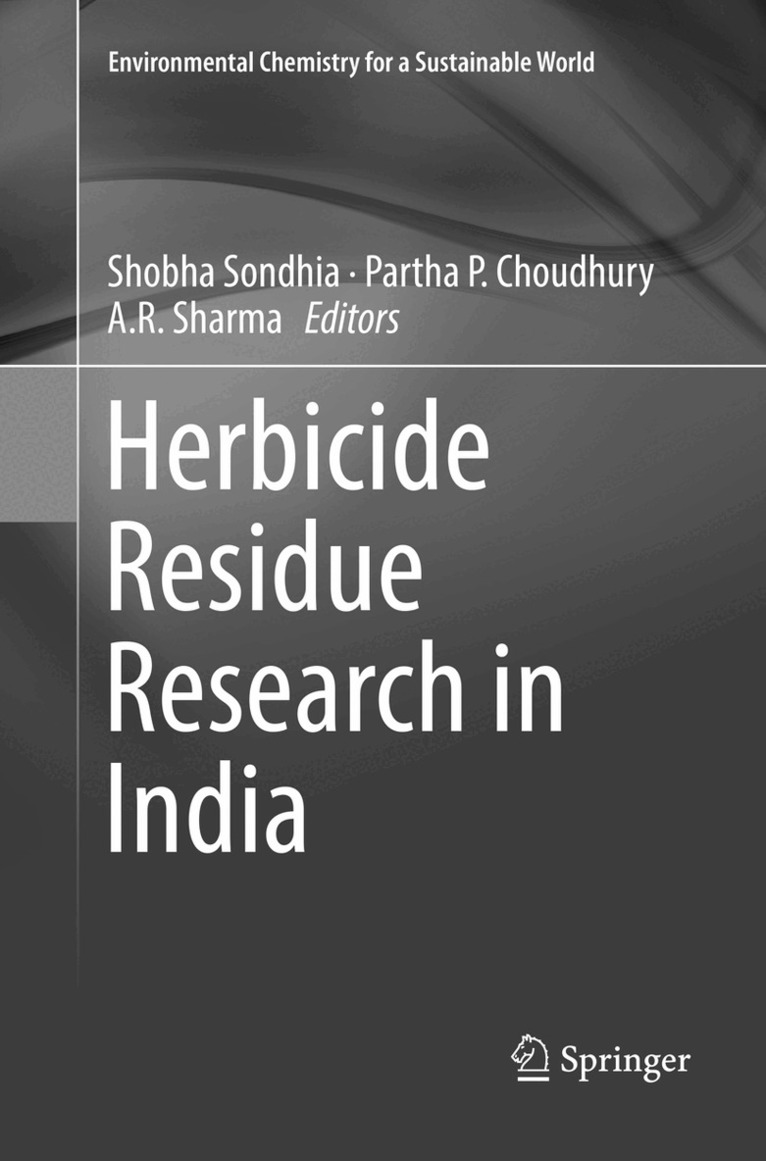
Herbicides constitute about 60% of the total pesticides consumed globally. In India, the use of herbicides started initially in tea gardens and picked up in the 1970s, when the high-yielding varieties of rice and wheat were introduced. Presently, 67 herbicides are registered in the country for controlling weeds in crops including cereals, pulses, oilseeds, fibre and tuber crops, and also in the non-crop situations. These chemicals are becoming increasingly popular because of their efficiency and relatively low cost compared with manual or mechanical weeding operations. The contribution of herbicide to total pesticide use, which was only 10-15% during the first decade of the 21st century, has now increased to about 25% with an annual growth rate of 15-20%, which is much higher than insecticides and fungicides. Though the application of herbicides is minimizing yield loss to a great extent, their residues in the food chain and surface and groundwater create some environmental nuisance particularly to non-target organisms.
Research on pesticide residues in India was started during 1970s, when such chemicals were introduced on a greater scale along with high-yielding variety seeds, irrigation and chemical fertilizers for increasing food production. However, the herbicide residue research was not given much emphasis until 1990s. The Indian Council of Agricultural Research initiated a national level programme known as All India Coordinated Research Project on Weed Management through the NRC-Weed Science as the main centre along with some centers of ICAR Institutes and state agricultural universities. Over the last two decades, adequate information was generated on estimation, degradation and mitigation of herbicide residues, which were documented in annual reports, bulletins, monographs and scientific articles. However, there was no consolidated compilation of all the available information providing a critical analysis of herbicide residues. Accordingly, an effort has been made in the publication to compile the available information on herbicide residues in India. This is the first report of its kind which presents the findings of herbicide residues and their interactions in the biotic and abiotic environment. There are 16 chapters contributed by the leading herbicide residue scientists, each describing the present status of herbicide use, crops and cropping systems, monitoring, degradation and mitigation, followed by conclusions and future lines of work.
This book will be useful to the weed scientists in general and herbicide residue chemists in particular, besides the policy makers, students and all those concerned with the agricultural production in the country.

1 633 kr
Skickas inom 10-15 vardagar