Sid Katzen – författare
Visar alla böcker från författaren Sid Katzen. Handla med fri frakt och snabb leverans.
6 produkter
6 produkter
Häftad, Engelska, 2012
1 199 kr
Skickas inom 10-15 vardagar
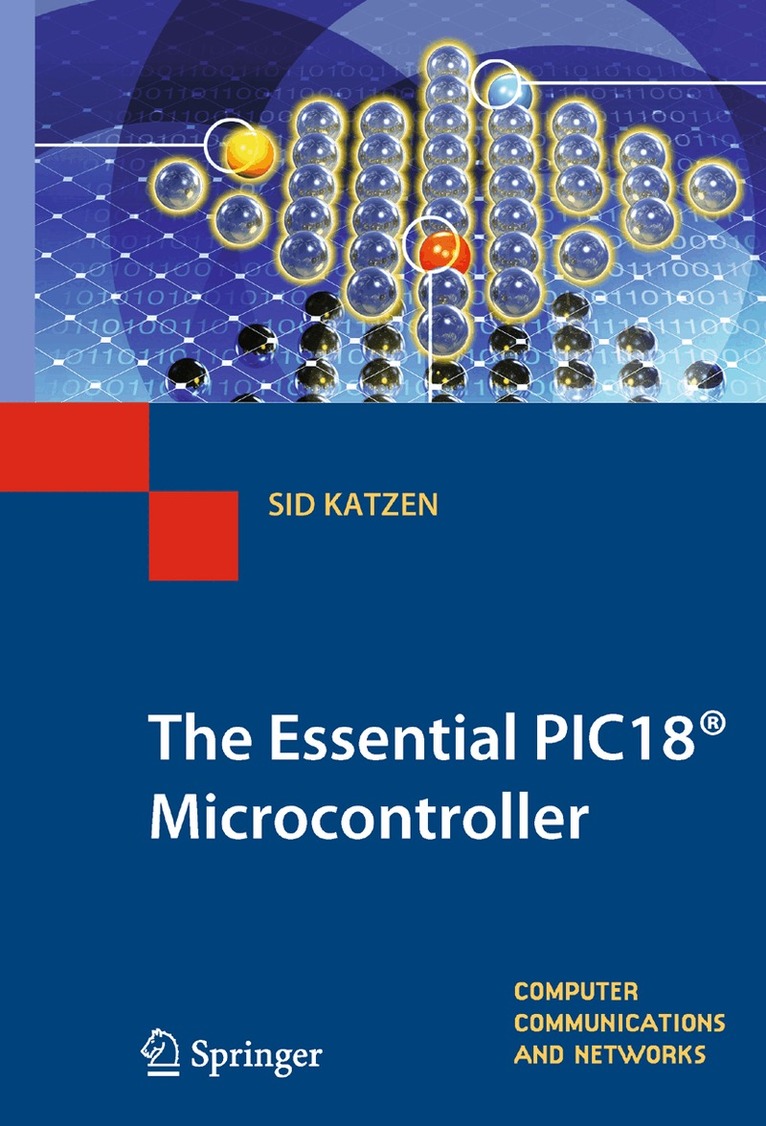
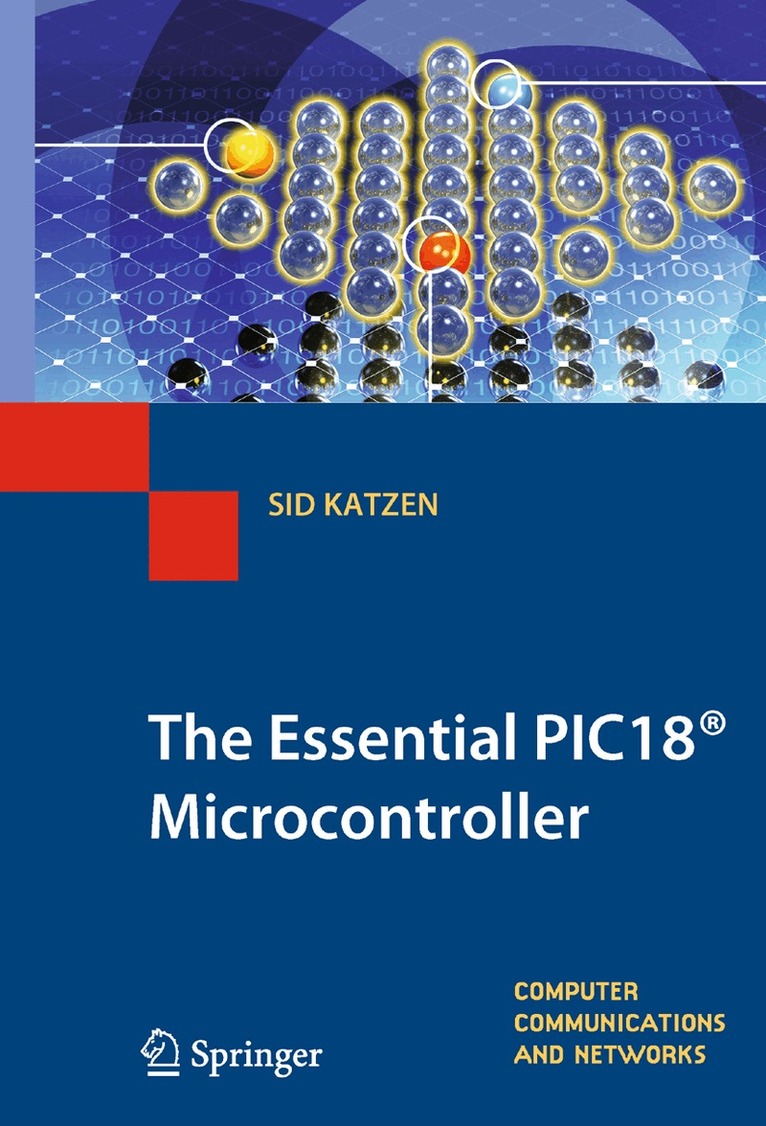
Microprocessors are the key component of the infrastructure of our 21st-century electronic- and digital information-based society. More than four billion are sold each year for use in 'intelligent' electronic devices; ranging from smart egg-timer through to aircraft management systems.Most of these processor devices appear in the form of highly-integrated microcontrollers, which comprize a core microprocessor together with memory and analog/digital peripheral ports. By using simple cores, these single-chip computers are the cost- and size-effective means of adding the brains to previous dumb widgets; such as the credit card.Using the same winning format as the successful Springer guide, The Quintessential PIC® Microcontroller, this down-to-earth new textbook/guide has been completely rewritten based on the more powerful PIC18 enhanced-range Microchip MCU family. Throughout the book, commercial hardware and software products are used to illustrate the material, as readers are provided real-world in-depth guidance on the design, construction and programming of small, embedded microcontroller-based systems. Suitable for stand-alone usage, the text does not require a prerequisite deep understanding of digital systems.Topics and features: uses an in-depth bottom-up approach to the topic of microcontroller design using the Microchip enhanced-range PIC18® microcontroller family as the exemplar; includes fully worked examples and self-assessment questions, with additional support material available on an associated website; provides a standalone module on foundation topics in digital, logic and computer architecture for microcontroller engineering; discusses the hardware aspects of interfacing and interrupt handling, with an emphasis on the integration of hardware and software; covers parallel and serial input/output, timing, analog, and EEPROM data-handling techniques; presents a practical build-and-program case study, as well as illustrating simple testingstrategies.This useful text/reference book will be of great value to industrial engineers, hobbyists and people in academia. Students of Electronic Engineering and Computer Science, at both undergraduate and postgraduate level, will also find this an ideal textbook, with many helpful learning tools.Dr. Sid Katzen is Associate to the School of Engineering, University of Ulster at Jordanstown, Northern Ireland.
E-bok
PDF, Engelska, 20131 140 kr
Läs direkt efter köp
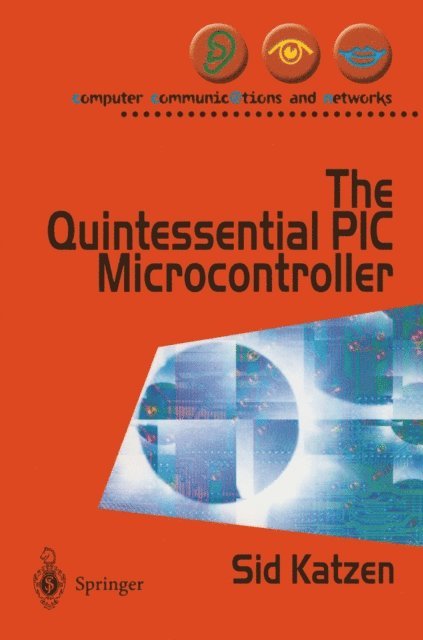
Microprocessors and their microcontroller derivatives are a ubiquitous, if rather invisible, part of the infrastructure of our 21st century electronic 1 and communications society. In 1998 it was reckoned that hidden in ev ery home were about 100 microcontrollers and microprocessors; in the sillging birthday card, washing machine, microwave oven, television con troller, telephone, personal computer and so on. About 20 more lurked in the average family car. For example monitoring in-tire radio pressure sensors and displaying critical data through the car area network (CAN). Around 4 billion such devices are sold each year to implement the intelligence of these smart electronic devices, ranging from smart egg timers through aircraft management systems. The evolution of the mi croprocessor from the firstIntel device introduced 30 years ago in 1971 has revolutionised the structure of society, effectively creating the sec ond smart industrial revolution coming to fruition at the beginning of the 21st century. Although the microprocessor is better known in its guise of powering the ubiquitous PC, in which raw computing power is the goal, sales of such microprocessors as the Intel Pentium, represent only around 2% of total volume. The vast majority of sales are of low-cost microcontrollers embedded into a dedicated-function digital electronic device, such as the smart card. Here the emphasis is the integration of the core processor with memory and input/output resources in the one chip. This integrated computing system is known as a microcontroller.
E-bok
PDF, Engelska, 2006712 kr
Läs direkt efter köp
A second edition of this book has given me the opportunity to respond to suggestions from both students and correspondents from around the world, fromdisparateregionsrangingfromScotlandtoHawaii. Sincethe time of the ?rst edition written in the late 1990s, the Microchip PIC range has become the largest volume selling 8-bit MCU. The mid-range f- ily used in the original edition has continued to expand vigorously, with some of the exemplars used becoming essentially obsolete. In addition, the enhanced-range 16-bit instruction line has been enlarged from vir- ally nothing to form a signi?cant proportion of the family. At the same time, new introductions to the original low- (or base-) end architecture continue apace. Because of the close relationship between the low-, mid-, high- and enhanced-range lines, the focus of the new edition has stayed with the mid-range line up. Virtually all diagrams have been modi?ed, many extensively, and - merous additional new ?gures have been added. Throughout the text, special attention has been paid to clarify the basic concepts. In Part I, Chapter 3 has been extensively rewritten with this in mind and to b- ter integrate with Chapters 4 and 5 in Part II, both of which bear only a super?cial relation to the original text. Chapter 7, covering interrupt handling, has also been largely rewritten to elucidate a di?cult topic.
Inbunden, Engelska, 2010
1 091 kr
Skickas inom 10-15 vardagar
Microprocessors are the key component of the infrastructure of our 21st-century electronic- and digital information-based society. More than four billion are sold each year for use in 'intelligent' electronic devices; ranging from smart egg-timer through to aircraft management systems.Most of these processor devices appear in the form of highly-integrated microcontrollers, which comprize a core microprocessor together with memory and analog/digital peripheral ports. By using simple cores, these single-chip computers are the cost- and size-effective means of adding the brains to previous dumb widgets; such as the credit card.Using the same winning format as the successful Springer guide, The Quintessential PIC® Microcontroller, this down-to-earth new textbook/guide has been completely rewritten based on the more powerful PIC18 enhanced-range Microchip MCU family. Throughout the book, commercial hardware and software products are used to illustrate the material, as readers are provided real-world in-depth guidance on the design, construction and programming of small, embedded microcontroller-based systems. Suitable for stand-alone usage, the text does not require a prerequisite deep understanding of digital systems.Topics and features: uses an in-depth bottom-up approach to the topic of microcontroller design using the Microchip enhanced-range PIC18® microcontroller family as the exemplar; includes fully worked examples and self-assessment questions, with additional support material available on an associated website; provides a standalone module on foundation topics in digital, logic and computer architecture for microcontroller engineering; discusses the hardware aspects of interfacing and interrupt handling, with an emphasis on the integration of hardware and software; covers parallel and serial input/output, timing, analog, and EEPROM data-handling techniques; presents a practical build-and-program case study, as well as illustrating simple testingstrategies.This useful text/reference book will be of great value to industrial engineers, hobbyists and people in academia. Students of Electronic Engineering and Computer Science, at both undergraduate and postgraduate level, will also find this an ideal textbook, with many helpful learning tools.Dr. Sid Katzen is Associate to the School of Engineering, University of Ulster at Jordanstown, Northern Ireland.
E-bok
PDF, Engelska, 20101 367 kr
Läs direkt efter köp
Microprocessors are the key component of the infrastructure of our 21st-century electronic- and digital information-based society. More than four billion are sold each year for use in ''intelligent'' electronic devices; ranging from smart egg-timer through to aircraft management systems.Most of these processor devices appear in the form of highly-integrated microcontrollers, which comprize a core microprocessor together with memory and analog/digital peripheral ports. By using simple cores, these single-chip computers are the cost- and size-effective means of adding the brains to previous dumb widgets; such as the credit card.Using the same winning format as the successful Springer guide, The Quintessential PIC® Microcontroller, this down-to-earth new textbook/guide has been completely rewritten based on the more powerful PIC18 enhanced-range Microchip MCU family. Throughout the book, commercial hardware and software products are used to illustrate the material, as readers are provided real-world in-depth guidance on the design, construction and programming of small, embedded microcontroller-based systems. Suitable for stand-alone usage, the text does not require a prerequisite deep understanding of digital systems.Topics and features: uses an in-depth bottom-up approach to the topic of microcontroller design using the Microchip enhanced-range PIC18® microcontroller family as the exemplar; includes fully worked examples and self-assessment questions, with additional support material available on an associated website; provides a standalone module on foundation topics in digital, logic and computer architecture for microcontroller engineering; discusses the hardware aspects of interfacing and interrupt handling, with an emphasis on the integration of hardware and software; covers parallel and serial input/output, timing, analog, and EEPROM data-handling techniques; presents a practical build-and-program case study, as well as illustrating simple testingstrategies.This useful text/reference book will be of great value to industrial engineers, hobbyists and people in academia. Students of Electronic Engineering and Computer Science, at both undergraduate and postgraduate level, will also find this an ideal textbook, with many helpful learning tools.Dr. Sid Katzen is Associate to the School of Engineering, University of Ulster at Jordanstown, Northern Ireland.
Häftad, Engelska, 2005
549 kr
Skickas inom 10-15 vardagar
A second edition of this book has given me the opportunity to respond to suggestions from both students and correspondents from around the world, fromdisparateregionsrangingfromScotlandtoHawaii. Sincethe time of the ?rst edition written in the late 1990s, the Microchip PIC range has become the largest volume selling 8-bit MCU. The mid-range f- ily used in the original edition has continued to expand vigorously, with some of the exemplars used becoming essentially obsolete. In addition, the enhanced-range 16-bit instruction line has been enlarged from vir- ally nothing to form a signi?cant proportion of the family. At the same time, new introductions to the original low- (or base-) end architecture continue apace. Because of the close relationship between the low-, mid-, high- and enhanced-range lines, the focus of the new edition has stayed with the mid-range line up. Virtually all diagrams have been modi?ed, many extensively, and - merous additional new ?gures have been added. Throughout the text, special attention has been paid to clarify the basic concepts. In Part I, Chapter 3 has been extensively rewritten with this in mind and to b- ter integrate with Chapters 4 and 5 in Part II, both of which bear only a super?cial relation to the original text. Chapter 7, covering interrupt handling, has also been largely rewritten to elucidate a di?cult topic.