Sigamoney Manicka Naicker – författare
Visar alla böcker från författaren Sigamoney Manicka Naicker. Handla med fri frakt och snabb leverans.
5 produkter
5 produkter
Häftad, Engelska, 2013
183 kr
Skickas inom 5-8 vardagar
E-bok
Engelska, 201349 kr
Läs direkt efter köp
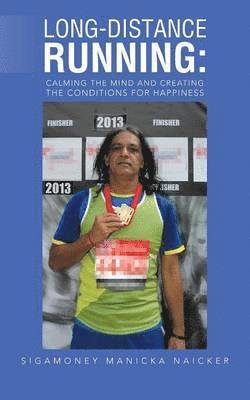
People could be happy at any one moment and suddenly feel sad. This feelingof mood swings is a result of what one thinks at any point in time. Women, menand children struggle with what they think. People experience a lot of pain andpleasure as a result of their thoughts. Thousands of people find switching offfrom daily work a massive struggle. Some of these people occupy very seniorpositions in various companies including those in executive positions. Thisbook is a self- help tool to help calm ones mind. It suggests ways of avoidingnegative thoughts and provides insight into silencing the stream of thoughtswe experience daily. By providing guidance on training the mind, it offersinsights into not allowing ones negative thoughts affect one emotionally.The book provides illuminating detail on the mind, memory, physical as wellas the spiritual composition of the human mind. A key dimension of thisbook is that it talks to the elusive concept of happiness. It attempts a morerealistic definition of happiness and suggests ways in which one can createthe conditions for happiness.
E-bok
PDF, Engelska, 2018490 kr
Läs direkt efter köp
This book offers policy makers, teachers and teacher trainers a framework for understanding inclusive education in the developing world. With a major focus on South Africa, it argues that planning for inclusive education must rupture old theories, assumptions, models and tools - including a recognition of how the history of special education has psychologized failure - with the mainstream taking ownership of the transformation to a fairer system. The author contends that for inclusive education to take hold, policy makers need to contextualize the curriculum to the needs of the developing country, and to place the vulnerable and working class demographic at the heart of the planning process - recognizing that the performative culture of developed countries will marginalize and alienate this majority group.Providing practical guidelines on developing full-service schools that can cater for learners who experience a range of barriers to learning, Inclusive Education in South Africa and the Developing World will be of great value to all those with an interest in education, inclusion and social justice both within South Africa and beyond.
E-bok
Engelska, 2018490 kr
Läs direkt efter köp
This book offers policy makers, teachers and teacher trainers a framework for understanding inclusive education in the developing world. With a major focus on South Africa, it argues that planning for inclusive education must rupture old theories, assumptions, models and tools - including a recognition of how the history of special education has psychologized failure - with the mainstream taking ownership of the transformation to a fairer system. The author contends that for inclusive education to take hold, policy makers need to contextualize the curriculum to the needs of the developing country, and to place the vulnerable and working class demographic at the heart of the planning process - recognizing that the performative culture of developed countries will marginalize and alienate this majority group.Providing practical guidelines on developing full-service schools that can cater for learners who experience a range of barriers to learning, Inclusive Education in South Africa and the Developing World will be of great value to all those with an interest in education, inclusion and social justice both within South Africa and beyond.
Häftad, Engelska, 2018
616 kr
Skickas inom 5-8 vardagar
This book offers policy makers, teachers and teacher trainers a framework for understanding inclusive education in the developing world. With a major focus on South Africa, it argues that planning for inclusive education must rupture old theories, assumptions, models and tools - including a recognition of how the history of special education has psychologized failure - with the mainstream taking ownership of the transformation to a fairer system. The author contends that for inclusive education to take hold, policy makers need to contextualize the curriculum to the needs of the developing country, and to place the vulnerable and working class demographic at the heart of the planning process - recognizing that the performative culture of developed countries will marginalize and alienate this majority group.Providing practical guidelines on developing full-service schools that can cater for learners who experience a range of barriers to learning, Inclusive Education in South Africa and the Developing World will be of great value to all those with an interest in education, inclusion and social justice both within South Africa and beyond.