Simon Hoffding – författare
752 kr
Läs direkt efter köp
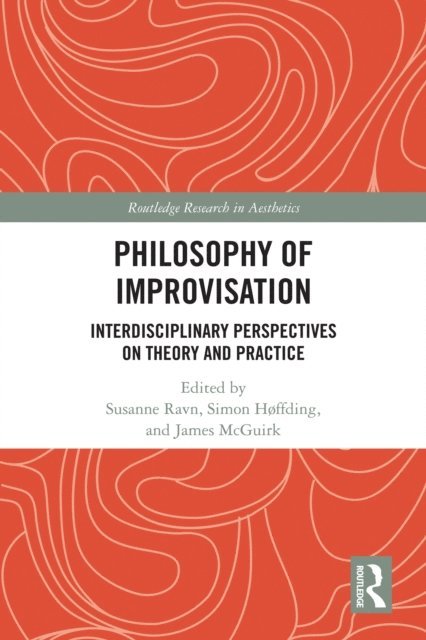
This volume brings together philosophical and interdisciplinary perspectives on improvisation. The contributions connect the theoretical dimensions of improvisation with different viewpoints on its practice in the arts and the classroom.
The chapters address the phenomenon of improvisation in two related ways. On the one hand, they attend to the lived practices of improvisation both within and without the arts in order to explain the phenomenon. They also extend the scope of improvisational practices to include the role of improvisation in habit and in planned action, at both individual and collective levels. Drawing on recent work done in the philosophy of mind, they address questions such as whether improvisation is a single unified phenomenon or whether it entails different senses that can be discerned theoretically and practically. Finally, they ask after the special kind of improvisational expertise which characterizes musicians, dancers, and other practitioners, an expertise marked by the artist’s ability to participate competently in complex situations while deliberately relinquishing control.
Philosophy of Improvisation will appeal to anyone with a strong interest in improvisation, to researchers working in philosophy, aesthetics, and pedagogy as well as practitioners involved in different kinds of music, dance, and theater performances.
752 kr
Läs direkt efter köp
This volume brings together philosophical and interdisciplinary perspectives on improvisation. The contributions connect the theoretical dimensions of improvisation with different viewpoints on its practice in the arts and the classroom.
The chapters address the phenomenon of improvisation in two related ways. On the one hand, they attend to the lived practices of improvisation both within and without the arts in order to explain the phenomenon. They also extend the scope of improvisational practices to include the role of improvisation in habit and in planned action, at both individual and collective levels. Drawing on recent work done in the philosophy of mind, they address questions such as whether improvisation is a single unified phenomenon or whether it entails different senses that can be discerned theoretically and practically. Finally, they ask after the special kind of improvisational expertise which characterizes musicians, dancers, and other practitioners, an expertise marked by the artist’s ability to participate competently in complex situations while deliberately relinquishing control.
Philosophy of Improvisation will appeal to anyone with a strong interest in improvisation, to researchers working in philosophy, aesthetics, and pedagogy as well as practitioners involved in different kinds of music, dance, and theater performances.
840 kr
Läs direkt efter köp
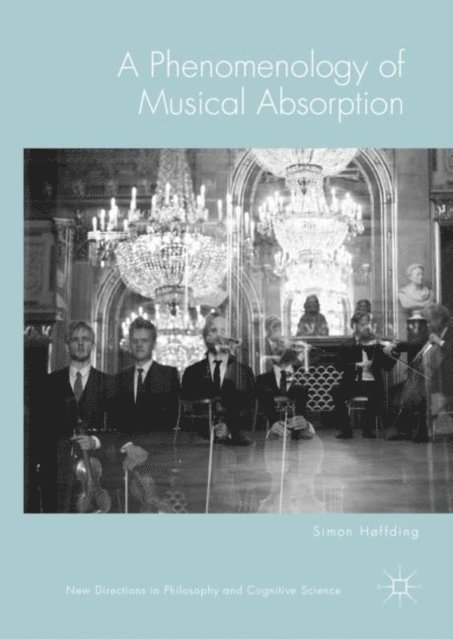
This book presents a detailed analysis of what it means to be absorbed in playing music. Based on interviews with one of the world’s leading classical ensembles, “The Danish String Quartet” (DSQ), it debunks the myth that experts cannot reflect while performing, but also shows that intense absorption is not something that can be achieved through will, intention, prediction or planning – it remains something individuals have to be receptive to. Based in the phenomenological tradition of Husserl and Merleau-Ponty as well as of Dan Zahavi and Shaun Gallagher, it lays out the conditions and essential structures of musical absorption. Employing the lived experience of the DSQ members, it also engages and challenges core ideas in phenomenology, philosophy of mind, enactivism, expertise studies, musical psychology, flow theory, aesthetics, dream and sleep studies, psychopathology and social ontology, and proposes a method that integrates phenomenology and cognitive science.