Simon Susen – författare
Visar alla böcker från författaren Simon Susen. Handla med fri frakt och snabb leverans.
15 produkter
15 produkter
Inbunden, Engelska, 2015
1 727 kr
Skickas inom 10-15 vardagar
Simon Susen examines the impact of the 'postmodern turn' on the contemporary social sciences. On the basis of an innovative five-dimensional approach, this study provides a systematic, comprehensive, and critical account of the legacy of the 'postmodern turn', notably in terms of its continuing relevance in the twenty-first century.
Inbunden, Engelska, 2011
1 236 kr
Skickas inom 5-8 vardagar
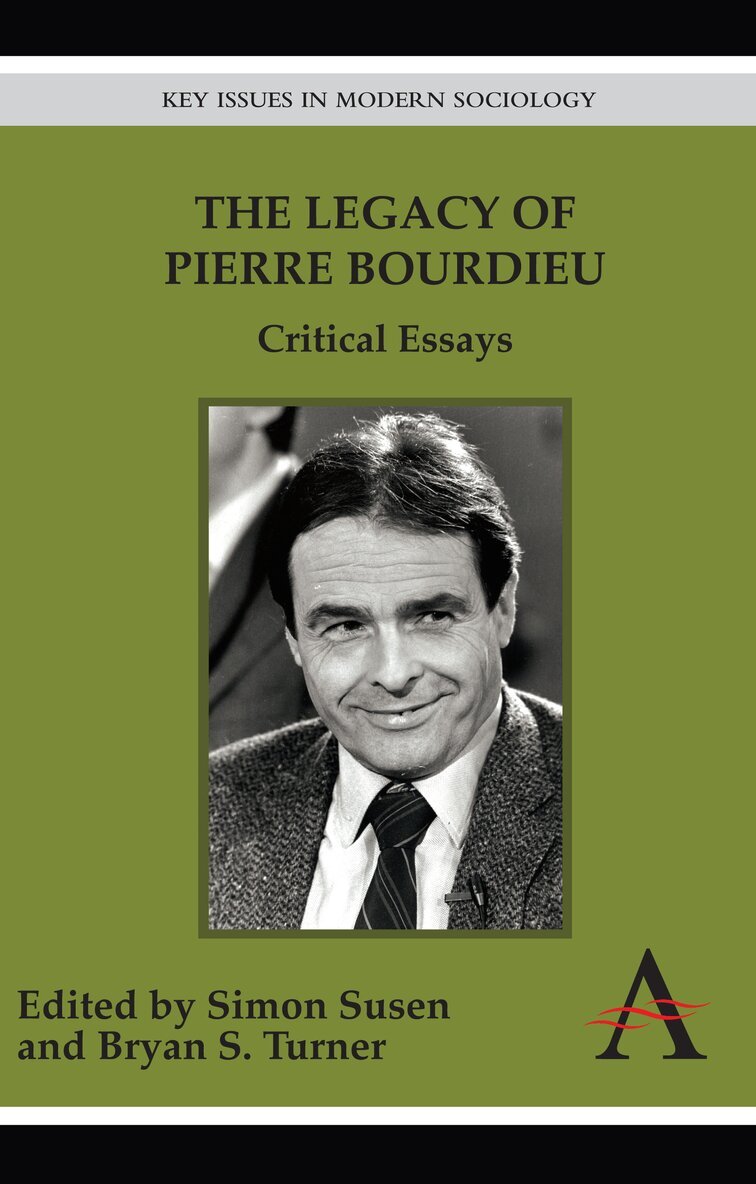
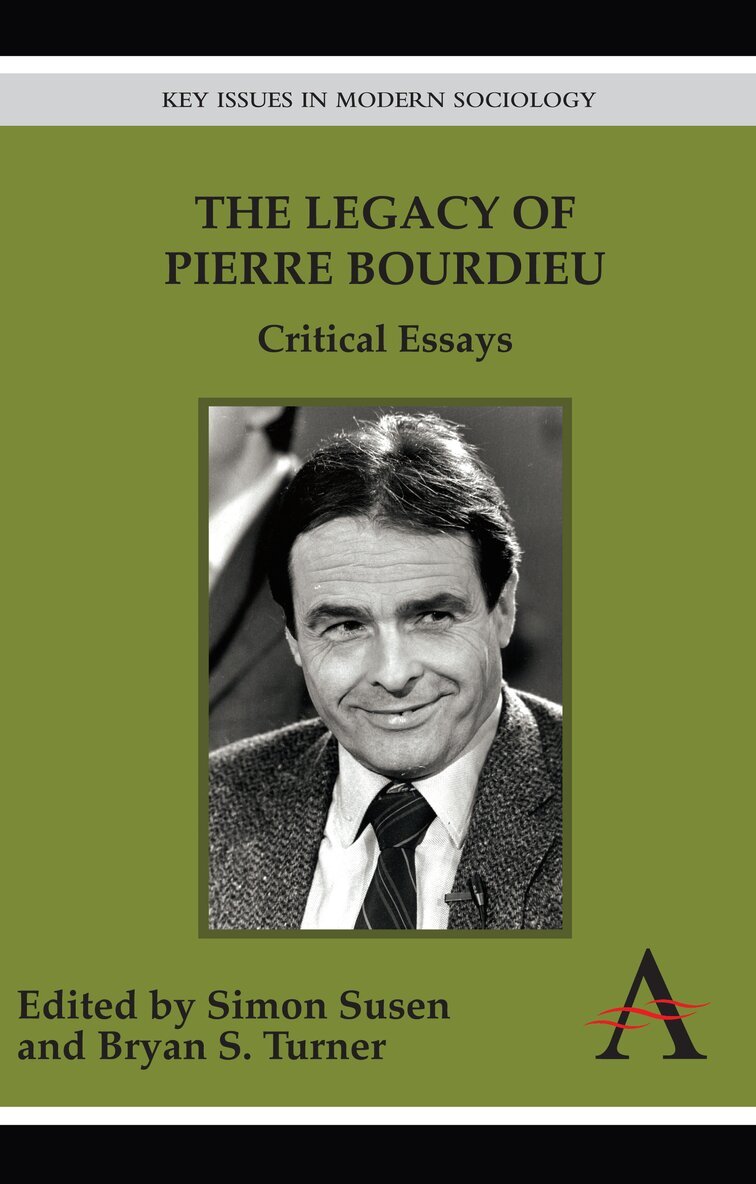
These critical essays bring together prominent scholars in the social sciences to consider the diverse nature of the legacy of Pierre Bourdieu in contemporary social theory. In offering a range of perspectives on the continuing relevance of Bourdieu’s sociology, the essays of this volume examine Bourdieu’s relationship to both classical and contemporary social theory. This collection constructs an intellectual bridge between French-speaking and English-speaking accounts of Bourdieu’s work.
Häftad, Engelska, 2026
608 kr
Kommande
Simon Susen’s trilogy offers a systematic account of Jürgen Habermas’s Also a History of Philosophy. It provides a comprehensive overview of the central issues at stake in this magnum opus and, crucially, assesses its most significant limitations and shortcomings.Susen shows how Habermas’s approach to the history of philosophy seeks to reconstruct the genealogy of postmetaphysical thinking by tracing the tension-laden relationship between faith and knowledge back to the major developments brought about during the Axial Age. The trilogy examines how Habermas’s latest project invites us to reconsider not only classical antinomies – such as faith vs. knowledge, the sacred vs. the profane, religion vs. science – but also the role of philosophy in the twenty-first century, particularly with regard to its capacity to overcome the tension between ‘ideologization’ [Verweltanschaulichung] and ‘scientization’ [Verwissenschaftlichung]. This endeavour, Susen argues, sheds light on the extent to which the emancipatory potential of rational freedom, far from being reducible to a mere product of the Enlightenment, has been present throughout human history – most notably in the processes of ‘the linguistification of the sacred’ in advanced civilizations during the first millennium BCE. Informed by a meticulous analysis of the Epilogue to the original German-language edition – which contains valuable insights into Habermas’s retrospective reflections on his main arguments and engages with the reception of his ambitious theoretical enterprise – this definitive trilogy serves as an essential guide to one of Habermas’s seminal works.The first volume, The Foundations of Postmetaphysical Thinking, comprises a detailed outline of the core assumptions underlying Habermas’s Auch eine Geschichte der Philosophie.This trilogy is for all those in the social sciences and humanities studying and researching classical and contemporary social theory, the sociology of knowledge, the sociology of religion, political sociology, cultural sociology, social and political philosophy, epistemology, the philosophy of religion, the philosophy of history, the philosophy of language, and the history of social and political thought.
Inbunden, Engelska, 2026
2 225 kr
Kommande
Simon Susen’s trilogy offers a systematic account of Jürgen Habermas’s Also a History of Philosophy. It provides a comprehensive overview of the central issues at stake in this magnum opus and, crucially, assesses its most significant limitations and shortcomings.Susen shows how Habermas’s approach to the history of philosophy seeks to reconstruct the genealogy of postmetaphysical thinking by tracing the tension-laden relationship between faith and knowledge back to the major developments brought about during the Axial Age. The trilogy examines how Habermas’s latest project invites us to reconsider not only classical antinomies – such as faith vs. knowledge, the sacred vs. the profane, religion vs. science – but also the role of philosophy in the twenty-first century, particularly with regard to its capacity to overcome the tension between ‘ideologization’ [Verweltanschaulichung] and ‘scientization’ [Verwissenschaftlichung]. This endeavour, Susen argues, sheds light on the extent to which the emancipatory potential of rational freedom, far from being reducible to a mere product of the Enlightenment, has been present throughout human history – most notably in the processes of ‘the linguistification of the sacred’ in advanced civilizations during the first millennium BCE. Informed by a meticulous analysis of the Epilogue to the original German-language edition – which contains valuable insights into Habermas’s retrospective reflections on his main arguments and engages with the reception of his ambitious theoretical enterprise – this definitive trilogy serves as an essential guide to one of Habermas’s seminal works.The first volume, The Foundations of Postmetaphysical Thinking, comprises a detailed outline of the core assumptions underlying Habermas’s Auch eine Geschichte der Philosophie.This trilogy is for all those in the social sciences and humanities studying and researching classical and contemporary social theory, the sociology of knowledge, the sociology of religion, political sociology, cultural sociology, social and political philosophy, epistemology, the philosophy of religion, the philosophy of history, the philosophy of language, and the history of social and political thought.
Inbunden, Engelska, 2026
2 225 kr
Kommande
Simon Susen’s trilogy offers a systematic account of Jürgen Habermas’s Also a History of Philosophy. It provides a comprehensive overview of the central issues at stake in this magnum opus and, crucially, assesses its most significant limitations and shortcomings.Susen shows how Habermas’s approach to the history of philosophy seeks to reconstruct the genealogy of postmetaphysical thinking by tracing the tension-laden relationship between faith and knowledge back to the major developments brought about during the Axial Age. The trilogy examines how Habermas’s latest project invites us to reconsider not only classical antinomies – such as faith vs. knowledge, the sacred vs. the profane, religion vs. science – but also the role of philosophy in the twenty-first century, particularly with regard to its capacity to overcome the tension between ‘ideologization’ [Verweltanschaulichung] and ‘scientization’ [Verwissenschaftlichung]. This endeavour, Susen argues, sheds light on the extent to which the emancipatory potential of rational freedom, far from being reducible to a mere product of the Enlightenment, has been present throughout human history – most notably in the processes of ‘the linguistification of the sacred’ in advanced civilizations during the first millennium BCE. Informed by a meticulous analysis of the Epilogue to the original German‑language edition – which contains valuable insights into Habermas’s retrospective reflections on his main arguments and engages with the reception of his ambitious theoretical enterprise – this definitive trilogy serves as an essential guide to one of Habermas’s seminal works.The second volume, The Consolidation of Postmetaphysical Thinking, explores the dimensions that are particularly important to Habermas’s project of developing a genealogy of postmetaphysical thinking.This trilogy is for all those in the social sciences and humanities studying and researching classical and contemporary social theory, the sociology of knowledge, the sociology of religion, political sociology, cultural sociology, social and political philosophy, epistemology, the philosophy of religion, the philosophy of history, the philosophy of language, and the history of social and political thought.
Häftad, Engelska, 2026
608 kr
Kommande
Simon Susen’s trilogy offers a systematic account of Jürgen Habermas’s Also a History of Philosophy. It provides a comprehensive overview of the central issues at stake in this magnum opus and, crucially, assesses its most significant limitations and shortcomings.Susen shows how Habermas’s approach to the history of philosophy seeks to reconstruct the genealogy of postmetaphysical thinking by tracing the tension-laden relationship between faith and knowledge back to the major developments brought about during the Axial Age. The trilogy examines how Habermas’s latest project invites us to reconsider not only classical antinomies – such as faith vs. knowledge, the sacred vs. the profane, religion vs. science – but also the role of philosophy in the twenty-first century, particularly with regard to its capacity to overcome the tension between ‘ideologization’ [Verweltanschaulichung] and ‘scientization’ [Verwissenschaftlichung]. This endeavour, Susen argues, sheds light on the extent to which the emancipatory potential of rational freedom, far from being reducible to a mere product of the Enlightenment, has been present throughout human history – most notably in the processes of ‘the linguistification of the sacred’ in advanced civilizations during the first millennium BCE. Informed by a meticulous analysis of the Epilogue to the original German‑language edition – which contains valuable insights into Habermas’s retrospective reflections on his main arguments and engages with the reception of his ambitious theoretical enterprise – this definitive trilogy serves as an essential guide to one of Habermas’s seminal works.The third volume, The Critique of Postmetaphysical Thinking, presents a set of critical reflections on Auch eine Geschichte der Philosophie and provides a rigorous assessment of Habermas’s endeavour.This trilogy is for all those in the social sciences and humanities studying and researching classical and contemporary social theory, the sociology of knowledge, the sociology of religion, political sociology, cultural sociology, social and political philosophy, epistemology, the philosophy of religion, the philosophy of history, the philosophy of language, and the history of social and political thought.
Inbunden, Engelska, 2026
2 225 kr
Kommande
Simon Susen’s trilogy offers a systematic account of Jürgen Habermas’s Also a History of Philosophy. It provides a comprehensive overview of the central issues at stake in this magnum opus and, crucially, assesses its most significant limitations and shortcomings.Susen shows how Habermas’s approach to the history of philosophy seeks to reconstruct the genealogy of postmetaphysical thinking by tracing the tension-laden relationship between faith and knowledge back to the major developments brought about during the Axial Age. The trilogy examines how Habermas’s latest project invites us to reconsider not only classical antinomies – such as faith vs. knowledge, the sacred vs. the profane, religion vs. science – but also the role of philosophy in the twenty-first century, particularly with regard to its capacity to overcome the tension between ‘ideologization’ [Verweltanschaulichung] and ‘scientization’ [Verwissenschaftlichung]. This endeavour, Susen argues, sheds light on the extent to which the emancipatory potential of rational freedom, far from being reducible to a mere product of the Enlightenment, has been present throughout human history – most notably in the processes of ‘the linguistification of the sacred’ in advanced civilizations during the first millennium BCE. Informed by a meticulous analysis of the Epilogue to the original German‑language edition – which contains valuable insights into Habermas’s retrospective reflections on his main arguments and engages with the reception of his ambitious theoretical enterprise – this definitive trilogy serves as an essential guide to one of Habermas’s seminal works.The third volume, The Critique of Postmetaphysical Thinking, presents a set of critical reflections on Auch eine Geschichte der Philosophie and provides a rigorous assessment of Habermas’s endeavour.This trilogy is for all those in the social sciences and humanities studying and researching classical and contemporary social theory, the sociology of knowledge, the sociology of religion, political sociology, cultural sociology, social and political philosophy, epistemology, the philosophy of religion, the philosophy of history, the philosophy of language, and the history of social and political thought.
Häftad, Engelska, 2026
608 kr
Kommande
Simon Susen’s trilogy offers a systematic account of Jürgen Habermas’s Also a History of Philosophy. It provides a comprehensive overview of the central issues at stake in this magnum opus and, crucially, assesses its most significant limitations and shortcomings.Susen shows how Habermas’s approach to the history of philosophy seeks to reconstruct the genealogy of postmetaphysical thinking by tracing the tension-laden relationship between faith and knowledge back to the major developments brought about during the Axial Age. The trilogy examines how Habermas’s latest project invites us to reconsider not only classical antinomies – such as faith vs. knowledge, the sacred vs. the profane, religion vs. science – but also the role of philosophy in the twenty-first century, particularly with regard to its capacity to overcome the tension between ‘ideologization’ [Verweltanschaulichung] and ‘scientization’ [Verwissenschaftlichung]. This endeavour, Susen argues, sheds light on the extent to which the emancipatory potential of rational freedom, far from being reducible to a mere product of the Enlightenment, has been present throughout human history – most notably in the processes of ‘the linguistification of the sacred’ in advanced civilizations during the first millennium BCE. Informed by a meticulous analysis of the Epilogue to the original German‑language edition – which contains valuable insights into Habermas’s retrospective reflections on his main arguments and engages with the reception of his ambitious theoretical enterprise – this definitive trilogy serves as an essential guide to one of Habermas’s seminal works.The second volume, The Consolidation of Postmetaphysical Thinking, explores the dimensions that are particularly important to Habermas’s project of developing a genealogy of postmetaphysical thinking.This trilogy is for all those in the social sciences and humanities studying and researching classical and contemporary social theory, the sociology of knowledge, the sociology of religion, political sociology, cultural sociology, social and political philosophy, epistemology, the philosophy of religion, the philosophy of history, the philosophy of language, and the history of social and political thought.
Häftad, Engelska, 2013
400 kr
Skickas inom 5-8 vardagar
These critical essays bring together prominent scholars in the social sciences to consider the diverse nature of the legacy of Pierre Bourdieu in contemporary social theory. In offering a range of perspectives on the continuing relevance of Bourdieu’s sociology, the essays of this volume examine Bourdieu’s relationship to both classical and contemporary social theory. This collection constructs an intellectual bridge between French-speaking and English-speaking accounts of Bourdieu’s work.
Inbunden, Engelska, 2014
2 710 kr
Skickas inom 5-8 vardagar
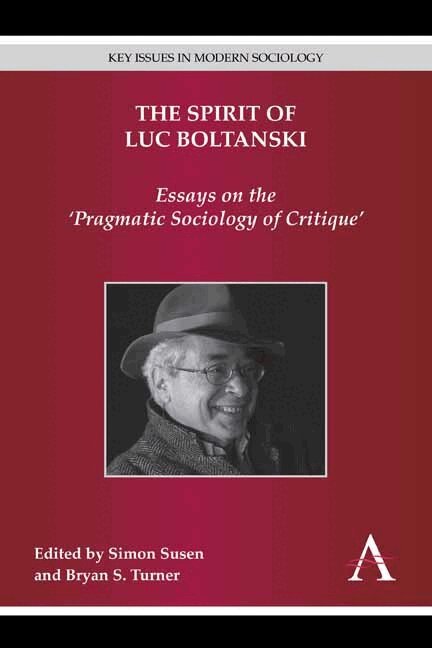
What is the relevance of Luc Boltanski’s ‘pragmatic sociology of critique’ to central issues in contemporary social and political analysis? In seeking to respond to this question, this book contains critical commentaries from prominent social theorists attempting to map out the influence and broad scope of Boltanski’s oeuvre.
Häftad, Engelska, 2020
646 kr
Skickas inom 10-15 vardagar
To this end, it focuses on significant issues surrounding the nature of sociology (‘What is sociology?’), the history of sociology (‘How has sociology evolved?’), and the study of sociology (‘How can or should we make sense of sociology?’).
Inbunden, Engelska, 2024
1 286 kr
Skickas inom 10-15 vardagar
This book will appeal to students and scholars of the social sciences and humanities – particularly to those interested in social theory, social philosophy, and the history of ideas.
Häftad, Engelska, 2025
1 286 kr
Skickas inom 10-15 vardagar
Focusing on the work of Hartmut Rosa, this book provides an in-depth account of the extent to which we, as humans, are obliged to face up to the uncontrollability of the world. Rosa is widely regarded as one of the most original contemporary European social theorists. Along with the concepts of ‘acceleration’, ‘alienation’, and ‘resonance’, the notion of ‘uncontrollability’ [Unverfügbarkeit] ranks among the most important reference points in Rosa’s critical theory, especially in his recent work. It is no accident, then, that – following his extensive inquiries into ‘acceleration’ and ‘alienation’ and the publication of his magnum opus on ‘resonance’ – Rosa has found it necessary to offer a brief, but powerful, account of the place occupied by the concept of ‘uncontrollability’ in his critical theory. The first half of this book comprises a detailed outline of Rosa’s central arguments on ‘uncontrollability’, before moving, in the second half, to a thorough assessment of the most significant limitations of his approach. This book will appeal to students and scholars of the social sciences and humanities – particularly to those interested in social theory, social philosophy, and the history of ideas.
Inbunden, Engelska, 2017
593 kr
Skickas inom 10-15 vardagar
This volume offers an unprecedented account of recent and future developments in the sociology of intellectuals.
Häftad, Engelska, 2018
593 kr
Skickas inom 10-15 vardagar
This volume offers an unprecedented account of recent and future developments in the sociology of intellectuals.