Simone Casiraghi – författare
Visar alla böcker från författaren Simone Casiraghi. Handla med fri frakt och snabb leverans.
3 produkter
3 produkter
Inbunden, Engelska, 2026
2 066 kr
Kommande
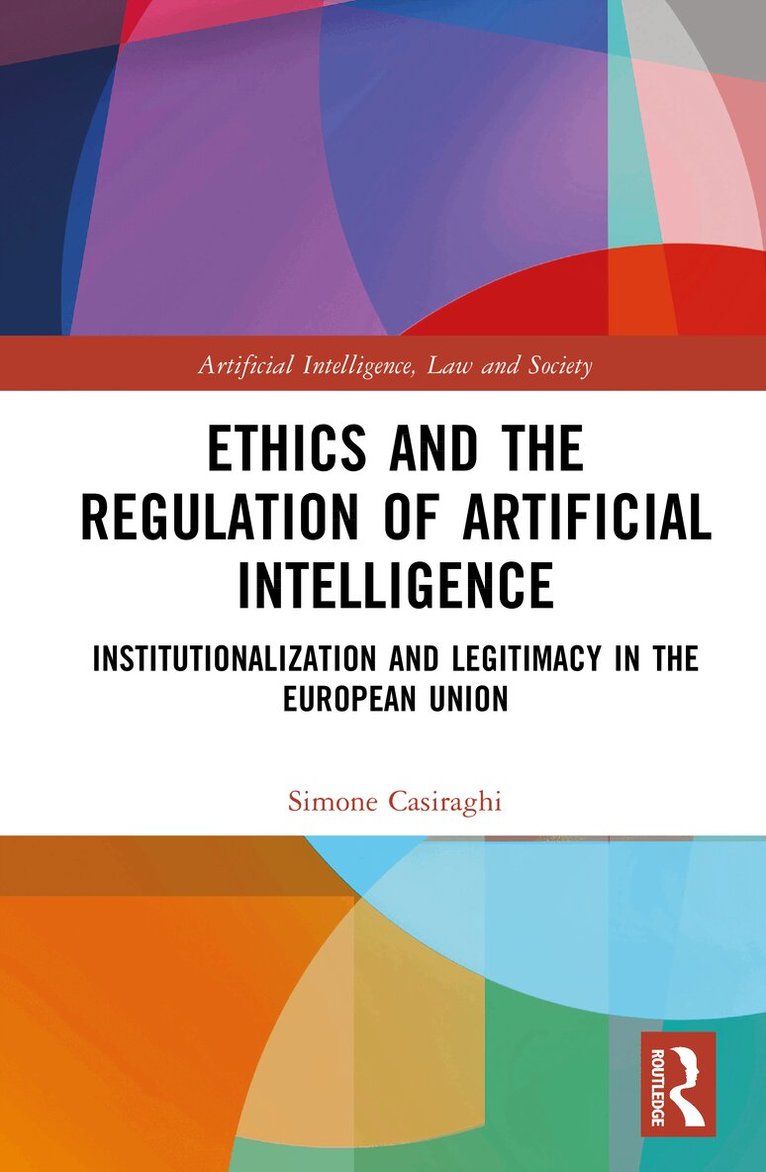
Through the theoretical lens of law and science and technology studies (STS), this book investigates the ‘ethification’ of the EU regulatory framework on AI.Discourses on ethics have been proliferating in recent policy, legislative and industry-led AI regulatory initiatives in the European Union (EU). In parallel, Artificial Intelligence (AI) ethics has become institutionalized at different levels. Focusing on three EU-based case studies – research ethics committees, advisory expert groups and standardization bodies – this book critically evaluates the legitimacy of AI ethics, through the ‘good governance’ principles of accountability, transparency, and participation. Despite the EU’s aspiration to promote a distinctive ethical approach centred on trustworthiness and human-centric AI, the book shows how ethical considerations often assume a technocratic form, lacking the robust checks and balances and democratic credentials typical of traditional forms of technology regulation. In response, the book argues for a recalibration—a deflation or re-politicization—of the role of ethics in the governance of AI.This book will appeal to scholars, EU officials, civil society actors and private-sector practitioners, working at the interface of law, ethics and technology, and especially those with interests in the regulation of AI.
Inbunden, Engelska, 2025
1 503 kr
Skickas inom 3-6 vardagar
Invocations of ethics in legal, policy and academic discourses about the governance of digital technologies such as the European Union's strategy on Artificial Intelligence (AI), recall traditional debates in legal philosophy about the relationship between law and morality. Since ethics has acquired an institutional dimension with dedicated advisory bodies, expert groups and committees, new dynamics have, however, emerged in these debates. Its discourses address the relation between law and morality not, like in the past, within the field of legal theory or jurisprudence, but from the perspective of this institutionalized ethics, which is reflected in new kinds of relations drawn between law and ethics. By comparing traditional and contemporary debates on this theme and emphasizing the importance of institutional and procedural aspects of the rule of law, the book highlights some undesirable consequences emerging from the institutionalization process and discursive practices of digital ethics, including the delegitimization of citizens by expert-based initiatives and the lack of the checks and balances guarantees of traditional rulemaking.
Häftad, Engelska, 2026
217 kr
Kommande
Invocations of ethics in legal, policy and academic discourses about the governance of digital technologies such as the European Union’s strategy on Artificial Intelligence (AI), recall traditional debates in legal philosophy about the relationship between law and morality. Since ethics has acquired an institutional dimension with dedicated advisory bodies, expert groups and committees, new dynamics have, however, emerged in these debates. Its discourses address the relation between law and morality not, like in the past, within the field of legal theory or jurisprudence, but from the perspective of this institutionalized ethics, which is reflected in new kinds of relations drawn between law and ethics. By comparing traditional and contemporary debates on this theme and emphasizing the importance of institutional and procedural aspects of the rule of law, the book highlights some undesirable consequences emerging from the institutionalization process and discursive practices of digital ethics, including the delegitimization of citizens by expert-based initiatives and the lack of the checks and balances guarantees of traditional rulemaking.