Solmeng-Jonas Hirschi - Böcker
Visar alla böcker från författaren Solmeng-Jonas Hirschi. Handla med fri frakt och snabb leverans.
2 produkter
2 produkter
2 249 kr
Skickas inom 3-6 vardagar
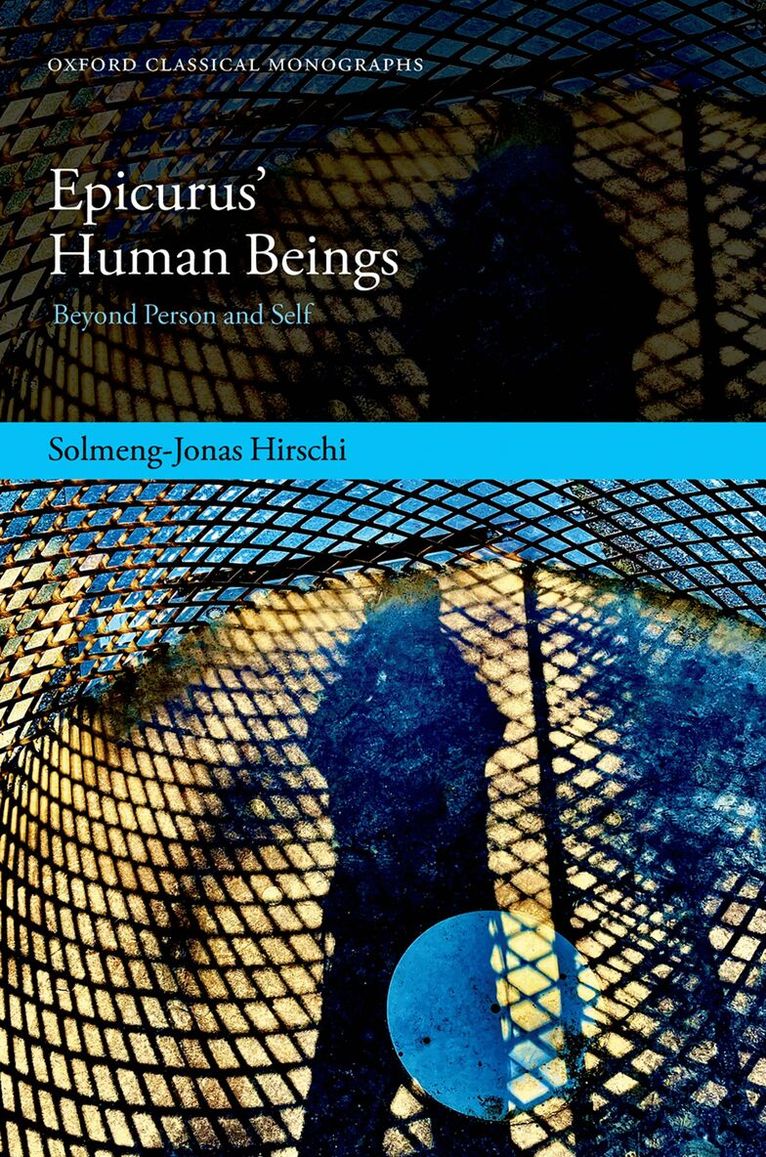
This is an open access title available under the terms of a CC BY-NC-ND 4.0 International licence. It is free to read at Oxford Scholarship Online and offered as a free PDF download from OUP and selected open access locations.Epicurus' philosophical project is predicated on its eudaimonistic efficacy. His letters and maxims not only describe a way of life but also instantiate his practice of care and reform. To memorise and understand them is meant to actually advance one's capacity to reach and maintain a state of ataraxia, i.e. the absence of troubles. They are written and designed to have an impact. Thus, to read Epicurus solely as a theoretical philosopher is to turn a blind eye to his agenda. In this book, Solmeng-Jonas Hirschi advocates a stronger reading that takes Epicurus' intentions at face value. It brings the doctrine closer to its application, through an examination of the readers and intended practitioners of Epicurus' philosophy: human beings. The main corpus of this study consists of the three letters and the doctrines written by Epicurus as transmitted by Diogenes Laertius in book 10 of the Lives of Eminent Philosophers. Each chapter is dedicated to one of these texts and subdivided into two main sections. In the first section, close readings and textual interpretations with a philosophical focus build a heuristic analysis of Epicurus' conception of what human beings are and do. In the second section, lexical analysis and a review of person deixis offer a text-centred counterpart. Together, they delineate the human beings as they are portrayed (theoretically) and addressed (linguistically) in Epicurus' written philosophy. In the case of the chapters on the Letter to Pythocles and the Kuriai Doxai, additional attention is paid to the problem of their authenticity by focusing on the production, structure, and function of those texts, which prove essential in assessing their form and content. A final appendix applies the same methodology to the Letter to Mother, found in Diogenes of Oenoanda's monumental inscription. This study yields important insights into the pragmatics of Epicurus' writings, especially with respect to their use, their format, and their functioning in one's efforts to become and remain untroubled. Such results are invaluable for our understanding of why, and how, Epicurus thought that his teaching can be efficacious and therapeutic.
Del 101 - Studien und Texte zu Antike und Christentum / Studies and Texts in Antiquity and Christianity
Sophisten in Hellenismus und Kaiserzeit
Orte, Methoden und Personen der Bildungsvermittlung
Häftad, Tyska, 2017
1 342 kr
Tillfälligt slut
Der Forschung geläufig ist die Rede von einer ersten (5./4. Jh. v. Chr.) und der sog. Zweiten Sophistik (2. Jh. n. Chr). Aber auch die Literatur des Hellenismus und der frühen Kaiserzeit kennt zahlreiche Sophisten. Der Sophist, verstanden als (schlechter) Lehrer und Redner, Gegenspieler des Philosophen oder Vertreter der griechischen Bildung, bildet deshalb den Dreh-und Angelpunkt der Beiträge, die Schlaglichter auf Orte, Methoden und Personen der Bildungsvermittlung werfen. Sophisten wirken im Gymnasion, im Museion in Alexandreia, in Tempeln in Rom oder privaten Schulen in Ägypten und Judäa. Der vorliegende Band diskutiert neben diesen Orten die Methoden der Bildungsvermittlung und die soziale Herkunft der Lehrer. Weitere wichtige Aspekte sind die Konkurrenz als strukturierendes Element des Lebens eines Sophisten und das Bankett als Ort der Bildungsvermittlung. Die Beiträge zeigen, wie pagane und jüdische Denker, Platoniker und Stoiker Bildung als Weg zum richtigen Welt- und Gottesverständnis verstehen.