
Son Lal – författare
Visar alla böcker från författaren . Handla med fri frakt och snabb leverans.
13 produkter
13 produkter
E-bok
Engelska10 kr
Läs direkt efter köp
E-bok
Engelska11 kr
Läs direkt efter köp
E-bok
Engelska11 kr
Läs direkt efter köp
E-bok
Engelska10 kr
Läs direkt efter köp
Häftad, Engelska, 2020
170 kr
Skickas inom 5-8 vardagar
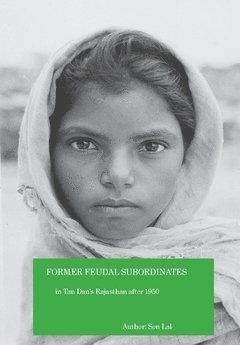
The life of some groups at Tan Dan's village Chelana in western Rajasthan, India. The narrations focus on persons of lowranked castes treated as untouchables by other villagers in the decades after 1950. The book shows the many connections of men, women and children in this part of rural Rajasthan. The unity that was found in the diversity.
Häftad, Engelska, 2021
356 kr
Skickas inom 5-8 vardagar
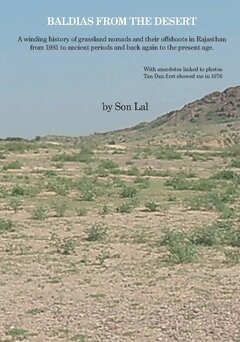
Boken beskriver i anekdotiska berättelser grupper med ett nomadiskt ursprung i västra Rajasthan, Indien. Deras långa historia i ett kargt halvökenlandskap finns med i de många foton som en vän till författaren tog under senare delen av nittonhundratalet.
Häftad, Engelska, 2021
124 kr
Skickas inom 5-8 vardagar
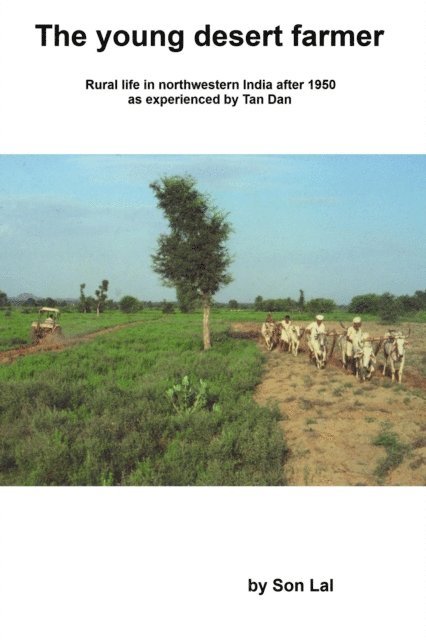
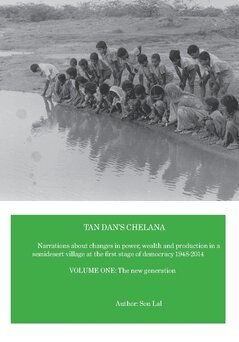
Tan Dan was a farmer in Rajasthan who lived from 1943 to 2021. He was a friend of the author. Persons, places and events have been described from Tan Dan’s angle in this book. His photos and narrations may have different interpretations by villagers with other attitudes and experience. Many names are fictive, as the book is an attempt to understand events and behaviour in a historical context without accusing individuals. Chelana (fictive name) was the village of Tan Dan and his brothers in Rajasthan, northwestern India. Their clan had been cattlebreeders with a nomadic origin. They managed to improve their living conditions due to a number of lucky coincidences. During those eventful years around 1950 India got independence, the feudal rule in Rajasthan was abolished, and the young brothers found water in the limestone cavities far below their feet. Their land had all of a sudden become a source of wealth and hope. They became the spearheads in the new democratic era, which offered new opportunities to dynamic villagers. To a new generation in the hot semidesert, which for generations had offered nothing but droughts and famines. Tan Dan’s region had got the name Marvar, which means the region of death. A dangerous place to pass for the transport caravans both due to water shortage and the risk of robbery. Dacoit gangs in the wilderness stopped being a harassment at about the same time as Marvari villagers got their first general election and the farmers at Chelana found out how to operate deep mechanized wells.
Häftad, Engelska, 2021
169 kr
Skickas inom 5-8 vardagar
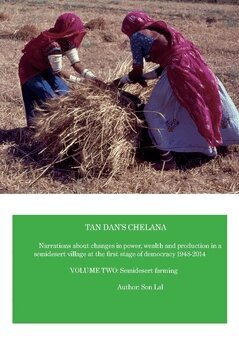
Chelana is Tan Dan’s village in Rajasthan, northwestern India. Tan Dan took a keen interest in the traditional farm life of his neighbours, and this volume starts with his narrations about their work routines. His own experience was more versatile than that of most other Rajasthani villagers, as shown in the stories about his participitation in agricultural development. He learnt pig rearing, poultry work, establishing grape vineyards and pomegranate orchards. From scientists at agricultural universities he learnt hybrid pearl millet cultivation for seed farms, and he were among the first farmers in his part of Rajasthan who started dwarf wheat cultivation. It was a part of the Green Revolution, which made it possible for India to become self-sufficient in foodgrain production, and ended the era of famines and mass starvation. The agronomic events which helped to make that change possible in the Chelana area are told about in the latter parts of the book.
Häftad, Engelska, 2021
91 kr
Skickas inom 5-8 vardagar
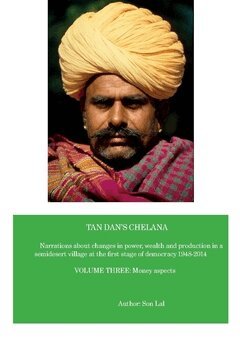
Chelana was Tan Dan’s native village in Rajasthan, northwestern India and money is the theme of the third volume of the book Tan Dan's Chelana. A book which describes how the farmer Tan Dan experienced changes in his social environment during the period 1948 to 2014. Volume Three focus on the financial changes in the Chelana area after the introduction of mechanical irrigation in deep wells. The start of cooperative societies and rural banks resulted in overspending and debts for the inexperienced waterlord farmers. The book shows how they tried to cope with these for them unexpected problems. The support of cooperative societies for social upliftment was as important to Tan Dan as it was to his friend Binj Nath, the landlord farmer shown on the front cover. In this volume there are anecdotes about Binj Nath’s dramatic life experience and the ups and downs of Tan Dan’s relatives, when they tried to finance the expanding activities of their big waterlord farm. Their relation to new rural banks and old moneylenders would have been better, if they had been less optimistic in their loan repayment plans. Tan Dan argued that the professional moneylenders got a too large share of the wealth produced on the Chelana waterlord farms. Some village Baniyas also earned money by taking care of savings of shepherds migrating to other regions a part of the year. Although poor villagers had been badly exploited by moneylenders for generations, the attitude of poor villagers to the business class was more positive than might be expected. That was Tan Dan’s feelings after getting scoldings from many villagers for supporting the tax department in a raid for finding hidden wealth at some merchant homes.
Häftad, Engelska, 2021
183 kr
Skickas inom 5-8 vardagar
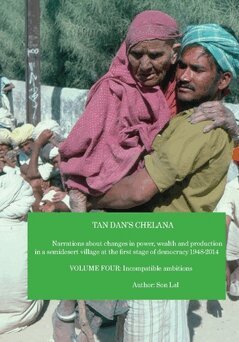
This is the fourth and last volume of the book Tan Dan’s Chelana. In the book Tan Dan tells about the life in his village with the help of his camera and his notebooks. The book has many anecdotes about changes in power, wealth and production at Chelana in the early stage of democracy from 1948 to 2014. Chelana is a fictive name of a semidesert village in Rajasthan, northwestern India. Tan Dan is the fictive name of a Rajasthani farmer, who lived from 1943 to 2021. Volume Four starts with Tan Dan’s narrations of the election campaign at Chelana in 1978. It occured in a period when more villagers wanted a say in the changing society. In those days the limestone economy grew in importance at Chelana. The village got richer, and those with money more powerful, but corrupt behaviour of the wealthy ones increased the difficulties for poor villagers. The Goverment of India tried to counterbalance that trend by introducing more schemes for protecting women and weak groups. As a result the village leadership changed in a direction, which few villagers would have dreamt of in the feudal period. Families of different background formed groups with incompatible ambitions, and some of their conflicting interests are described in Volume Four.
Häftad, Engelska, 2019
75 kr
Skickas inom 5-8 vardagar
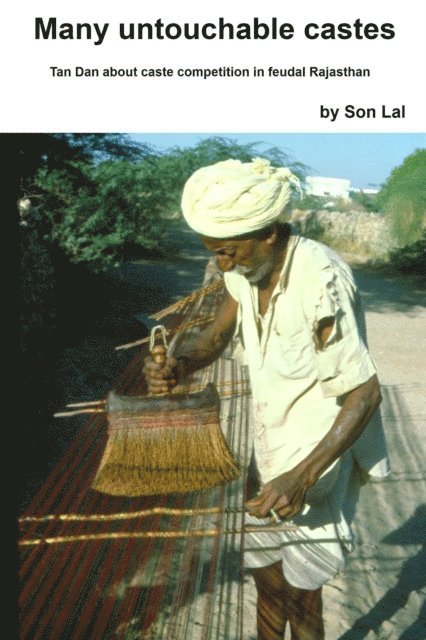
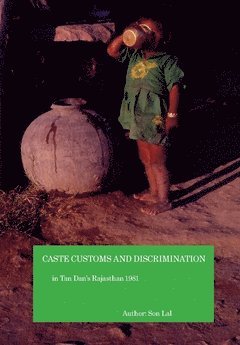
Kastrelationerna mellan människorna på landsbygden i västra Rajasthan, Indien, under åren omkring 1981. Såsom relationerna uppfattades av en man av Charankasten. Han var själv var bonde och bybo med stort intresse för vad som pågick i hans by och hela västra Rajasthan.
Häftad, Svenska, 2020
138 kr
Skickas inom 5-8 vardagar
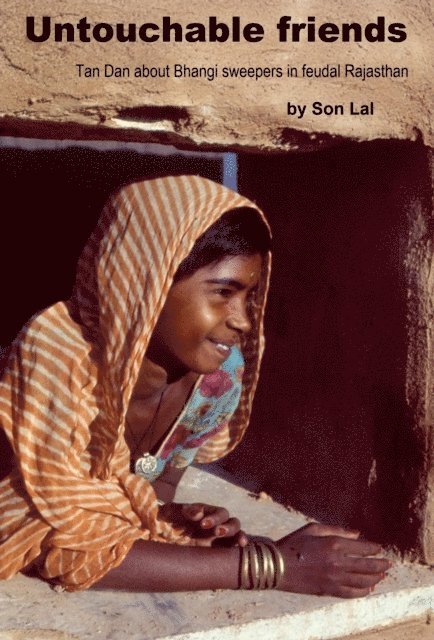
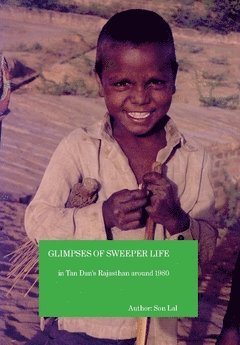
Anecdotes about sweeper families in a few villages of western Rajasthan, India. Based on Tan Dan's experience of the relations in his region. He was a farmer with keen interest in the living conditions of low-ranked castes in his village around 1980. The narrations are richly illustrated by Tan Dan's photos of his Bhangi friends of all ages. Their historical roots are touched upon and the reason for their skill in making strong reed baskets.
Häftad, Engelska, 2020
177 kr
Skickas inom 5-8 vardagar
This book is about cattle breeders in feudal Rajasthan up to 1950