Song Nai Rhee – författare
Visar alla böcker från författaren Song Nai Rhee. Handla med fri frakt och snabb leverans.
7 produkter
Beautiful as the Rainbow
Nashimoto Masako, a Japanese Princess Against All Odds for Love, Life, and Happiness
Häftad, 2013
220 kr
Lägg i varukorg
Beautiful as the Rainbow
Nashimoto Masako, a Japanese Princess Against All Odds for Love, Life, and Happiness
E-bok, 2013
55 kr
Lägg i varukorg
Reared in a palace and educated at Gakushuin, the elite Peers School, Princess Masako was elegant, refined, and proper in all things royal and Japanese. She was also stunningly beautiful. It was therefore only natural that she was being groomed to be betrothed to a princeno less than Crown Prince …
Beautiful as the Rainbow
Nashimoto Masako, a Japanese Princess Against All Odds for Love, Life, and Happiness
Inbunden, 2013
433 kr
Lägg i varukorg
Meaningful Connections in My Long Journey Between a Pine Grove of Songki-Ri and the Bank of the Siuslaw River
Häftad, 2023
324 kr
Lägg i varukorg
Meaningful Connections in My Long Journey Between a Pine Grove of Songki-Ri and the Bank of the Siuslaw River
Inbunden, 2023
457 kr
Lägg i varukorg
Meaningful Connections in My Long Journey between a Pine Grove of Songki-ri and the Bank of the Siuslaw River
E-bok, 2023
558 kr
Lägg i varukorg
This is Song-nai Rhee''s personal memoirs of an eighty-seven-year-long life between a pine grove of Songki-riin, Korea and the bank of the Siuslaw River on the West Coast, covering his early life during World War II; his existential crisis during the Korean War; his life transformation from …
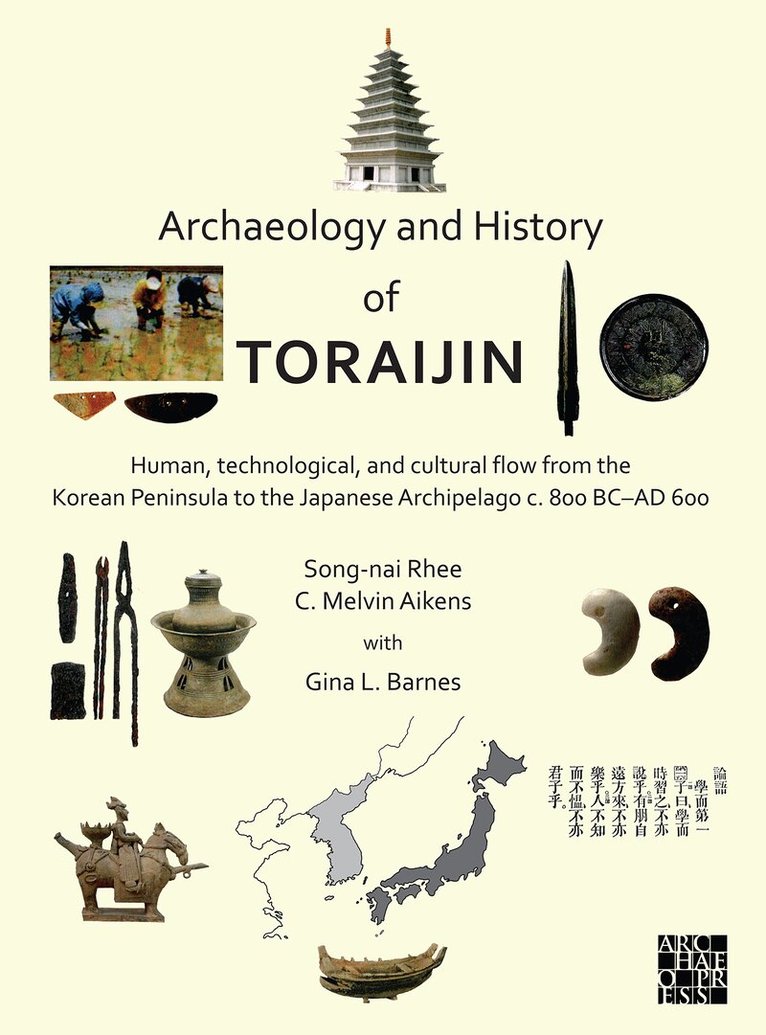
Archaeology and History of Toraijin
Human, Technological, and Cultural Flow from the Korean Peninsula to the Japanese Archipelago c. 800 BC–AD 600
Av Song-nai Rhee, C. Melvin Aikens m. fl.
Häftad, 2021
605 kr
Lägg i varukorg
Archaeology and History of Toraijin: Human, technological, and cultural flow from the Korean Peninsula to the Japanese Archipelago c. 800 BC–AD 600 explores the fundamental role in the history of the Japanese archipelago played by Toraijin – immigrants mainly from the Korean Peninsula – during this …