Sonia M. TascA³n – författare
693 kr
Läs direkt efter köp
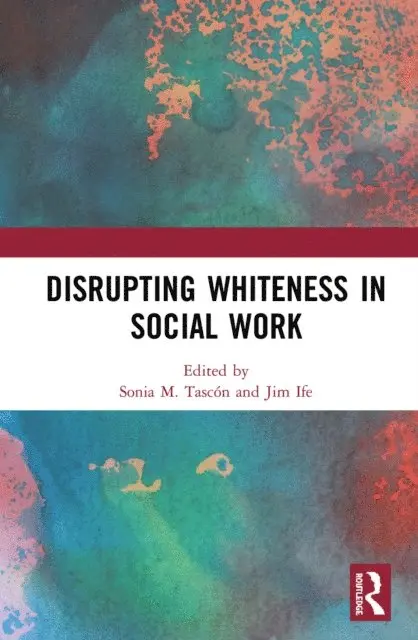
Focussing on the epistemic – the way in which knowledge is understood,
constructed,
transmitted and used – this book shows the way social work
knowledge has been constructed from within a white western paradigm, and
the need for a critique of whiteness within social work at this epistemic level.
Social work, emerging from the western Enlightenment world, has privileged
white western knowledge in ways that have been, until recently, largely unexamined
within its professional discourse. This imposition of white western
ways of knowing has led to a corresponding marginalisation of other forms
of knowledge. Drawing on views from social workers from Asia, the Pacific
region, Africa, Australia and Latin America, this book also includes a glossary
of over 40 commonly used social work terms, which are listed with their epistemological
assumptions identified. Opening up a debate about the received
wisdom of much social work language as well as challenging the epistemological
assumptions behind conventional social work practice, this book will be
of interest to all scholars and students of social work as well as practitioners
seeking
to develop genuinely decolonised forms of practice.
693 kr
Läs direkt efter köp
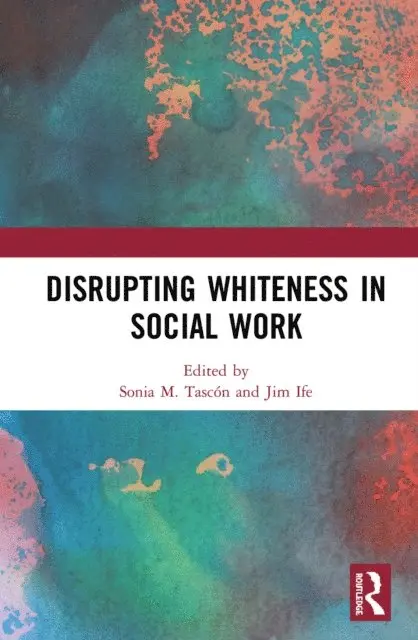
Focussing on the epistemic – the way in which knowledge is understood,
constructed,
transmitted and used – this book shows the way social work
knowledge has been constructed from within a white western paradigm, and
the need for a critique of whiteness within social work at this epistemic level.
Social work, emerging from the western Enlightenment world, has privileged
white western knowledge in ways that have been, until recently, largely unexamined
within its professional discourse. This imposition of white western
ways of knowing has led to a corresponding marginalisation of other forms
of knowledge. Drawing on views from social workers from Asia, the Pacific
region, Africa, Australia and Latin America, this book also includes a glossary
of over 40 commonly used social work terms, which are listed with their epistemological
assumptions identified. Opening up a debate about the received
wisdom of much social work language as well as challenging the epistemological
assumptions behind conventional social work practice, this book will be
of interest to all scholars and students of social work as well as practitioners
seeking
to develop genuinely decolonised forms of practice.
727 kr
Läs direkt efter köp
How are we to understand how the dominance of visual images and representations in late modernity affects Social Work practice, research and education? Social workers are increasingly using still and moving images to illustrate their work, to create new knowledge, and to further specific groups’ interests. As a profession in which communication is central, visual practices are becoming ever more significant as they seek to carry out their work with, and for, the marginalised and disenfranchised.
It is time for the profession to gain more critical, analytical, and practical knowledge of visual culture and communication, in order to use and create images in accordance with its central principle of social justice. That requires an understanding of them beyond representation. As important as this is, it is also where the profession’s scholarly work in this area has remained and halted, and thus understanding of the work of images in our practices is limited. In order to more fully understand images and their effects – both ideologically and experientially – social workers need to bring to bear other areas of study such as reception studies, visual phenomenology, and the gaze.
These other analytical frames enable a consideration not only of images per se, but also of their effect on the viewer, the human spectators, and the subjects at the heart of Social Work. By bringing understandings and experiences in Film, Media, and Communications, Visual Communication for Social Work Practice provides the reader with a wide range of critically analytical frames for practitioners, activists, educators, and researchers as they use and create images. This invites a deeper knowledge and familiarity with the power dimensions of the image, thus aligning with the social justice dimension of Social Work. Examples are provided from cinema, popular media, but more importantly from Social Work practitioners themselves to demonstrate what has already been made possible as they create and use images to further the interpersonal, communal, and justice dimensions of their work.
This book will be of interest to scholars, students, and social workers, particularly those with an interest in critical and creative methodologies.
727 kr
Läs direkt efter köp
How are we to understand how the dominance of visual images and representations in late modernity affects Social Work practice, research and education? Social workers are increasingly using still and moving images to illustrate their work, to create new knowledge, and to further specific groups’ interests. As a profession in which communication is central, visual practices are becoming ever more significant as they seek to carry out their work with, and for, the marginalised and disenfranchised.
It is time for the profession to gain more critical, analytical, and practical knowledge of visual culture and communication, in order to use and create images in accordance with its central principle of social justice. That requires an understanding of them beyond representation. As important as this is, it is also where the profession’s scholarly work in this area has remained and halted, and thus understanding of the work of images in our practices is limited. In order to more fully understand images and their effects – both ideologically and experientially – social workers need to bring to bear other areas of study such as reception studies, visual phenomenology, and the gaze.
These other analytical frames enable a consideration not only of images per se, but also of their effect on the viewer, the human spectators, and the subjects at the heart of Social Work. By bringing understandings and experiences in Film, Media, and Communications, Visual Communication for Social Work Practice provides the reader with a wide range of critically analytical frames for practitioners, activists, educators, and researchers as they use and create images. This invites a deeper knowledge and familiarity with the power dimensions of the image, thus aligning with the social justice dimension of Social Work. Examples are provided from cinema, popular media, but more importantly from Social Work practitioners themselves to demonstrate what has already been made possible as they create and use images to further the interpersonal, communal, and justice dimensions of their work.
This book will be of interest to scholars, students, and social workers, particularly those with an interest in critical and creative methodologies.