Sophie A. Whiting – författare
Visar alla böcker från författaren Sophie A. Whiting. Handla med fri frakt och snabb leverans.
4 produkter
4 produkter
E-bok
PDF, Engelska, 2018979 kr
Läs direkt efter köp
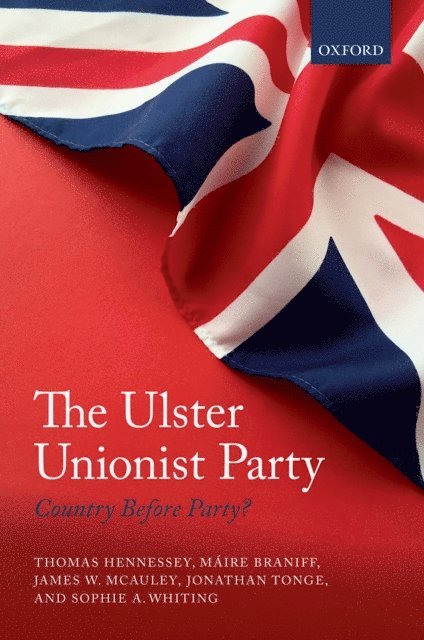
The Ulster Unionist Party: Country Before Party? uses unprecedented access to the party that dominated Northern Ireland politics for decades to assess the reasons for its decline and to analyse whether it can recover. Having helped produce the Belfast/Good Friday Agreement, the Ulster Unionist Party (UUP) struggled to deliver the deal amid unease over aspects of what its leadership negotiated. Paramilitary prisoner releases, policing changes, andpower-sharing with the republican ''enemy'' were all controversial. As the UUP leader won a Nobel Peace Prize, his party began to lost elections. For the UUP leadership, acceptance of change was the right thing to do for Northern Ireland - a case of putting country before party.The decades since the peace agreement have seen the UUP eclipsed by the rival Democratic Unionist Party (DUP) even though most of what the UUP agreed in 1998 has remained in place. This book examines the travails of the UUP in recent times. It draws upon the first-ever survey of UUP members and a wide range of interviews, including with the five most recent leaders of the party, to analyse the reasons for its reverses and the capacity to revive.The volume assesses why the UUP''s (still sizeable) membership remains loyal and discusses what the UUP and unionism means to those members, in terms of loyalty, policy, national and religious identity, views of other parties and what a shared future in Northern Ireland will constitute. Amid Brexit and talk of a border poll, crises of devolved government, rows with republicans and intra-unionist tensions, how secure and confident does the UUP membership feel about Northern Ireland''s future?Written by the same expert team that produced an award-winning book on the DUP, this book is indispensable to understanding parties and political change in divided societies.
E-bok
Engelska, 2018979 kr
Läs direkt efter köp
The Ulster Unionist Party: Country Before Party? uses unprecedented access to the party that dominated Northern Ireland politics for decades to assess the reasons for its decline and to analyse whether it can recover. Having helped produce the Belfast/Good Friday Agreement, the Ulster Unionist Party (UUP) struggled to deliver the deal amid unease over aspects of what its leadership negotiated. Paramilitary prisoner releases, policing changes, andpower-sharing with the republican ''enemy'' were all controversial. As the UUP leader won a Nobel Peace Prize, his party began to lost elections. For the UUP leadership, acceptance of change was the right thing to do for Northern Ireland - a case of putting country before party.The decades since the peace agreement have seen the UUP eclipsed by the rival Democratic Unionist Party (DUP) even though most of what the UUP agreed in 1998 has remained in place. This book examines the travails of the UUP in recent times. It draws upon the first-ever survey of UUP members and a wide range of interviews, including with the five most recent leaders of the party, to analyse the reasons for its reverses and the capacity to revive.The volume assesses why the UUP''s (still sizeable) membership remains loyal and discusses what the UUP and unionism means to those members, in terms of loyalty, policy, national and religious identity, views of other parties and what a shared future in Northern Ireland will constitute. Amid Brexit and talk of a border poll, crises of devolved government, rows with republicans and intra-unionist tensions, how secure and confident does the UUP membership feel about Northern Ireland''s future?Written by the same expert team that produced an award-winning book on the DUP, this book is indispensable to understanding parties and political change in divided societies.
Inbunden, Engelska, 2024
1 410 kr
Skickas inom 5-8 vardagar
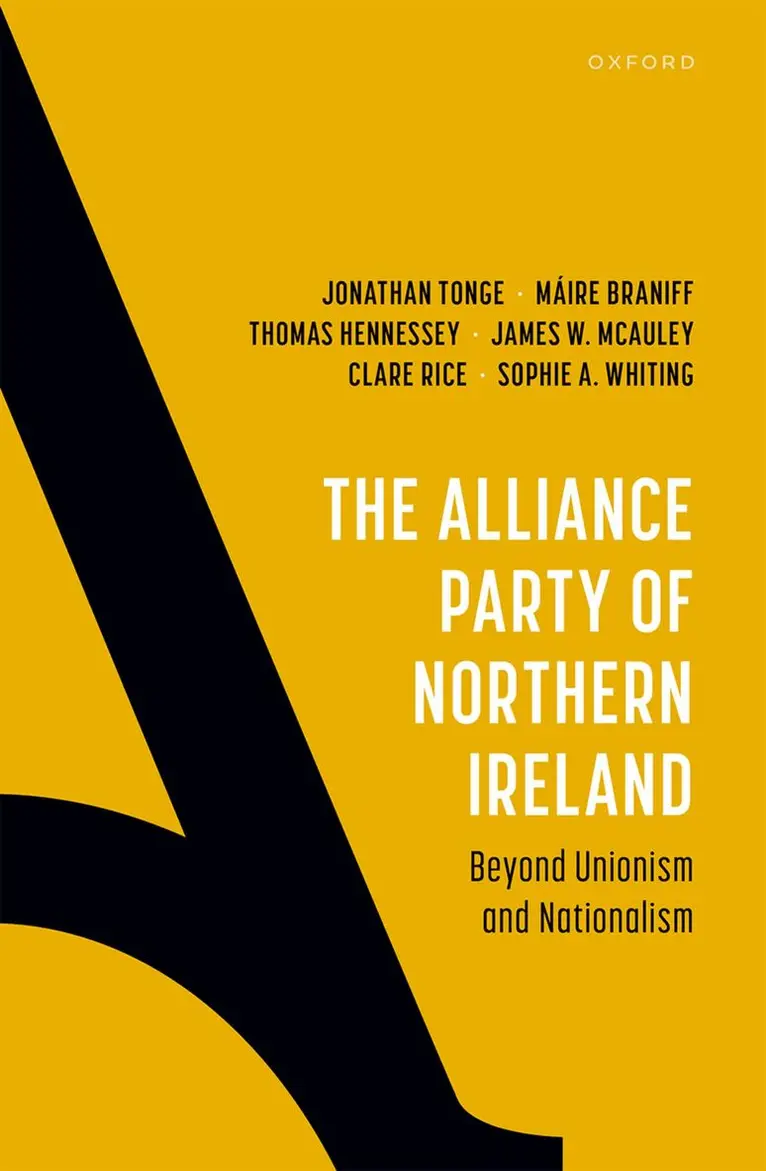
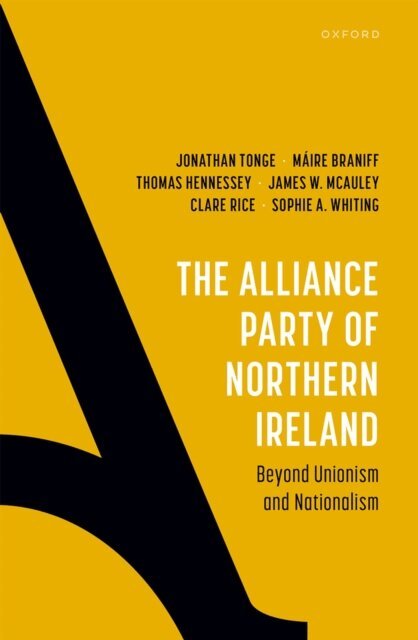
Northern Ireland's political system is dominated by an Irish Catholic nationalist versus British Protestant unionist faultline, based upon the long-running argument over whether the region should remain part of the United Kingdom or form part of a United Ireland. Yet the largest category of elector in Northern Ireland says they are neither a unionist nor a nationalist and the third most popular political party is now Alliance, which is not aligned to either of the two traditional constitutional positions. Drawing upon a unique in-depth survey of its members, this volume analyses the history and contemporary rise of Alliance and the surge of a centrist party in Northern Irish politics which is challenging the old order. How has a party which eschews ethnic bloc politics, has no constitutional preference, and contains a mix of Catholics, Protestants, and many of no religion come to prominence in a polity whose political institutions are framed upon an old binary divide? The Alliance Party of Northern Ireland undertakes an extensive membership survey analysing the role of a non-ethnic party in an ethnic system, assessing Alliance identities, politics, and futures. Can Alliance integrate Northern Irish society through shared education and housing or will continuing polarisation thwart the Party's project? Would Alliance take a position in the event of a constitutional referendum on Northern Ireland's future - and what might that stand be? These and other key questions form part of a novel study of the party of Northern Ireland's often overlooked centre ground. The volume is essential reading for those wanting to understand how non-ethnic parties can survive and even thrive within an ethnic party system.
Inbunden, Engelska, 2019
1 701 kr
Skickas inom 3-6 vardagar
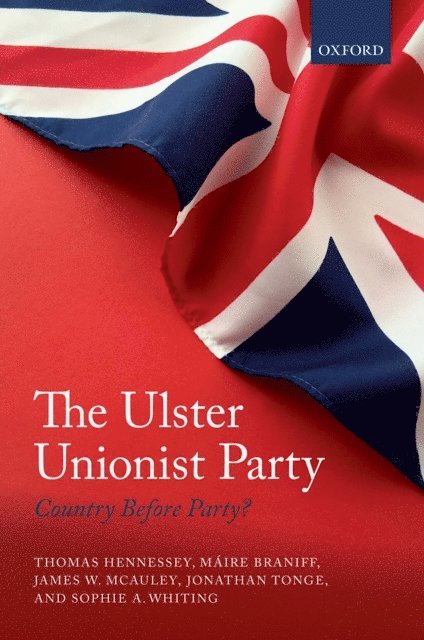
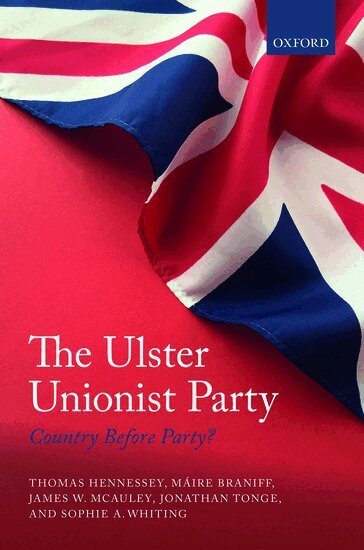
The Ulster Unionist Party: Country Before Party? uses unprecedented access to the party that dominated Northern Ireland politics for decades to assess the reasons for its decline and to analyse whether it can recover. Having helped produce the Belfast/Good Friday Agreement, the Ulster Unionist Party (UUP) struggled to deliver the deal amid unease over aspects of what its leadership negotiated. Paramilitary prisoner releases, policing changes, and power-sharing with the republican 'enemy' were all controversial. As the UUP leader won a Nobel Peace Prize, his party began to lost elections. For the UUP leadership, acceptance of change was the right thing to do for Northern Ireland - a case of putting country before party.The decades since the peace agreement have seen the UUP eclipsed by the rival Democratic Unionist Party (DUP) even though most of what the UUP agreed in 1998 has remained in place. This book examines the travails of the UUP in recent times. It draws upon the first-ever survey of UUP members and a wide range of interviews, including with the five most recent leaders of the party, to analyse the reasons for its reverses and the capacity to revive. The volume assesses why the UUP's (still sizeable) membership remains loyal and discusses what the UUP and unionism means to those members, in terms of loyalty, policy, national and religious identity, views of other parties and what a shared future in Northern Ireland will constitute. Amid Brexit and talk of a border poll, crises of devolved government, rows with republicans and intra-unionist tensions, how secure and confident does the UUP membership feel about Northern Ireland's future?Written by the same expert team that produced an award-winning book on the DUP, this book is indispensable to understanding parties and political change in divided societies.