Spencer Lilley – författare
Visar alla böcker från författaren Spencer Lilley. Handla med fri frakt och snabb leverans.
2 produkter
2 produkter
Häftad, Engelska, 2019
586 kr
Skickas inom 3-6 vardagar
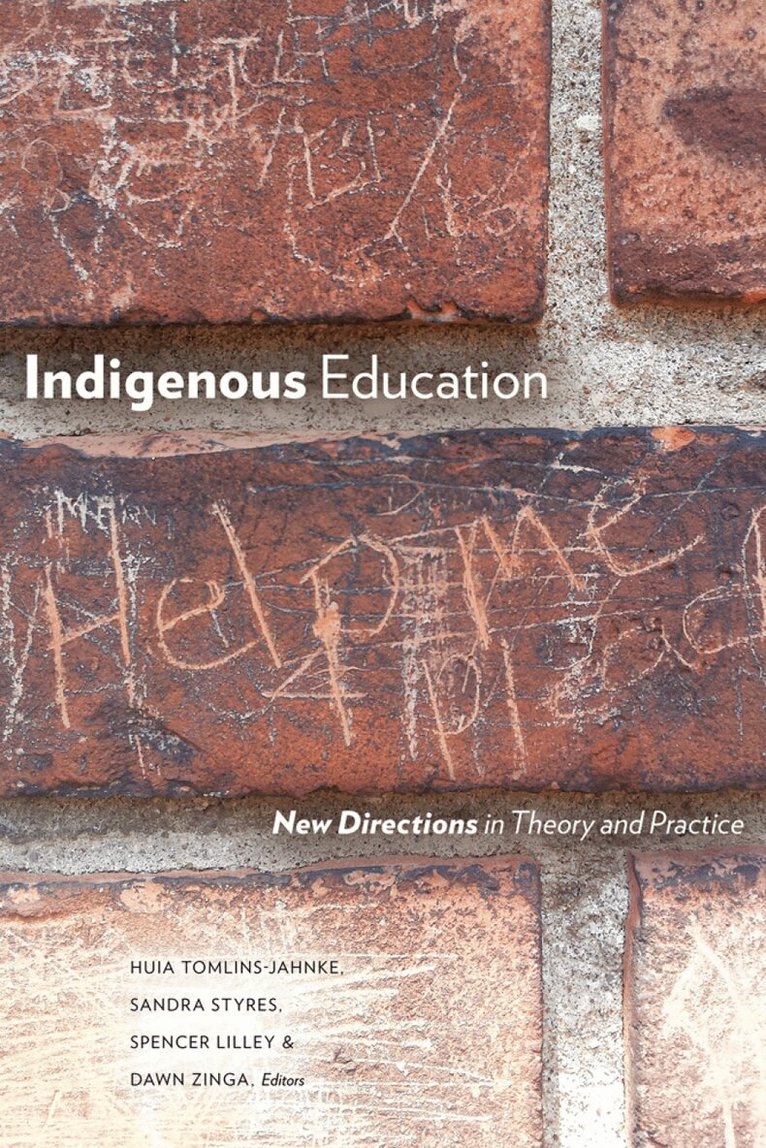
For Indigenous students and teachers alike, formal teaching and learning occurs in contested places. In Indigenous Education, leading scholars in contemporary Indigenous education from North America, New Zealand, and Hawaii disentangle aspects of colonialism from education to advance alternative philosophies of instruction. From multiple disciplines, contributors explore Indigenous education from theoretical and applied perspectives and invite readers to embrace new, informed ways of schooling. Part of a growing body of research, this is an exciting, powerful volume for Indigenous and non-Indigenous teachers, researchers, policy makers, and scholars, and a must-read for anyone who wants to understand the contested spaces of contemporary education. Foreword by Linda Tuhiwai Smith. Contributors: Jill Bevan-Brown, Frank Deer, Wiremu Doherty, Dwayne Donald, Ngarewa Hawera, Margie Hohepa, Robert Jahnke, Patricia Maringi G. Johnston, Spencer Lilley, Daniel Lipe, Margaret J. Maaka, Angela Nardozi, Katrina-Ann R. Kapāʻanaokalāokeola Nākoa Oliveira, Wally Penetito, Michelle Pidgeon, Leonie Pihama, Jean-Paul Restoule, Mari Ropata-Te Hei, Sandra Styres, Huia Tomlins-Jahnke, Sam L. No‘eau Warner, K. Laiana Wong, Dawn Zinga
Inbunden, Engelska, 2027
1 928 kr
Kommande
Amplifies underrepresented Indigenous perspectives on information policy, highlighting their vital contributions to library and information science knowledge.Libraries, archives, and other information institutions have historically focused on Western knowledge systems, marginalizing or misappropriating Indigenous ways of knowing. This important book demonstrates how Indigenous information perspectives can and must provide a critical lens for decolonizing or indigenizing these institutions. It helps academics, professionals, and library and information science (LIS) students to rethink and transform existing library and information frameworks, cataloging systems, and epistemologies. Its focus on information policy issues enhances LIS curricula and provides readers with a critical understanding of what equity, diversity, and inclusion looks like when viewed through an indigenizing lens.Chapters highlight timely topics such as freedom of information, digitization and repatriation of Indigenous resources, Indigenous cultural and intellectual property rights, and Indigenizing or decolonizing libraries and library workforce development.