Sriram Divi - Böcker
Visar alla böcker från författaren Sriram Divi. Handla med fri frakt och snabb leverans.
3 produkter
3 produkter
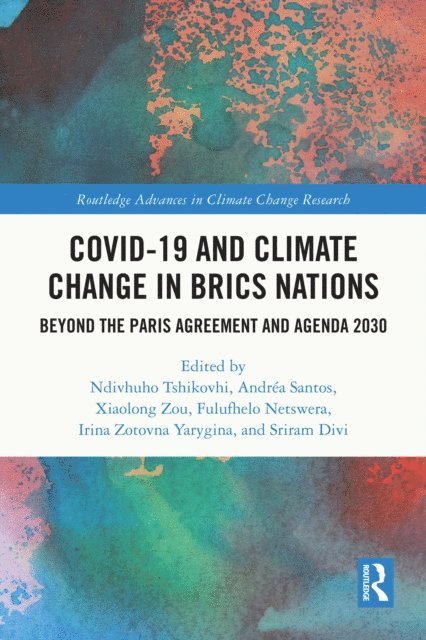
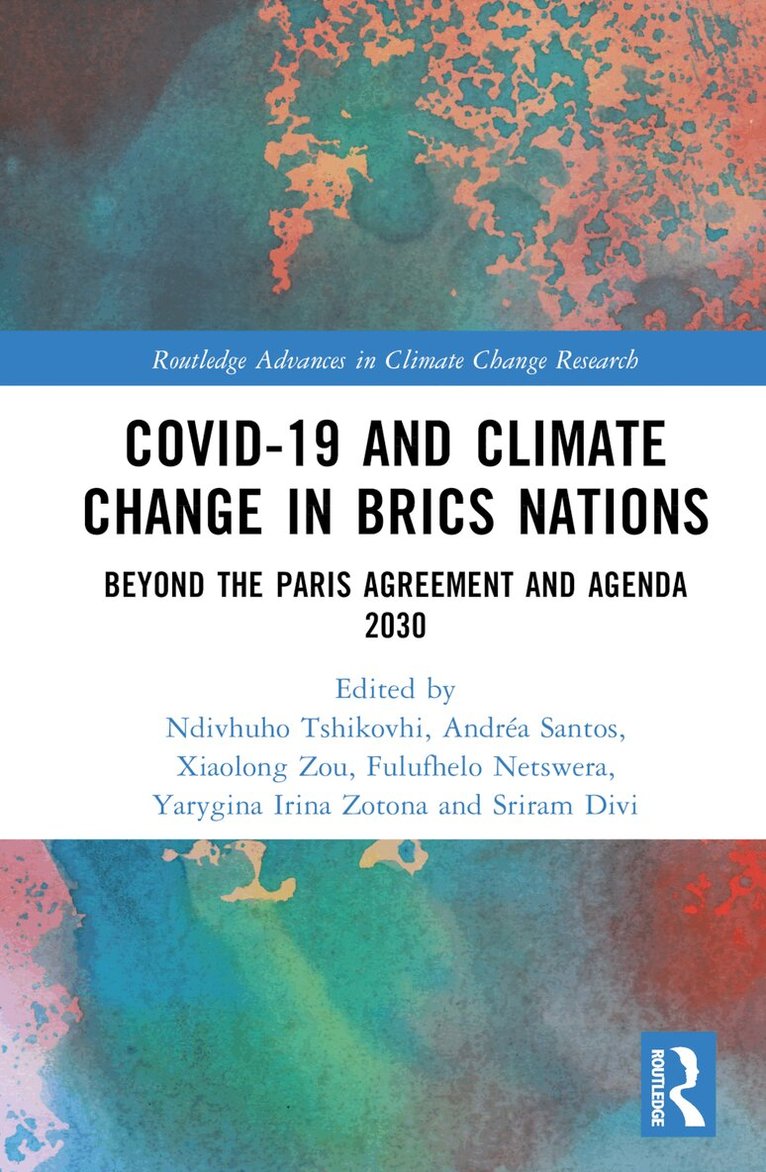
COVID-19 and Climate Change in BRICS Nations
Beyond the Paris Agreement and Agenda 2030
Inbunden, Engelska, 2023
2 098 kr
Skickas inom 10-15 vardagar
This book provides a quantitative and qualitative overview of the overall impact that the COVID-19 pandemic had on the capacity of Brazil, Russia, India, China, and South Africa (BRICS countries) to reshape global climate governance and explore areas for mutual cooperation.BRICS countries account for nearly 40% of the total world population and are thus intrinsic to the global efforts and results for Agenda 2030, the Sustainable Development Goals, the Paris Agreement, and beyond. The outbreak of the COVID-19 pandemic does not at first appear to be directly related to BRICS’ policies to address climate change, but it has influenced the pace and nature of climate action due to the loss of human and financial capital. This book examines this correlation and raises awareness of the COVID-19 pandemic’s impacts and potential solutions on BRICS’ climate strategies. Drawing on case studies from each country, the authors use examples from urban governance, energy transition strategy, foreign investment, and more to illustrate how COVID-19 has negatively or positively impacted climate data and draw wider conclusions about the long-term climate policies that may be implemented.This volume will be of great interest to students and scholars of climate change, environmental politics and governance, and global development studies.
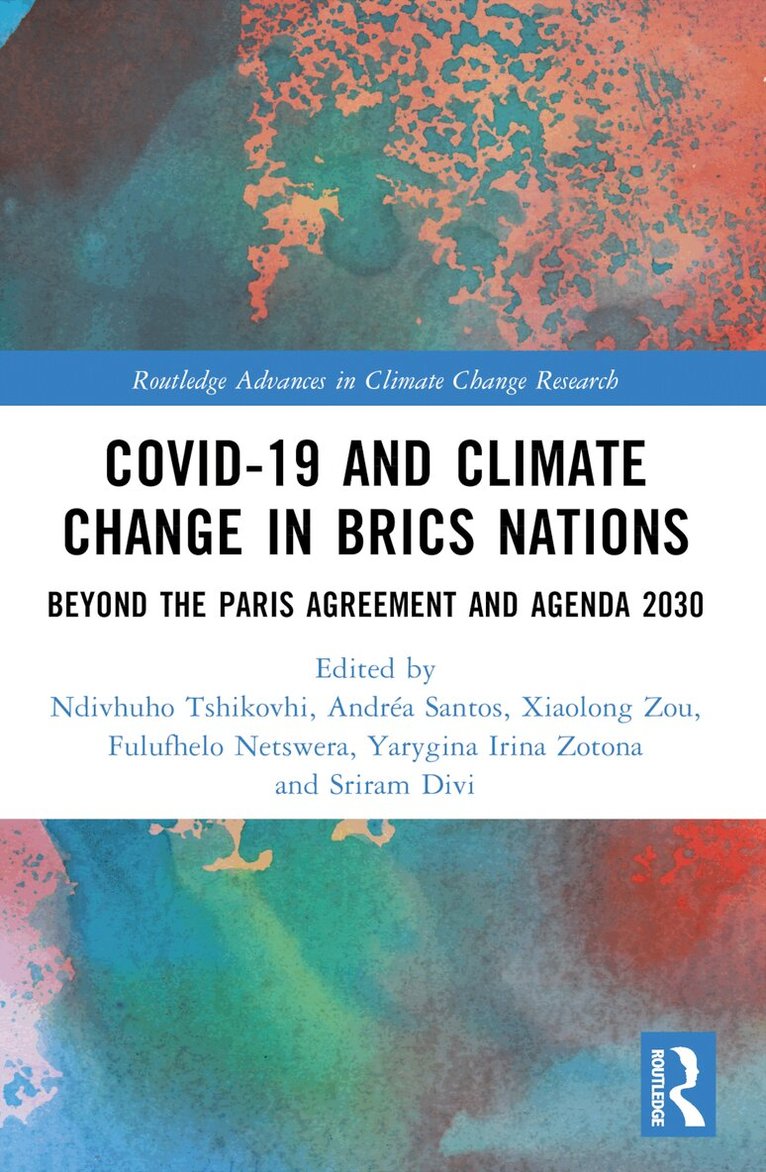
COVID-19 and Climate Change in BRICS Nations
Beyond the Paris Agreement and Agenda 2030
Häftad, Engelska, 2025
633 kr
Skickas inom 10-15 vardagar
This book provides a quantitative and qualitative overview of the overall impact that the COVID-19 pandemic had on the capacity of Brazil, Russia, India, China, and South Africa (BRICS countries) to reshape global climate governance and explore areas for mutual cooperation.BRICS countries account for nearly 40% of the total world population and are thus intrinsic to the global efforts and results for Agenda 2030, the Sustainable Development Goals, the Paris Agreement, and beyond. The outbreak of the COVID-19 pandemic does not at first appear to be directly related to BRICS’ policies to address climate change, but it has influenced the pace and nature of climate action due to the loss of human and financial capital. This book examines this correlation and raises awareness of the COVID-19 pandemic’s impacts and potential solutions on BRICS’ climate strategies. Drawing on case studies from each country, the authors use examples from urban governance, energy transition strategy, foreign investment, and more to illustrate how COVID-19 has negatively or positively impacted climate data and draw wider conclusions about the long-term climate policies that may be implemented.This volume will be of great interest to students and scholars of climate change, environmental politics and governance, and global development studies.
Energy Resilience and Sustainability in BRICS+ Economies
A Policy Analysis Perspective
Inbunden, Engelska, 2026
2 258 kr
Kommande
The expanded group of BRICS nations informally known as BRICS+ encompasses of both established members and the new additions nations which includes Egypt, Ethiopia, Iran, Saudi Arabia, and the United Arab Emirates (UAE). These BRICS+ nations stand at the cusp of unparalleled growth and economic expansion. BRICS+ contributes significantly to global primary energy production, accounting for 48% of the sector.This book emphasizes the significance of energy for growth and sustainability, highlighting the role of BRICS+ nations in enhancing global energy resilience. This resilience could be achieved through collaborations, policy strategies, and economic implications, calling attention to energy trading free from sanctions. Further, it embarks on a comprehensive exploration of the dynamic landscape inhabited by the BRICS+ nations, a collective that includes established BRICS+ countries as well as new members. At its core, the narrative confronts the looming spectre of structural shocks, with a keen focus on the energy sector, and the profound implications these disruptions pose for the economic potential of these nations. What sets this work apart is its emphasis on the vulnerabilities of the BRICS+ nations, characterized by fiscally fragile economies heavily reliant on imported energy. It delves into the international externalities that make these nations susceptible, compounded by their geological predisposition to volatility. The book charts a course for change, proposing a systematic departure from these disruptions through academic insights and elaborations, laying the foundation for sustained and successful growth.As such, it will be a useful guide for academics, students, researchers and policymakers concerned with the discourse on sustainability and resilience in BRICS+ nations, paving the way for a more informed and innovative approach to the challenges faced by these nations in the interconnected global landscape.