
Stanley Pierson – författare
Visar alla böcker från författaren . Handla med fri frakt och snabb leverans.
3 produkter
3 produkter

Inbunden, Engelska, 1993
831 kr
Skickas inom 5-8 vardagar
How does one explain the presence of educated recruits in movements that were overwhelmingly working class in composition? How did intellectuals function within the movements? In the first in-depth exploration of this question, Stanley Pierson examines the rise, development, and ultimate failure of the German Social Democrats, the largest of the European socialist parties, from 1887 to 1912. Prominent figures, such as Karl Kautsky, August Bebel, Rosa Luxemburg, and Eduard Bernstein are discussed, but the book focuses primarily on the younger generation. These forgotten intellectuals—Max Schippel, Paul Kampffmeyer, Conrad Schmidt, Paul Ernst, and others—struggled most directly with the dilemmas arising out of the attempt to translate Marxist doctrines into practical and personal terms.These young writers, speakers, and politicians set out to supplant old ways of thinking with a Marxist understanding of history and society. Pierson weaves together over thirty intellectual biographies to explore the relationship between ideology and politics in Germany. He examines the conflict within Social Democracy between the “revisionist” intellectuals, who sought to adapt Marxist theory to changing economic and social realities, and those “orthodox” and “radical” intellectuals who attempted to remain faithful to the Marxist vision. By examining the struggles of the socialist intellectuals in Germany, Pierson brings out the special features of German cultural, social, and political life before World War I. His study of this critical time in the development of the German Social Democratic party also illuminates the wider development of Marxism in Europe during the twentieth century.
Inbunden, Engelska, 2002
785 kr
Skickas inom 10-15 vardagar
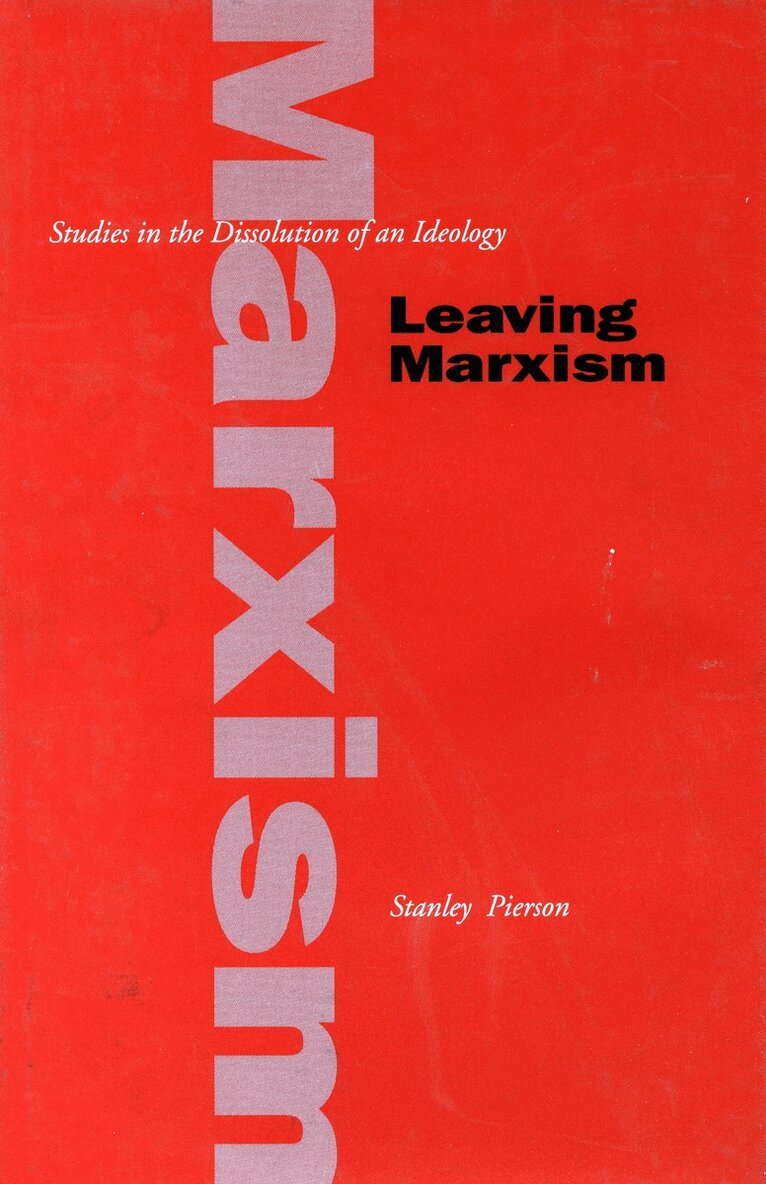
The collapse of Marxism as a compelling ideology and political force is one of the most important developments in the history of twentieth-century Europe. This book seeks to understand the failure of Marxism by viewing it up close, in the experiences of three important Marxist intellectuals—the Belgian Henri De Man, the German Max Horkheimer, and the Pole Leszek Kolakowski—each of whom embraced Marxism early in life and later decisively rejected it. The author focuses on the processes through which these three figures lost their faith in Marxism, thereby providing the framework for a more general account of modern ideological disenchantment.An introductory chapter surveys an earlier stage of that disenchantment by examining the appeal of Nietzsche and his concept of the superman to Marxist intellectuals in each of the major European socialist movements, focusing particularly on those who have lost confidence in the redemptive historical role of the proletariat. In studying the ideological trajectory of De Man, Horkheimer, and Kolakowski, the author identifies the common dilemmas they faced in their efforts to advance the Marxist cause. Those dilemmas arose in large part out of the clash between their bourgeois ethical sensibilities and the materialistic and deterministic outlook of orthodox Marxism. This clash provides a connecting link between the three generations of Marxist intellectuals dealt with in the study.The author also discusses the aftermath of these three versions of ideological disenchantment—the attempts of each of these intellectuals to reconstruct a view of the world following the dissolution of his Marxist faith. The book concludes by placing Marxism in a broad historical context, and raises questions about its place—and that of the utopian imagination in general—within Western civilization.

Inbunden, Engelska, 1979
884 kr
Tillfälligt slut