
Stathis Kalyvas – författare
Visar alla böcker från författaren Stathis Kalyvas. Handla med fri frakt och snabb leverans.
5 produkter
5 produkter
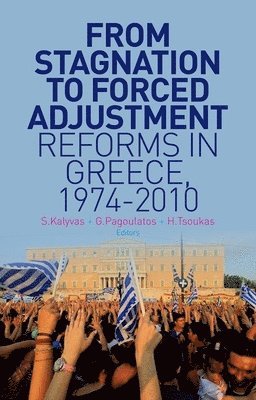
Inbunden, Engelska, 2013
889 kr
Skickas inom 3-6 vardagar
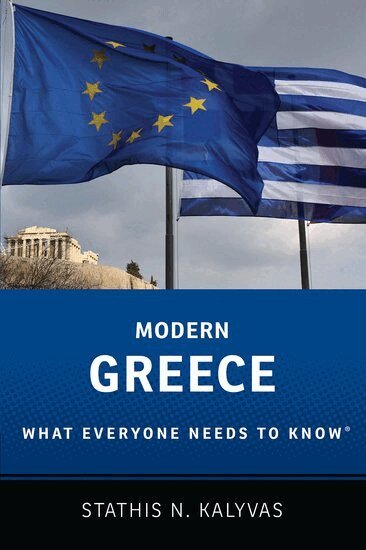
Inbunden, Engelska, 2015
592 kr
Skickas inom 11-20 vardagar
Just a few years ago, Greece appeared to be a politically secure nation with a healthy economy. Today, Greece can be found at the center of the economic maelstrom in Europe. Beginning in late 2008, the Greek economy entered a nosedive that would transform it into the European country with the most serious and intractable fiscal problems. Both the deficit and the unemployment rate skyrocketed. Quickly thereafter, Greece edged toward a pre-revolutionary condition, as massive anti-austerity protests punctuated by violence and vandalism spread throughout Greek cities. Greece was certainly not the only country hit hard by the recession, but nevertheless the entire world turned its focus toward it for a simple reason: the possibility of a Greek exit from the European Monetary Union, and its potential to unravel the entire Union, with other weaker members heading for the exits as well. The fate of Greece is inextricably tied up with the global politics surrounding austerity as well. Is austerity rough but necessary medicine, or is it an intellectually bankrupt approach to fiscal policy that causes ruin? Through it all, Greece has staggered from crisis to crisis, and the European central bank's periodic attempts to prop up its economy fall short in the face of popular recalcitrance and negative economic growth. Though the catalysts for Greece's current economic crises can be found in the conditions and events of the past few years, one can only understand the factors that helped to transform these crises into a terrible political and social catastrophe by tracing Greece's development as an independent country over the past two centuries. In Greece: What Everyone Needs to Know, Stathis Kalyvas, an eminent scholar of conflict, Europe, and Greece, begins by elucidating the crisis's impact on contemporary Greek society. He then shifts his focus to modern Greek history, tracing the nation's development from the early nineteenth century to the present. Key episodes include the independence movement of the early nineteenth century, the aftermath of World War I (in which Turkey and Greece engaged in a massive mutual ethnic cleansing), the German occupation of World War II, the brutal civil war that followed, the postwar conflict with Turkey over Cyprus, the military coup of 1967, and-finally-democracy and entry into the European Union. The final part of the book will cover the recent crisis in detail. Written by one of the most brilliant political scientists in the academy, Greece is the go-to resource for understanding both the present turmoil and the deeper past that has brought the country to where it is now.
E-bok
PDF, Engelska, 2015106 kr
Läs direkt efter köp
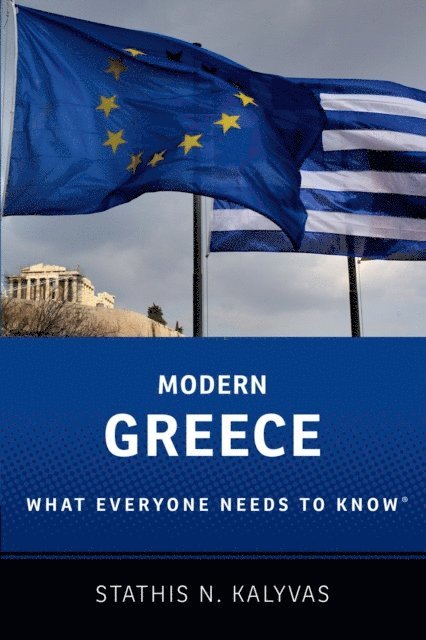
When Greece''s economic troubles began to threaten the stability of the European Union in 2010, the nation found itself in the center of a whirlwind of international finger-pointing. In the years prior, Greece appeared to be politically secure and economically healthy. Upon its emergence in the center of the European economic maelstrom, however, observers and critics cited a century of economic hurdles, dictatorships, revolutions, and more reasons as to why their current crisis was understandable, if not predictable. The ancient birthplace of democracy and countless artistic, literary, philosophical, and scientific developments had struggled to catch-up to its economically-thriving neighbors in Western Europe for years and quickly became the most seriously economically-troubled European country following a fiscal nosedive beginning in 2008. When the deficit and unemployment skyrocketed, the resulting austerity measures triggered widespread social unrest.The entire world turned its focus toward the troubled nation, waiting for the possibility of a Greek exit from the European Monetary Union and its potential to unravel the entire Union, with other weaker members heading for the exit as well. The effects of Greece''s crisis are also tied up in the global arguments about austerity, with many viewing it as necessary medicine, and still others seeing austerity as an intellectually bankrupt approach to fiscal policy that only further damages weak economies.In Modern Greece: What Everyone Needs to Know®, Stathis Kalyvas, an eminent scholar of conflict, Europe, and Greece combines the most up-to-date economic and political-science findings on the current Greek crisis with a discussion of Greece''s history. Tracing the nation''s development from the early nineteenth century to the present, the informative question-and answer format covers key episodes including the independence movement of the early nineteenth century, the massive ethnic cleansing in Turkey and Greece following World War I, the German occupation in World War II, the following brutal civil war, the conflict with Turkey over Cyprus, the military coup of 1967, democracy at long last, and the country''s entry into the European Union. Written by one of the most brilliant political scientists in the academy, Modern Greece is the go-to resource for understanding both the current crisis and the historical events that brought the country to where it is today.What Everyone Needs to Know® is a registered trademark of Oxford University Press.
Häftad, Engelska, 2015
116 kr
Skickas
Just a few years ago, Greece appeared to be a politically secure nation with a healthy economy. Today, Greece can be found at the center of the economic maelstrom in Europe. Beginning in late 2008, the Greek economy entered a nosedive that would transform it into the European country with the most serious and intractable fiscal problems. Both the deficit and the unemployment rate skyrocketed. Quickly thereafter, Greece edged toward a pre-revolutionary condition, as massive anti-austerity protests punctuated by violence and vandalism spread throughout Greek cities. Greece was certainly not the only country hit hard by the recession, but nevertheless the entire world turned its focus toward it for a simple reason: the possibility of a Greek exit from the European Monetary Union, and its potential to unravel the entire Union, with other weaker members heading for the exits as well. The fate of Greece is inextricably tied up with the global politics surrounding austerity as well. Is austerity rough but necessary medicine, or is it an intellectually bankrupt approach to fiscal policy that causes ruin? Through it all, Greece has staggered from crisis to crisis, and the European central bank's periodic attempts to prop up its economy fall short in the face of popular recalcitrance and negative economic growth. Though the catalysts for Greece's current economic crises can be found in the conditions and events of the past few years, one can only understand the factors that helped to transform these crises into a terrible political and social catastrophe by tracing Greece's development as an independent country over the past two centuries. In Greece: What Everyone Needs to Know, Stathis Kalyvas, an eminent scholar of conflict, Europe, and Greece, begins by elucidating the crisis's impact on contemporary Greek society. He then shifts his focus to modern Greek history, tracing the nation's development from the early nineteenth century to the present. Key episodes include the independence movement of the early nineteenth century, the aftermath of World War I (in which Turkey and Greece engaged in a massive mutual ethnic cleansing), the German occupation of World War II, the brutal civil war that followed, the postwar conflict with Turkey over Cyprus, the military coup of 1967, and-finally-democracy and entry into the European Union. The final part of the book will cover the recent crisis in detail. Written by one of the most brilliant political scientists in the academy, Greece is the go-to resource for understanding both the present turmoil and the deeper past that has brought the country to where it is now.
E-bok
Engelska, 2015105 kr
Läs direkt efter köp
When Greece''s economic troubles began to threaten the stability of the European Union in 2010, the nation found itself in the center of a whirlwind of international finger-pointing. In the years prior, Greece appeared to be politically secure and economically healthy. Upon its emergence in the center of the European economic maelstrom, however, observers and critics cited a century of economic hurdles, dictatorships, revolutions, and more reasons as to why their current crisis was understandable, if not predictable. The ancient birthplace of democracy and countless artistic, literary, philosophical, and scientific developments had struggled to catch-up to its economically-thriving neighbors in Western Europe for years and quickly became the most seriously economically-troubled European country following a fiscal nosedive beginning in 2008. When the deficit and unemployment skyrocketed, the resulting austerity measures triggered widespread social unrest.The entire world turned its focus toward the troubled nation, waiting for the possibility of a Greek exit from the European Monetary Union and its potential to unravel the entire Union, with other weaker members heading for the exit as well. The effects of Greece''s crisis are also tied up in the global arguments about austerity, with many viewing it as necessary medicine, and still others seeing austerity as an intellectually bankrupt approach to fiscal policy that only further damages weak economies.In Modern Greece: What Everyone Needs to Know®, Stathis Kalyvas, an eminent scholar of conflict, Europe, and Greece combines the most up-to-date economic and political-science findings on the current Greek crisis with a discussion of Greece''s history. Tracing the nation''s development from the early nineteenth century to the present, the informative question-and answer format covers key episodes including the independence movement of the early nineteenth century, the massive ethnic cleansing in Turkey and Greece following World War I, the German occupation in World War II, the following brutal civil war, the conflict with Turkey over Cyprus, the military coup of 1967, democracy at long last, and the country''s entry into the European Union. Written by one of the most brilliant political scientists in the academy, Modern Greece is the go-to resource for understanding both the current crisis and the historical events that brought the country to where it is today.What Everyone Needs to Know® is a registered trademark of Oxford University Press.