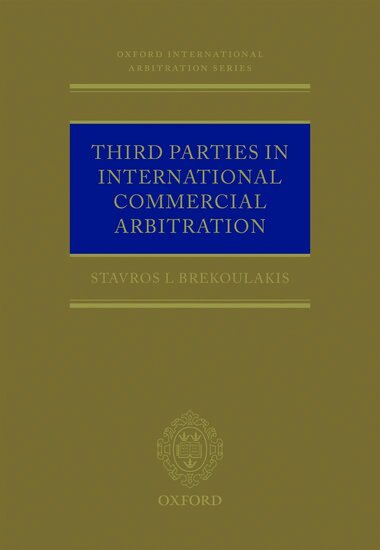
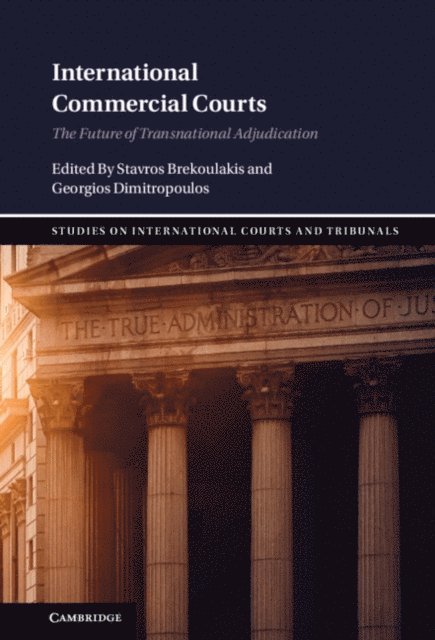
Stavros Brekoulakis – författare
3 964 kr
Skickas inom 5-8 vardagar
1 939 kr
Läs direkt efter köp
1 939 kr
Läs direkt efter köp
1 654 kr
Skickas inom 7-10 vardagar
2 555 kr
Läs direkt efter köp
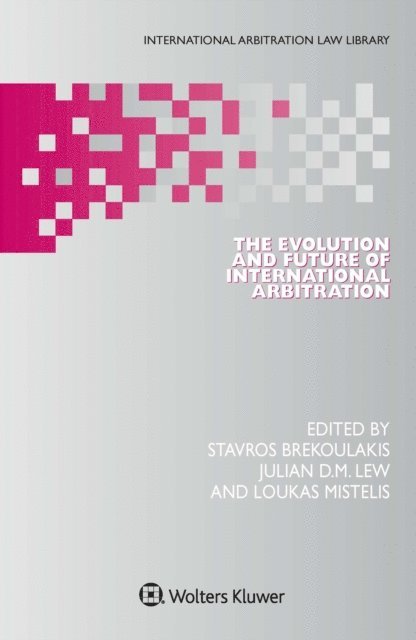
The School of International Arbitration of the Centre for Commercial Law Studies at Queen Mary University of London celebrated its 30th anniversary in April 2015 with a major conference featuring presentations by 35 international arbitration practitioners and scholars from many countries representing a variety of legal systems. This volume has emerged from that conference. What is striking is not only the range and diversity of the topics examined but also the emergence of new subjects for examination, demonstrating that arbitration law and practice do not stand still but are constantly evolving.
The issues and topics covered include the following:
- Evolution of case law and practice in international arbitration;- The concept and autonomy of arbitral award;- Parties in international arbitration;- Parallel proceedings in international arbitration;- Court review of arbitration awards;- Geographic expansion of international arbitration;- Counsel regulation and conflicts disclosures;- The use of technology in international arbitration;- Teaching and research in international arbitration.This superbly organised and edited volume, like earlier conference volumes from the School of International Arbitration, is sure to be welcomed and acclaimed, and like them will prove of lasting value.
2 555 kr
Läs direkt efter köp
The School of International Arbitration of the Centre for Commercial Law Studies at Queen Mary University of London celebrated its 30th anniversary in April 2015 with a major conference featuring presentations by 35 international arbitration practitioners and scholars from many countries representing a variety of legal systems. This volume has emerged from that conference. What is striking is not only the range and diversity of the topics examined but also the emergence of new subjects for examination, demonstrating that arbitration law and practice do not stand still but are constantly evolving.
The issues and topics covered include the following:
- Evolution of case law and practice in international arbitration;- The concept and autonomy of arbitral award;- Parties in international arbitration;- Parallel proceedings in international arbitration;- Court review of arbitration awards;- Geographic expansion of international arbitration;- Counsel regulation and conflicts disclosures;- The use of technology in international arbitration;- Teaching and research in international arbitration.This superbly organised and edited volume, like earlier conference volumes from the School of International Arbitration, is sure to be welcomed and acclaimed, and like them will prove of lasting value.
2 826 kr
Skickas inom 5-8 vardagar
2 407 kr
Läs direkt efter köp
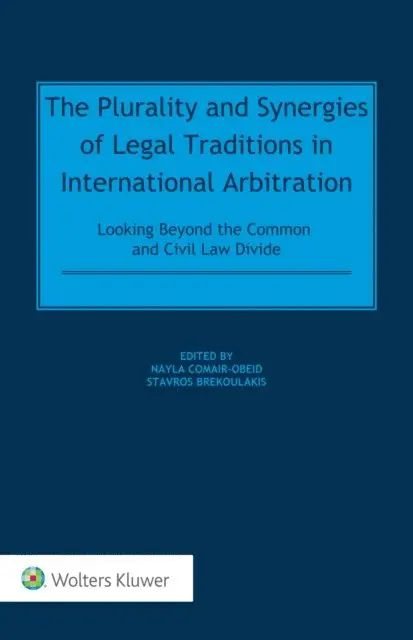
The cultural diversity characterizing international arbitration today is as much a source of enrichment as it is sometimes a source of practical difficulties affecting both the arbitration procedure and the application of substantive law. Consequently, it is becoming clearer that the critical project for international arbitration in the immediate future will be how to best answer the fundamental question of cultural pluralism. This book presents an informative and well-argued discussion on many aspects of international arbitration, clarifying the main procedural and substantive similarities and differences between different legal systems around the world, focusing not only on common and civil law traditions but also the role played by regional legal traditions including Islamic law and African perspectives.
With contributions from fifty arbitrators, counsel, and academics representing every region of the world where international arbitration has secured a foothold, the volume consolidates and synthesizes a series of discussions sponsored by the Chartered Institute of Arbitrators that took place in Dubai, Johannesburg, and Paris in 2017. The essays identify and address the cultural distinctions that affect the key ever-present factors which have forged the character of modern international arbitration, such as the following:
the seat of the arbitration and the legal regime to which the arbitration is attached;
due process, which has different and specific meanings in different national legal systems;
international standards such as international public policy, illegality, arbitrability, and sanctions;
the immunity of international arbitrators;
form of presentation of evidence, production of documents, oral and written submissions, and expert evidence;
the specific context of international investment arbitration;
disputes in specific industries or legal areas (telecommunications, construction, mining, intellectual property);
the role of national judges and the legal traditions they embrace throughout and after arbitration proceedings;
how to incorporate more conciliatory cultural traditions, which are notably shared in many African and Asian countries; and
training and opportunities for the next generation in international arbitration.
The book is replete with tools and recommendations to ensure synergy and harmony between the different legal traditions that coexist in today’s arbitral proceedings.
All users of arbitration, whether the arbitrators themselves, lawyers involved as counsel for parties, or judges applying arbitration law, will greatly appreciate this matchless elucidation of the different systems and alternative ways of presenting the divergent procedures and ways of conducting international arbitrations. The book’s immeasurable value to arbitration academics goes without saying.
2 407 kr
Läs direkt efter köp
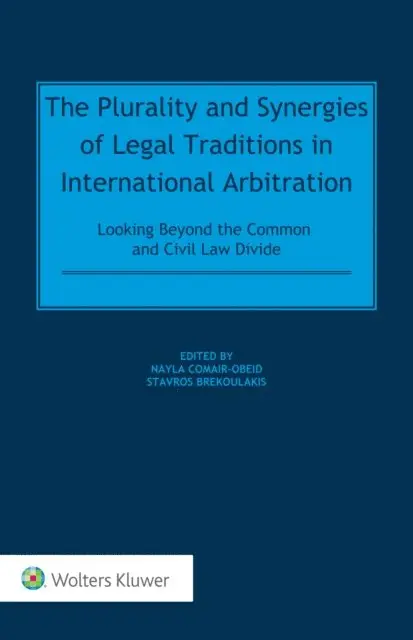
The cultural diversity characterizing international arbitration today is as much a source of enrichment as it is sometimes a source of practical difficulties affecting both the arbitration procedure and the application of substantive law. Consequently, it is becoming clearer that the critical project for international arbitration in the immediate future will be how to best answer the fundamental question of cultural pluralism. This book presents an informative and well-argued discussion on many aspects of international arbitration, clarifying the main procedural and substantive similarities and differences between different legal systems around the world, focusing not only on common and civil law traditions but also the role played by regional legal traditions including Islamic law and African perspectives.
With contributions from fifty arbitrators, counsel, and academics representing every region of the world where international arbitration has secured a foothold, the volume consolidates and synthesizes a series of discussions sponsored by the Chartered Institute of Arbitrators that took place in Dubai, Johannesburg, and Paris in 2017. The essays identify and address the cultural distinctions that affect the key ever-present factors which have forged the character of modern international arbitration, such as the following:
the seat of the arbitration and the legal regime to which the arbitration is attached;
due process, which has different and specific meanings in different national legal systems;
international standards such as international public policy, illegality, arbitrability, and sanctions;
the immunity of international arbitrators;
form of presentation of evidence, production of documents, oral and written submissions, and expert evidence;
the specific context of international investment arbitration;
disputes in specific industries or legal areas (telecommunications, construction, mining, intellectual property);
the role of national judges and the legal traditions they embrace throughout and after arbitration proceedings;
how to incorporate more conciliatory cultural traditions, which are notably shared in many African and Asian countries; and
training and opportunities for the next generation in international arbitration.
The book is replete with tools and recommendations to ensure synergy and harmony between the different legal traditions that coexist in today’s arbitral proceedings.
All users of arbitration, whether the arbitrators themselves, lawyers involved as counsel for parties, or judges applying arbitration law, will greatly appreciate this matchless elucidation of the different systems and alternative ways of presenting the divergent procedures and ways of conducting international arbitrations. The book’s immeasurable value to arbitration academics goes without saying.
2 500 kr
Skickas inom 5-8 vardagar
2 109 kr
Läs direkt efter köp
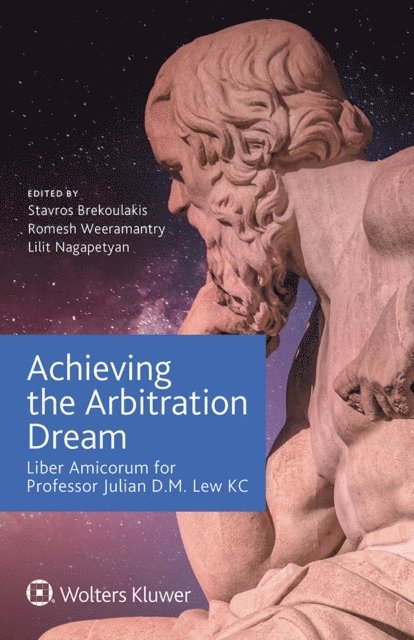
A celebration of the multi-faceted legacy of a key figure in the evolution of international arbitration, this collection of world-class contributions provides critical perspectives and in-depth analyses by leading arbitration professionals and scholars on a wide range of cutting-edge topics in the field of law of which Julian Lew was a founder, and in which he remains an outstanding arbitrator and teacher.
Inspired by Lew’s profound influence on the understanding of arbitration as an autonomous and international field of practice, more than forty distinguished contributors address the main trends shaping the arbitration system as it continues to evolve. The chapters in this book offer insightful commentary on a variety of topics gathered under the following headings:
applicable law;
evidence and procedure;
jurisdiction and substantive issues;
the arbitrators’ role;
the seat; and
third-party funders.
In a field which has become increasingly busy in terms of events and publications, the high number of contributors to this volume is a testament to the great esteem that Julian Lew enjoys among his peers. With perspectives from a wide diversity of backgrounds, the authors shed clear light on international arbitration’s emerging and future challenges, greatly benefitting the work of both practitioners and academics in the field.
2 109 kr
Läs direkt efter köp
A celebration of the multi-faceted legacy of a key figure in the evolution of international arbitration, this collection of world-class contributions provides critical perspectives and in-depth analyses by leading arbitration professionals and scholars on a wide range of cutting-edge topics in the field of law of which Julian Lew was a founder, and in which he remains an outstanding arbitrator and teacher.
Inspired by Lew’s profound influence on the understanding of arbitration as an autonomous and international field of practice, more than forty distinguished contributors address the main trends shaping the arbitration system as it continues to evolve. The chapters in this book offer insightful commentary on a variety of topics gathered under the following headings:
applicable law;
evidence and procedure;
jurisdiction and substantive issues;
the arbitrators’ role;
the seat; and
third-party funders.
In a field which has become increasingly busy in terms of events and publications, the high number of contributors to this volume is a testament to the great esteem that Julian Lew enjoys among his peers. With perspectives from a wide diversity of backgrounds, the authors shed clear light on international arbitration’s emerging and future challenges, greatly benefitting the work of both practitioners and academics in the field.