Steering Committee on Future Health Scenarios – författare
Visar alla böcker från författaren Steering Committee on Future Health Scenarios. Handla med fri frakt och snabb leverans.
10 produkter
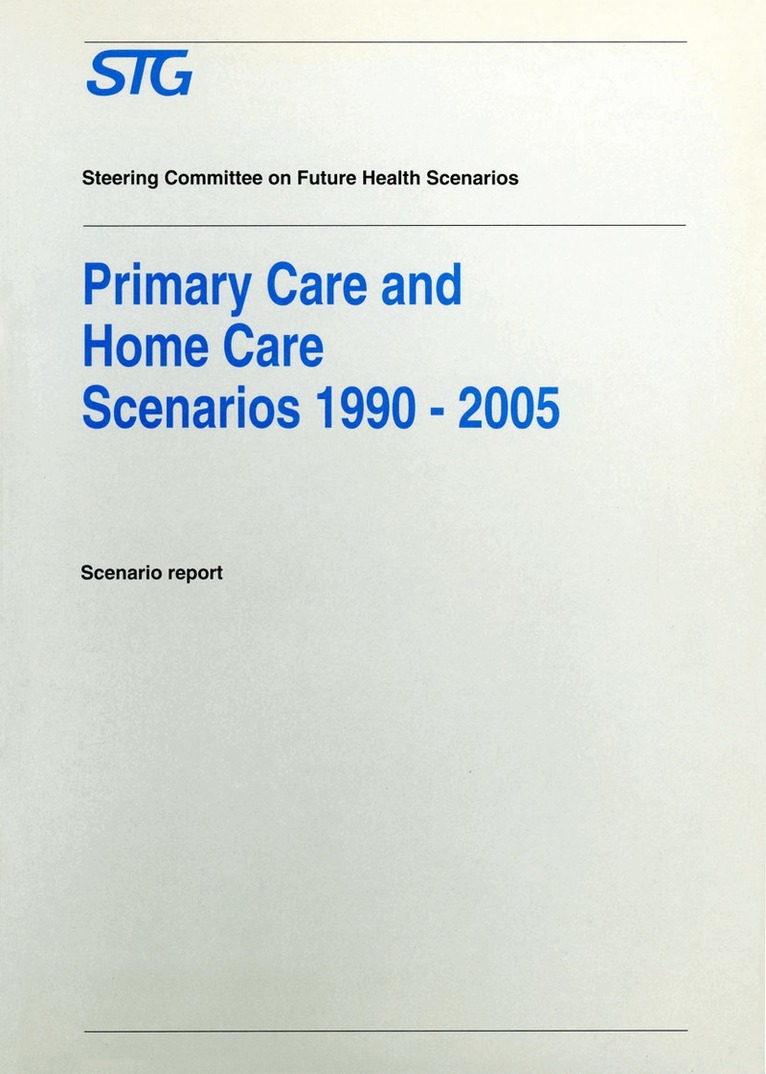
Primary Care and Home Care Scenarios 1990–2005
Scenario report commissioned by the Steering Committee on Future Health Scenarios
Av Steering Committee on Future Health Scenarios
Häftad, 1994
566 kr
Lägg i varukorg
CARE AT HOME -HOME CARE Health care in the Netherlands looks to be a well structured system. Supplementing the vital level of self-care and informal care are four levels of professional care: the public health service (known in the Netherlands as basic health care) is mainly concerned with …
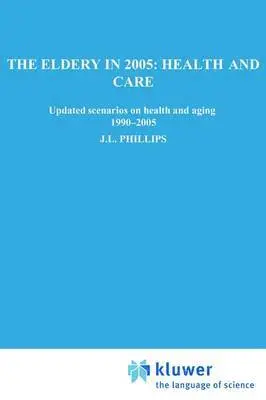
Elderly in 2005: Health and Care
Updated Scenarios on Health and Aging 1990-2005 Scenario Report Commissioned by the Steering Committee on Future Health Scenarios
Av Steering Committee on Future Health Scenarios
Häftad, 1994
2244 kr
Lägg i varukorg
The first STG report to embody scenarios on population ageing, health and care appeared in 1985. This report describes developments since 1985, reviewing the current position and setting out updated scenarios. The 1985 report set out three scenarios, in which the central focus was on the developing …
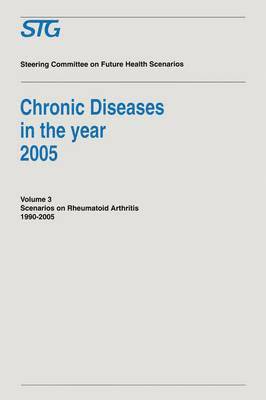
Chronic Diseases in the Year 2005 - Volume 3
Scenario on Rheumatoid Arthritis 1990-2005 Scenario Report commissioned by the Steering Committee on Future Health Scenarios
Av Steering Committee on Future Health Scenarios, Centre for Epidemiology m. fl.
Häftad, 1995
2244 kr
Lägg i varukorg
The report Scenarios on Rheumatoid Arthritis 1990--2005 is the third specialized report of the Chronic Diseases Scenario Project. An exploration has been made of the likely trends in the number of patients, the number of severity of consequences and complications, the quality of life and the …
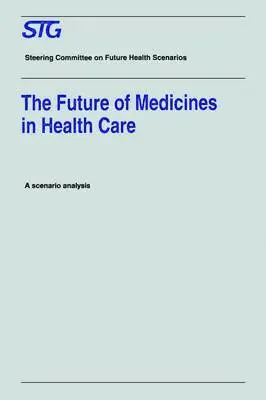
Future of Medicines in Health Care
Scenario Report Commissioned by the Steering Committee on Future Health Scenarios
Av Steering Committee on Future Health Scenarios
Häftad, 1995
2244 kr
Lägg i varukorg
The future place of medicines in health care is both exciting and uncertain. With an aging population, an increasing number of chronic sick, a growing range of treatment options and a developing European market, the one certainty is that medication patterns will change radically over the next 15 …
Cancer in the Netherlands Volume 1: Scenario Report, Volume 2: Annexes
Scenarios on Cancer 1985-2000 Commissioned by the Steering Committee on Future Health Scenarios
Av Steering Committee on Future Health Scenarios, F. J. Cleton m. fl.
Häftad, 1988
2244 kr
Lägg i varukorg
Heart of the Future/The Future of the Heart Volume 1: Scenario Report 1986 Volume 2: Background and Approach 1986
Scenarios on Cardiovascular Diseases 1985-2010 Commissioned by the Steering Committee on Future Health Scenarios
Av Steering Committee on Future Health Scenarios
Häftad, 1987
1685 kr
Lägg i varukorg
Growing Old in the Future
Scenarios on health and ageing 1984–2000
Av Steering Committee on Future Health Scenarios
Häftad, 1987
1636 kr
Lägg i varukorg
This publication represents the report of the Scenario Committee on Ageing. The draft report was discussed with a wide range of experts, inter alia during the symposium 'Growing Old in the Future' held on October 27th, 1984. In addition to the scenario report, a background report containing the …
Heart of the Future/The Future of the Heart Volume 1: Scenario Report 1986 Volume 2: Background and Approach 1986
Scenarios on Cardiovascular Diseases 1985-2010 Commissioned by the Steering Committee on Future Health Scenarios
Av Steering Committee on Future Health Scenarios
Inbunden, 1987
1685 kr
Lägg i varukorg
Growing Old in the Future
Scenarios on health and ageing 1984–2000
Av Steering Committee on Future Health Scenarios
E-bok, 2012
2174 kr
Lägg i varukorg
This publication represents the report of the Scenario Committee on Ageing. The draft report was discussed with a wide range of experts, inter alia during the symposium ''Growing Old in the Future'' held on October 27th, 1984. In addition to the scenario report, a background report containing the …
Primary Care and Home Care Scenarios 1990-2005
Scenario report commissioned by the Steering Committee on Future Health Scenarios
Av Steering Committee on Future Health Scenarios
E-bok, 2012
755 kr
Lägg i varukorg
CARE AT HOME -HOME CARE Health care in the Netherlands looks to be a well structured system. Supplementing the vital level of self-care and informal care are four levels of professional care: the public health service (known in the Netherlands as basic health care) is mainly concerned with …