Stefaan Tavernier – författare
Visar alla böcker från författaren Stefaan Tavernier. Handla med fri frakt och snabb leverans.
5 produkter
5 produkter
Inbunden, Engelska, 2006
3 321 kr
Skickas inom 10-15 vardagar
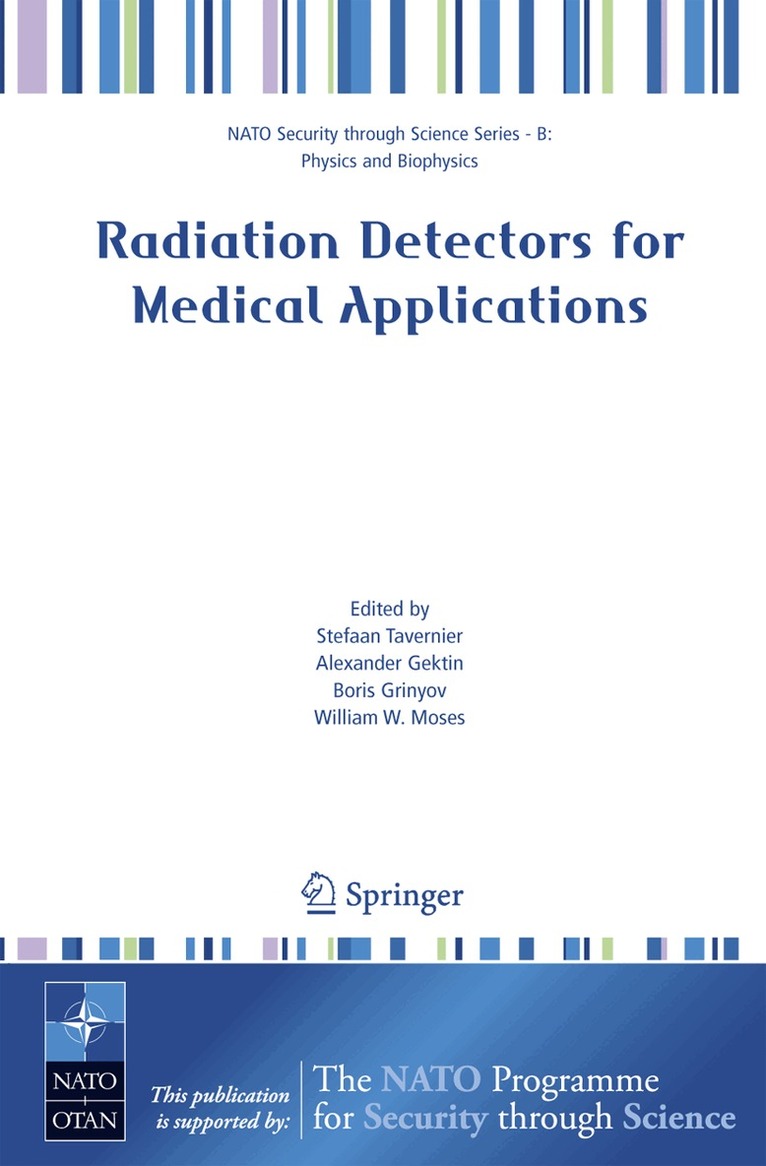
The "NATO Advanced Research Workshop on radiation detectors for medical imaging", held in Alushta (Crimea, Ukraine) in September 2005 was a unique event and I am very pleased that the proceedings are published in the prestigious NATO Security Through Science series. Since their discovery by Becquerel and Röntgen, radiation and radiation detectors have played an ever more important role in medical diagnostics and therapy. The spirit of such NATO workshops is to give an overview of the present state of the field, rather than to bring the latest research results. We have been very lucky to have with us several of the worlds leading experts in the use of radiation detectors for medial imaging, resulting in a number of extremely interesting overview talks. The talks of these 14 keynote speakers to the NATO workshop are published in the present volume. The presentations by A. Gektin and W. Moses were combined in one common paper, so that the present book only has 13 chapters. We are sure most of these contributions will prove of lasting value. We are particularly grateful to the "NATO science committee" that has financially supported the meeting. Thanks to the NATO funding we have been able to cover a significant fraction of the expenses for a total of 48 participants to this workshop. Without this support a number of participants from central and east Europe would most probably not have had the possibility to attend.
Häftad, Engelska, 2006
3 321 kr
Skickas inom 10-15 vardagar
The "NATO Advanced Research Workshop on radiation detectors for medical imaging", held in Alushta (Crimea, Ukraine) in September 2005 was a unique event and I am very pleased that the proceedings are published in the prestigious NATO Security Through Science series. Since their discovery by Becquerel and Röntgen, radiation and radiation detectors have played an ever more important role in medical diagnostics and therapy. The spirit of such NATO workshops is to give an overview of the present state of the field, rather than to bring the latest research results. We have been very lucky to have with us several of the worlds leading experts in the use of radiation detectors for medial imaging, resulting in a number of extremely interesting overview talks. The talks of these 14 keynote speakers to the NATO workshop are published in the present volume. The presentations by A. Gektin and W. Moses were combined in one common paper, so that the present book only has 13 chapters. We are sure most of these contributions will prove of lasting value. We are particularly grateful to the "NATO science committee" that has financially supported the meeting. Thanks to the NATO funding we have been able to cover a significant fraction of the expenses for a total of 48 participants to this workshop. Without this support a number of participants from central and east Europe would most probably not have had the possibility to attend.
E-bok
PDF, Engelska, 20064 066 kr
Läs direkt efter köp
The "NATO Advanced Research Workshop on radiation detectors for medical imaging", held in Alushta (Crimea, Ukraine) in September 2005 was a unique event and I am very pleased that the proceedings are published in the prestigious NATO Security Through Science series. Since their discovery by Becquerel and Röntgen, radiation and radiation detectors have played an ever more important role in medical diagnostics and therapy. The spirit of such NATO workshops is to give an overview of the present state of the field, rather than to bring the latest research results. We have been very lucky to have with us several of the worlds leading experts in the use of radiation detectors for medial imaging, resulting in a number of extremely interesting overview talks. The talks of these 14 keynote speakers to the NATO workshop are published in the present volume. The presentations by A. Gektin and W. Moses were combined in one common paper, so that the present book only has 13 chapters. We are sure most of these contributions will prove of lasting value. We are particularly grateful to the "NATO science committee" that has financially supported the meeting. Thanks to the NATO funding we have been able to cover a significant fraction of the expenses for a total of 48 participants to this workshop. Without this support a number of participants from central and east Europe would most probably not have had the possibility to attend.
Inbunden, Engelska, 2010
758 kr
Skickas inom 10-15 vardagar
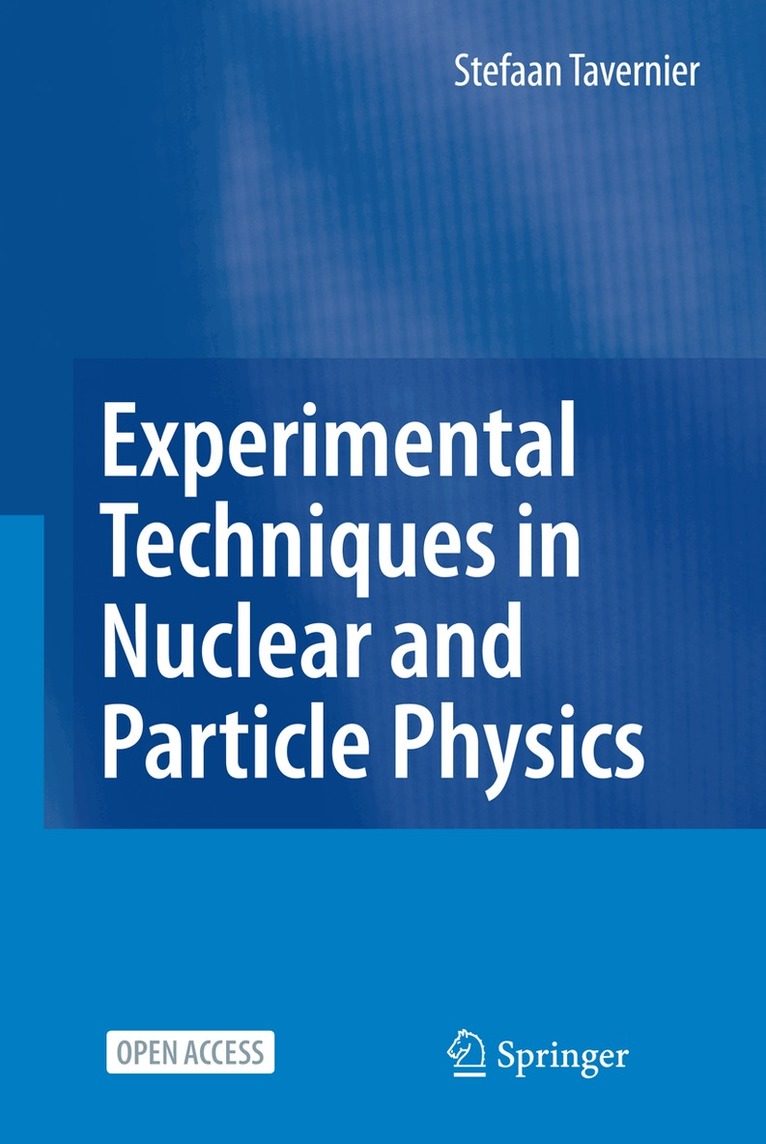
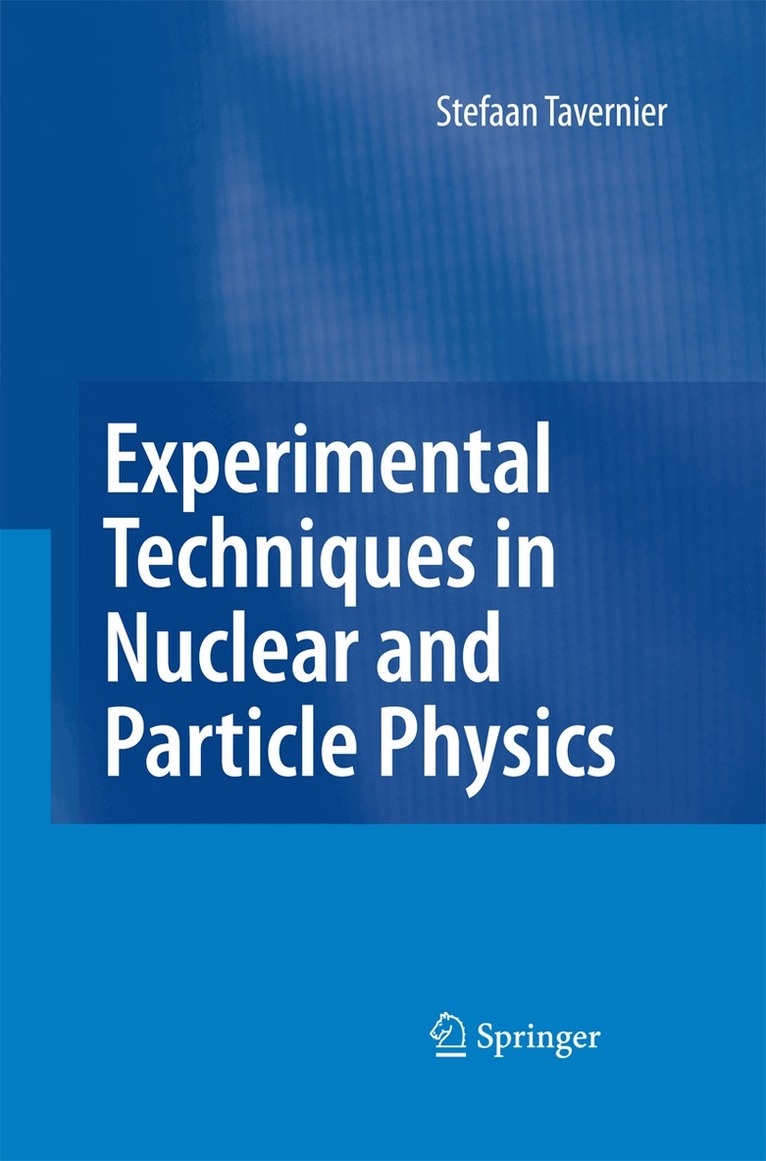
I have been teaching courses on experimental techniques in nuclear and particle physics to master students in physics and in engineering for many years. This book grew out of the lecture notes I made for these students. The physics and engineering students have rather different expectations of what such a course should be like. I hope that I have nevertheless managed to write a book that can satisfy the needs of these different target audiences. The lectures themselves, of course, need to be adapted to the needs of each group of students. An engineering student will not qu- tion a statement like “the velocity of the electrons in atoms is ?1% of the velocity of light”, a physics student will. Regarding units, I have written factors h and c explicitly in all equations throughout the book. For physics students it would be preferable to use the convention that is common in physics and omit these constants in the equations, but that would probably be confusing for the engineering students.Physics students tend to be more interested in theoretical physics courses. However, physics is an experimental science and physics students should und- stand how experiments work, and be able to make experiments work.This is an open access book.
Häftad, Engelska, 2014
543 kr
Skickas inom 10-15 vardagar
I have been teaching courses on experimental techniques in nuclear and particle physics to master students in physics and in engineering for many years. This book grew out of the lecture notes I made for these students. The physics and engineering students have rather different expectations of what such a course should be like. I hope that I have nevertheless managed to write a book that can satisfy the needs of these different target audiences. The lectures themselves, of course, need to be adapted to the needs of each group of students. An engineering student will not qu- tion a statement like “the velocity of the electrons in atoms is ?1% of the velocity of light”, a physics student will. Regarding units, I have written factors h and c explicitly in all equations throughout the book. For physics students it would be preferable to use the convention that is common in physics and omit these constants in the equations, but that would probably be confusing for the engineering students.Physics students tend to be more interested in theoretical physics courses. However, physics is an experimental science and physics students should und- stand how experiments work, and be able to make experiments work.This is an open access book.