Stefan Aquilina - Böcker
Visar alla böcker från författaren Stefan Aquilina. Handla med fri frakt och snabb leverans.
12 produkter
12 produkter
2 841 kr
Skickas inom 10-15 vardagar
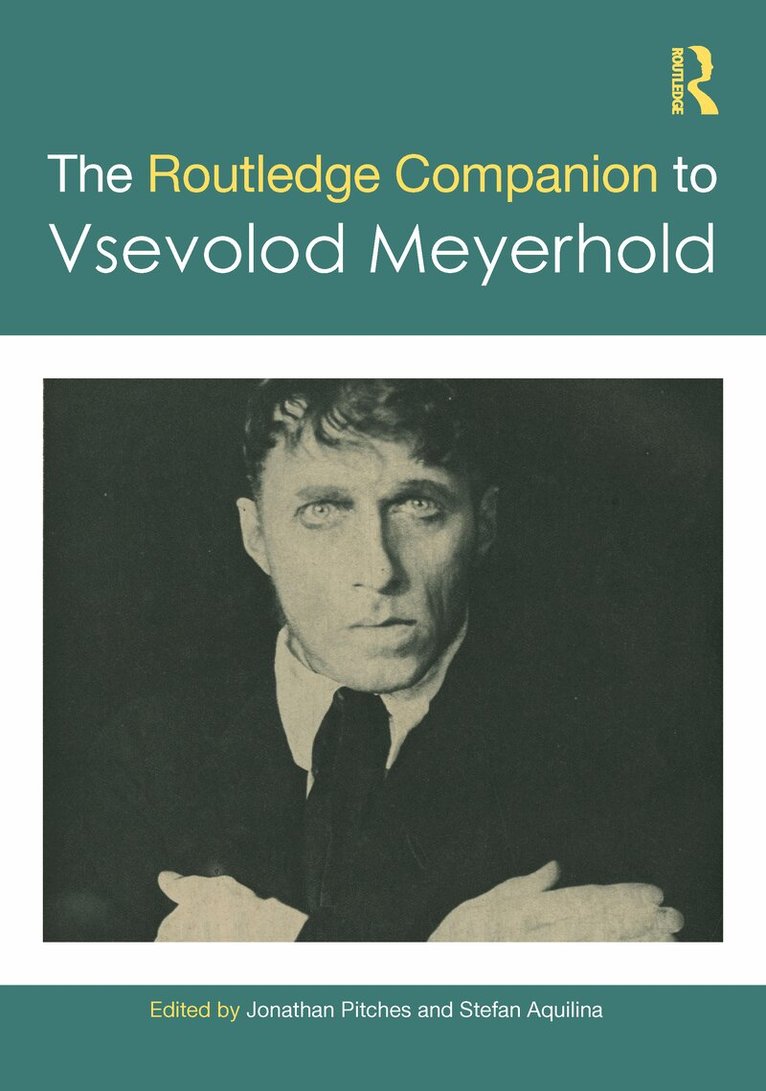
The Routledge Companion to Vsevolod Meyerhold brings together a wealth of scholarship on one of the foremost innovators in European theatre. It presents a detailed picture of the Russian director’s work from when it first emerged on the modern stage to its multifarious present-day manifestations.By combining an historical focus with the latest contemporary research from an international range of perspectives and authors, this collection marks an important moment in Meyerhold studies as well as offering a new assessment of his relation to today's theatre-making. Its dynamic blend of research is presented in five sections: Histories enlarges on more conventional subjects like the grotesque and Biomechanics, to overlooked topics such as Meyerhold's ‘failed’ projects and his work in film; Collaborations and Connections extends understandings of Meyerhold’s well-known collaborative capacities to consider new cultural influences and lesser known working relationships; Sources engages with hitherto untapped material in Meyerhold’s oeuvre by reproducing and contextualising previously untranslated primary sources on his work; Practitioner Voices offer lively, on the ground, testimony of the contemporary impact of Meyerhold's practice; Meyerhold in New Contexts maps the routes of his practice across continents and examines ways in which his work is being applied in a number of contemporary scenarios, such as motion capture, computer-based 3D visualisations, and the ‘new normal’ of digital pedagogy.This is a key resource for students and scholars of European Theatre, acting theory, and actor training, as well as for those more broadly interested in the socio-political impact of theatre.
663 kr
Skickas inom 10-15 vardagar
The Routledge Companion to Vsevolod Meyerhold brings together a wealth of scholarship on one of the foremost innovators in European theatre. It presents a detailed picture of the Russian director’s work from when it first emerged on the modern stage to its multifarious present-day manifestations.By combining an historical focus with the latest contemporary research from an international range of perspectives and authors, this collection marks an important moment in Meyerhold studies as well as offering a new assessment of his relation to today's theatre-making. Its dynamic blend of research is presented in five sections: Histories enlarges on more conventional subjects like the grotesque and Biomechanics, to overlooked topics such as Meyerhold's ‘failed’ projects and his work in film; Collaborations and Connections extends understandings of Meyerhold’s well-known collaborative capacities to consider new cultural influences and lesser known working relationships; Sources engages with hitherto untapped material in Meyerhold’s oeuvre by reproducing and contextualising previously untranslated primary sources on his work; Practitioner Voices offer lively, on the ground, testimony of the contemporary impact of Meyerhold's practice; Meyerhold in New Contexts maps the routes of his practice across continents and examines ways in which his work is being applied in a number of contemporary scenarios, such as motion capture, computer-based 3D visualisations, and the ‘new normal’ of digital pedagogy.This is a key resource for students and scholars of European Theatre, acting theory, and actor training, as well as for those more broadly interested in the socio-political impact of theatre.
579 kr
Skickas inom 10-15 vardagar
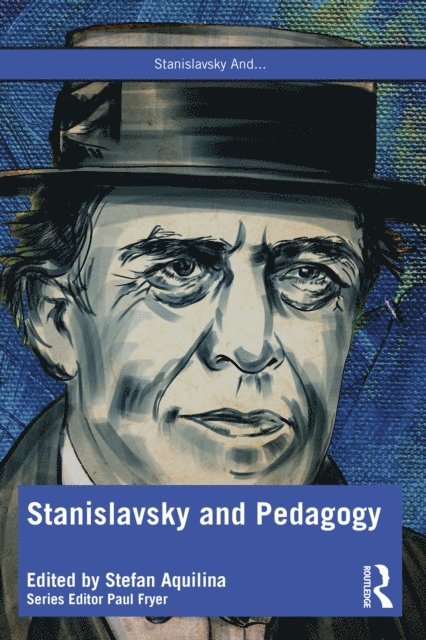
Stanislavsky and Pedagogy explores current thinking around the pedagogical implications of Stanislavsky’s work. The volume depicts the voices of a number of practitioners, teachers, and scholars who are themselves journeying with Stanislavsky, and who in his work find a potent instigator for their own pedagogical practice and study. This book outlines instances in which updated interpretations of Stanislavsky’s pedagogy are adapted to cater for contemporary needs and scenarios. These include the theatre industry, new digital technologies, the need to develop playfulness, application to a broad repertoire, performance as pedagogy, university managerialism, and interdisciplinary crossovers with dance and opera. The pedagogies that emerge from these case-studies are marked by fluidity and non-fixity and help to underscore the malleability of Stanislavsky’s system.Stanislavsky And... is a series of multi-perspectival collections that bring the enduring legacy of Stanislavskian actor training into the spotlight of contemporary performance culture, making them ideal for students, teachers, and scholars of acting, actor training, and directing.
2 012 kr
Skickas inom 10-15 vardagar
Stanislavsky and Pedagogy explores current thinking around the pedagogical implications of Stanislavsky’s work. The volume depicts the voices of a number of practitioners, teachers, and scholars who are themselves journeying with Stanislavsky, and who in his work find a potent instigator for their own pedagogical practice and study. This book outlines instances in which updated interpretations of Stanislavsky’s pedagogy are adapted to cater for contemporary needs and scenarios. These include the theatre industry, new digital technologies, the need to develop playfulness, application to a broad repertoire, performance as pedagogy, university managerialism, and interdisciplinary crossovers with dance and opera. The pedagogies that emerge from these case-studies are marked by fluidity and non-fixity and help to underscore the malleability of Stanislavsky’s system.Stanislavsky And... is a series of multi-perspectival collections that bring the enduring legacy of Stanislavskian actor training into the spotlight of contemporary performance culture, making them ideal for students, teachers, and scholars of acting, actor training, and directing.
1 314 kr
Skickas inom 10-15 vardagar
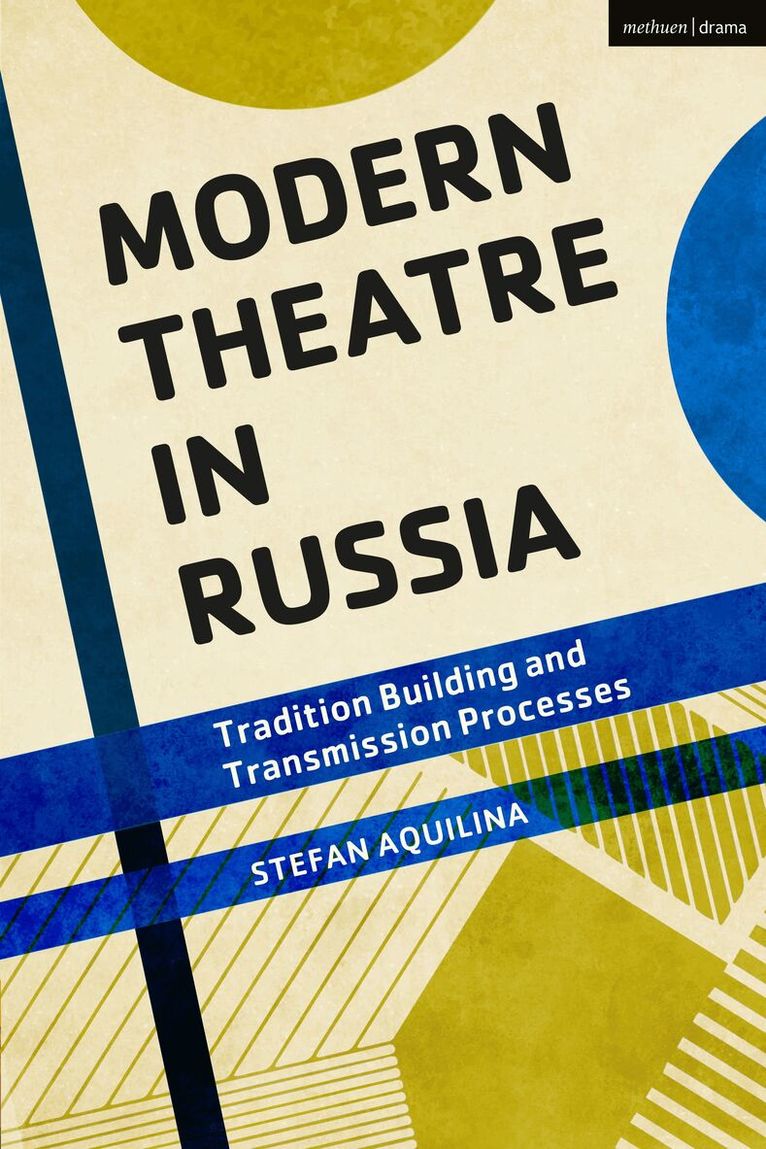
What did modern theatre in Russia look like and how did it foreground tradition building and transmission processes? The book challenges conventional historiographical approaches by weaving contemporary theories on cultural transmission into its historical narrative. It argues that processes of transmission – training spaces, acting manuals, photographic evidence, newspaper reports, international networking, informal encounters, cultural memories – contribute to the formation and consolidation of theatre traditions. Through English translations of rare Russian sources, the book expounds on:*side-lined material on Stanislavsky, including his relationship with German actor Ludwig Barnay, use of improvisation at the First Studio, and rehearsal practices for Artists and Admirers (1933);*Valentin Smyshlaev’s acting manual The Technique to Process Stage Performance and the creation of hybrid practices;*proletarian theatre as an amateur-professional combination and force in the transformation of everyday life, as seen in the Proletkult’s volume Art at the Workers’ Clubs; *Meyerhold’s Borodin Studio as an early example of Practice as Research, his European tour of 1930, and international persona as depicted in newspapers published in the West; and*Asja Lacis’s work with children, which contributes to current efforts to address the gender imbalance that is often characteristic of modernism.This historical-theoretical investigation is combined with practical exercises that provide a more experiential understanding of the modern performance realities involved. In this way, the book speaks not only to theatre scholars and historians, but also to students and practitioners engaged in practical work.
1 520 kr
Skickas inom 10-15 vardagar
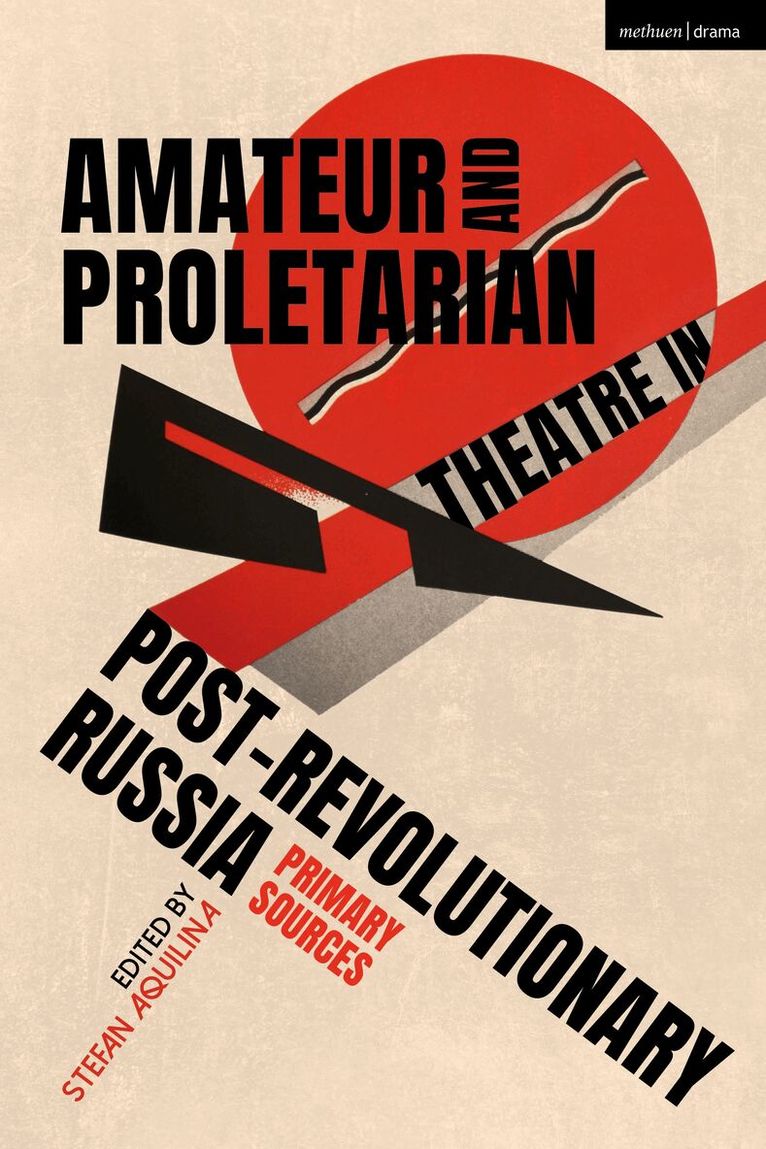
This is the first collection of primary sources that addresses the amateur theatre produced by the workers in the first decade after the Russian Revolution. Newly translated from the Russian, the essays capture both theoretical articulations on the scene – by luminaries such as Alexander Bogdanov, Platon Kerzhentsev, Valerian Pletnev, Alexander Mgebrov and Valentin Smyshliaev – and the more fleeting descriptions and first-hand accounts of the productions staged, accounts and voices which are typically harder to capture.The essays tell a story of unabashed optimism in the creativity of the working classes. They speak of the use of theatre to carve a public and political role in the construction of a new world. The sources, however, also exhibit the flipside of the scene, or the sombre difficulties faced by the amateur actors and the incessant calls to raise standards through professional help. The narrative developed is that of an amateur theatre which began as an autonomous and heterogeneous activity but which by the mid-to-late 1920s was transformed into a regulated practice and a space for cultural programming.The collection makes an important contribution to our understanding of modern theatre: scholarship conventionally tackles the canonical names from the professional world but gives little attention to the more down-to-earth forms of performance taking place in factories, clubs and amateur circles. An introductory essay also highlights the range and significance of the collection and draws links between the essays.
420 kr
Skickas inom 10-15 vardagar
This is the first collection of primary sources that addresses the amateur theatre produced by the workers in the first decade after the Russian Revolution. Newly translated from the Russian, the essays capture both theoretical articulations on the scene – by luminaries such as Alexander Bogdanov, Platon Kerzhentsev, Valerian Pletnev, Alexander Mgebrov and Valentin Smyshliaev – and the more fleeting descriptions and first-hand accounts of the productions staged, accounts and voices which are typically harder to capture.The essays tell a story of unabashed optimism in the creativity of the working classes. They speak of the use of theatre to carve a public and political role in the construction of a new world. The sources, however, also exhibit the flipside of the scene, or the sombre difficulties faced by the amateur actors and the incessant calls to raise standards through professional help. The narrative developed is that of an amateur theatre which began as an autonomous and heterogeneous activity but which by the mid-to-late 1920s was transformed into a regulated practice and a space for cultural programming.The collection makes an important contribution to our understanding of modern theatre: scholarship conventionally tackles the canonical names from the professional world but gives little attention to the more down-to-earth forms of performance taking place in factories, clubs and amateur circles. An introductory essay also highlights the range and significance of the collection and draws links between the essays.
447 kr
Skickas inom 10-15 vardagar
What did modern theatre in Russia look like and how did it foreground tradition building and transmission processes? The book challenges conventional historiographical approaches by weaving contemporary theories on cultural transmission into its historical narrative. It argues that processes of transmission – training spaces, acting manuals, photographic evidence, newspaper reports, international networking, informal encounters, cultural memories – contribute to the formation and consolidation of theatre traditions. Through English translations of rare Russian sources, the book expounds on:*side-lined material on Stanislavsky, including his relationship with German actor Ludwig Barnay, use of improvisation at the First Studio, and rehearsal practices for Artists and Admirers (1933);*Valentin Smyshlaev’s acting manual The Technique to Process Stage Performance and the creation of hybrid practices;*proletarian theatre as an amateur-professional combination and force in the transformation of everyday life, as seen in the Proletkult’s volume Art at the Workers’ Clubs; *Meyerhold’s Borodin Studio as an early example of Practice as Research, his European tour of 1930, and international persona as depicted in newspapers published in the West; and*Asja Lacis’s work with children, which contributes to current efforts to address the gender imbalance that is often characteristic of modernism.This historical-theoretical investigation is combined with practical exercises that provide a more experiential understanding of the modern performance realities involved. In this way, the book speaks not only to theatre scholars and historians, but also to students and practitioners engaged in practical work.
1 398 kr
Kommande
Using an autoethnographic approach, this book offers practical strategies that help scholars perform their roles as academics.With academic formation at its foundational core, the book presents practical strategies aimed at facilitating academic performance, particularly in the areas of research-informed teaching, interdisciplinarity and collaboration, community engagement and the development of an international academic profile. The view on academia that emerges from the book is a holistic and integrated one, with teaching often adopted as the locus where pedagogy connects with research and outreach. Performing Academia treats the various facets of academic performance not in isolation, but as elements that support and enable each other. While the case studies presented are rooted in theatre and performance, with a focus on modern theatre given the author’s publication background, the emerging concerns are relevant to a much broader audience engaged in higher education.The book begins as a reflection on the author’s own university career, primarily revolving around 15 years of experience at the University of Malta and consistent engagement with research methodologies, reflective teaching, networking, internationalization and the duties associated with admin and senior management roles. Building on these reflections, the book supports early career researchers and academics in the initial stages of their career who might be seeking guidance to navigate, or perform, their roles in academia. Its narratives are also of interest to more seasoned academics looking to revitalize some aspect of their work.
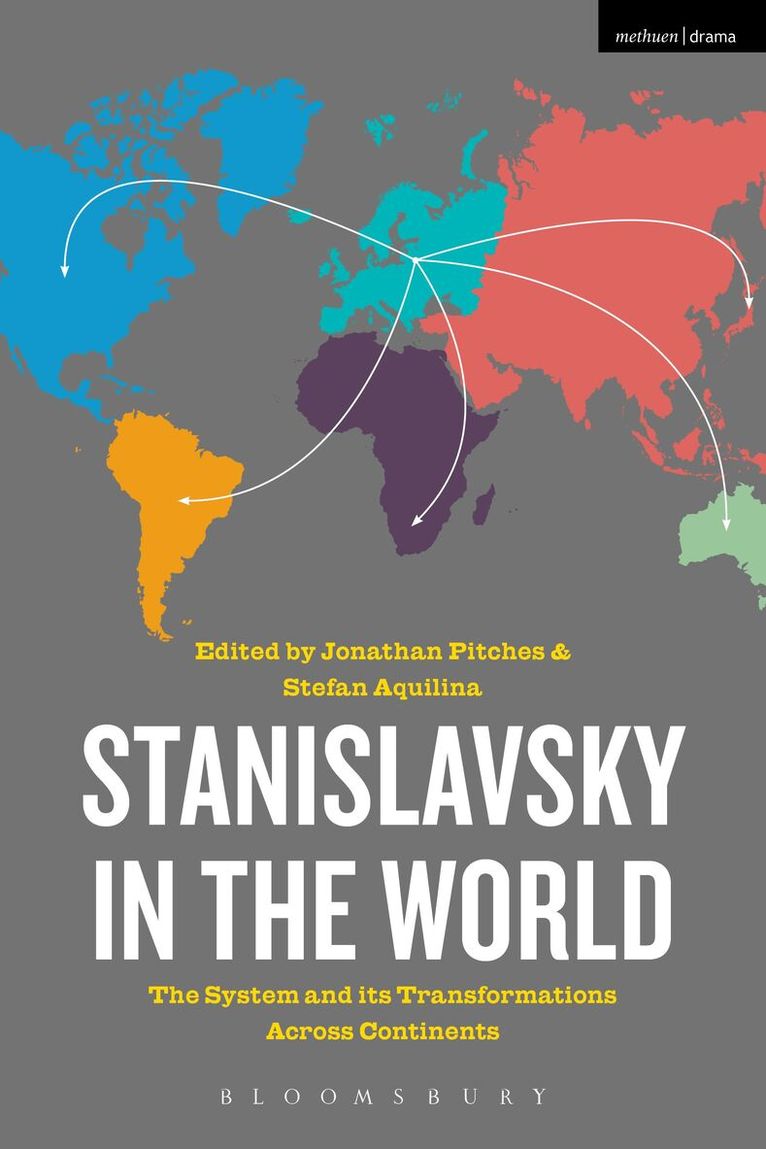
Stanislavsky in the World
The System and its Transformations Across Continents
Inbunden, Engelska, 2017
1 520 kr
Skickas inom 10-15 vardagar
Stanislavsky in the World is an ambitious and ground-breaking work charting a fascinating story of the global dissemination and transformation of Stanislavsky’s practices. Case studies written by local experts, historians and practitioners are brought together to introduce the reader to new routes of Stanislavskian transmission across the continents of Europe, Asia, Africa, Australasia and South (Latin) America. Such a diverse set of stories moves radically beyond linear understandings of transmission to embrace questions of transformation, translation, hybridisation, appropriation and resistance. This important work not only makes a significant contribution to Stanislavsky studies but also to recent research on theatre and interculturalism, theatre and globalisation, theatre and (post)colonialism and to the wider critical turn in performer training historiographies. This is a unique examination of Stanislavsky’s work presenting a richly diverse range of examples and an international perspective on Stanislavsky’s impact that has never been attempted before.
447 kr
Skickas inom 10-15 vardagar
Stanislavsky in the World is an ambitious and ground-breaking work charting a fascinating story of the global dissemination and transformation of Stanislavsky’s practices. Case studies written by local experts, historians and practitioners are brought together to introduce the reader to new routes of Stanislavskian transmission across the continents of Europe, Asia, Africa, Australasia and South (Latin) America. Such a diverse set of stories moves radically beyond linear understandings of transmission to embrace questions of transformation, translation, hybridisation, appropriation and resistance. This important work not only makes a significant contribution to Stanislavsky studies but also to recent research on theatre and interculturalism, theatre and globalisation, theatre and (post)colonialism and to the wider critical turn in performer training historiographies. This is a unique examination of Stanislavsky’s work presenting a richly diverse range of examples and an international perspective on Stanislavsky’s impact that has never been attempted before.
421 kr
Skickas inom 10-15 vardagar
Stanislavsky’s Use of Improvisation is the first work that brings together material across Stanislavsky’s entire career to survey his use of improvisation. Beyond that, however, Stanislavsky’s use of improvisation was a dynamic and expanded one that answered a range of work challenges.