Stefania Stellacci - Böcker
Visar alla böcker från författaren Stefania Stellacci. Handla med fri frakt och snabb leverans.
3 produkter
3 produkter
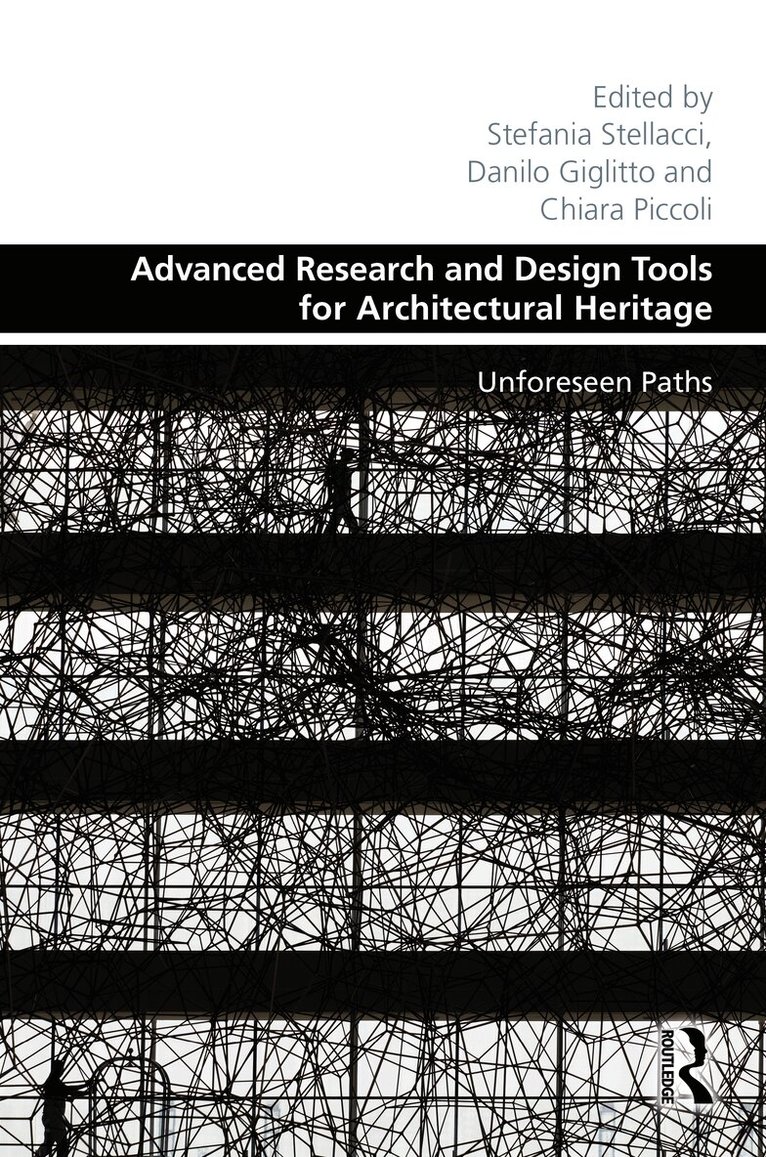
Advanced Research and Design Tools for Architectural Heritage
Unforeseen Paths
Inbunden, Engelska, 2024
2 160 kr
Skickas inom 10-15 vardagar
Advanced Research and Design Tools for Architectural Heritage: Unforeseen Paths rethinks how to analyse, preserve, and adapt Architectural Heritage and its surroundings along unforeseen paths using a broad spectrum of advanced research and design tools. By delving into conceptual foundations and recent applications, it transcends disciplinary boundaries and leverages advanced design tools, such as space syntax, natural language processing, advanced photogrammetry, heritage building information modelling, and virtual reality.This book offers a comprehensive collection of collaborative research studies by a team of scholars with diverse perspectives and digital expertise from long-term projects. Encompassing case studies and recent academic experiences, the volume explores notable heritage sites in Europe, Asia, and Africa. Readers are afforded a nuanced understanding of integrated tools through a forward-looking approach. By addressing critical heritage challenges, the book contributes to reshaping architecture discourse and practice.The chapters explore the integration of advanced methodologies to address emerging societal concerns, making the book a valuable resource for architecture, archaeology, urban planning, catering to professors, trainers, and students. Additionally, its relevance extends to practitioners interested in cultural studies, urban policies, and data science, including archivists, representatives from public governmental authorities, and policy stakeholders.
695 kr
Kommande
Advanced Research and Design Tools for Architectural Heritage: Unforeseen Paths rethinks how to analyse, preserve, and adapt Architectural Heritage and its surroundings along unforeseen paths using a broad spectrum of advanced research and design tools. By delving into conceptual foundations and recent applications, it transcends disciplinary boundaries and leverages advanced design tools, such as space syntax, natural language processing, advanced photogrammetry, heritage building information modelling, and virtual reality.This book offers a comprehensive collection of collaborative research studies by a team of scholars with diverse perspectives and digital expertise from long-term projects. Encompassing case studies and recent academic experiences, the volume explores notable heritage sites in Europe, Asia, and Africa. Readers are afforded a nuanced understanding of integrated tools through a forward-looking approach. By addressing critical heritage challenges, the book contributes to reshaping architecture discourse and practice.The chapters explore the integration of advanced methodologies to address emerging societal concerns, making the book a valuable resource for architecture, archaeology, urban planning, catering to professors, trainers, and students. Additionally, its relevance extends to practitioners interested in cultural studies, urban policies, and data science, including archivists, representatives from public governmental authorities, and policy stakeholders.
1 795 kr
Skickas inom 10-15 vardagar
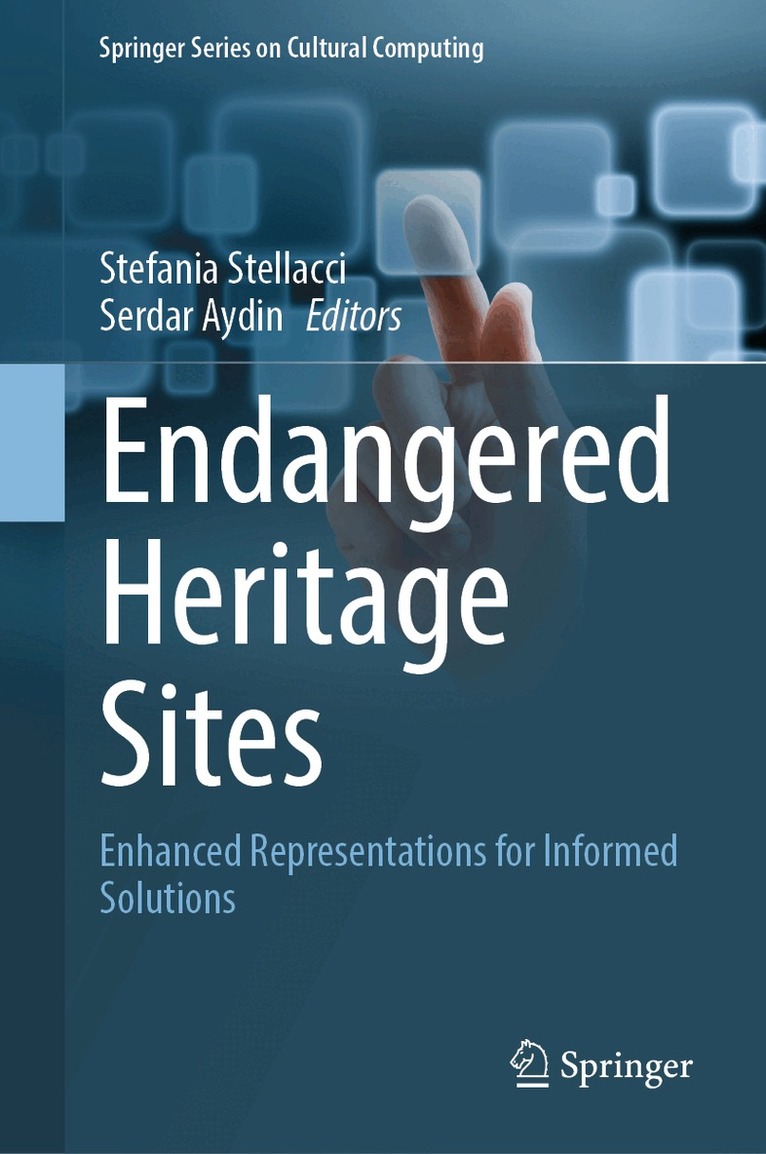
This book provides a thorough exploration of how heritage representation has evolved in the digital age, highlighting connections between diverse informed solutions for preserving and interpreting heritage knowledge. It provides a holistic overview of advanced surveying and visualization tools essential for decoding and analyzing cultural heritage data. Techniques such as remote sensing, heritage building information modeling (HBIM), knowledge graphs, and game-based learning can unveil the complex layers inherent in endangered heritage sites. Beyond these tools, the book examines policy perspectives that require critical review and collective efforts. A key focus of the contributions is the revolutionary role of the smart heritage information base as a new form of knowledge and practice. Enriched representations and integrated analyses have revolutionized heritage practices, moving beyond the traditional eidotypes that were prevalent until the first decade of the 21st century. The diverse array of the collected contributions in this book highlights a cultural and technical shift that represents a significant methodological and epistemological progress in the fields of digital humanities and heritage management. With insightful analyses of heritage sites, especially archaeological remains, through real-world case studies in Spain, Portugal, Turkey, Pakistan, and Israel, this book delves into the challenges posed by human-made induced disasters and natural hazards, offering valuable insights into safeguarding our cultural heritage. These case studies not only show the challenges local sites and communities face now and, in the future, but also enrich the discourse on how to protect our shared cultural heritage together. The advanced mapping and analysis of these case studies reveal the importance to unveil hidden narratives, protect collective values, and reshape perspectives on cultural heritage in the digital age. The target audience includes heritage practitioners, architects, archaeologists, urban planners, data scientists, researchers, academics, teaching institutions, and architecture students. Its international scope is reflected in contributions and editors from diverse locations. The thematic breadth appeals to a global readership interested in different theoretical and methodological approaches, complemented by a range of case studies across different cultural, economic, and environmental contexts and future scenarios.