Stefanie Bock – författare
Visar alla böcker från författaren Stefanie Bock. Handla med fri frakt och snabb leverans.
7 produkter
7 produkter
Inbunden, Engelska, 2026
1 553 kr
Kommande
The first volume of a three volume series which presents a set of common foundational concepts in criminal law and criminal justice. The series focuses on a comparison between Anglo-American and German concepts, doctrines, principles and structures.Criminal law and criminal justice are becoming increasingly globalised. There is a growing desire to develop common approaches to common problems and to learn from the diversity of current practice in different countries. This development has been reinforced by the internationalisation of criminal justice in international and mixed criminal tribunals. However, attempts at trans-jurisdictional discourse are often hampered by mutual misunderstandings. Professionals and academics engaged in comparative criminal law sometimes use the same terms with different meanings or different terms which mean the same thing.If we are to overcome these obstacles, we need to engage in a multijurisdictional and comparative conceptual analysis of a kind not provided by previous comparative projects, which typically focus on specific topics or issues. This volume looks for a set of common foundational concepts that could provide the basis for productive trans-jurisdictional exchanges. It provides insight on key topics such as the offences against property, liability for attempts, cyber-crime, the presumption of innocence, the role of victims, and wrongful convictions. It includes contributions from distinguished scholars with international reputations, from a diversity of backgrounds and including theoretical and normative as well as empirical focuses.
E-bok
PDF, Engelska, 2006221 kr
Läs direkt efter köp
Seminar paper from the year 2003 in the subject English Language and Literature Studies - Linguistics, grade: 1, Justus-Liebig-University Giessen, language: English, abstract: IntroductionApparently, the ancient legacy of the building of Babel is finally overcome: the English language has reached a spread all over the world unprecedented in history. People coming from such diverse backgrounds as Europe, America or Africa are now linked by one language: English. When following statistical numbers that estimate the total number of English speakers to exceed 1bn, it is not surprising that English is now agreed to be the lingua franca (cf. McArthur 2001: 1). On the surface, this achievement might be regarded as the fulfilment of a long aspired goal: the dream of universal intelligibility. Yet it brings with it certain conflicts and complications: English, now having reached cultures totally different from those that belong to the up to now accepted standards of English, was thus challenged to become an appropriate means for speakers to communicate within contexts the English language never was used in before. As a result, speakers from countries such as India, Kenya or Nigeria have moulded the English language and have adapted it to their own individual context - a development that might be a hindrance to the vision of English as a link language worldwide. Unfortunately, it is not long ago that many of these New Englishes were considered to be provincial, backward and incorrect (cf. Gorlach 1995: 11). Such judgemental views of the issue neither pay attention to the concept of interference the speakers first language has on English in these countries nor to the deviations motivated by acculturation. In the course of this paper the concepts of interference and acculturation as well as the issue of a universal understandable English are to be investigated in terms of one particular variety: Indian English. The study is structured as follows: Firstly, light will be shed on the different backgrounds an English speaker might come from. In order to introduce into the variety of Indian English as a next step, it will give an overview of how English gained roots in India. In addition to that, some of the most productive processes of adapting the English language to India will be illustrated. Finally, a discussion of some of the most important ideas of an International English intends to touch on the problem of worldwide intelligibility in connection with the many Englishes. For reasons such as the colonial past of India comparisons of Indian English to any standard variety of English will be reduced to the British standard...
Häftad, Tyska, 2010
826 kr
Skickas inom 3-6 vardagar
Del 14 - Grundlagen des Strafrechts
Potentiale der Normentheorie im Prozess der strafrechtlichen Internationalisierung
Häftad, Tyska, 2025
729 kr
Skickas inom 3-6 vardagar
Inbunden, Engelska, 2021
1 602 kr
Skickas inom 10-15 vardagar
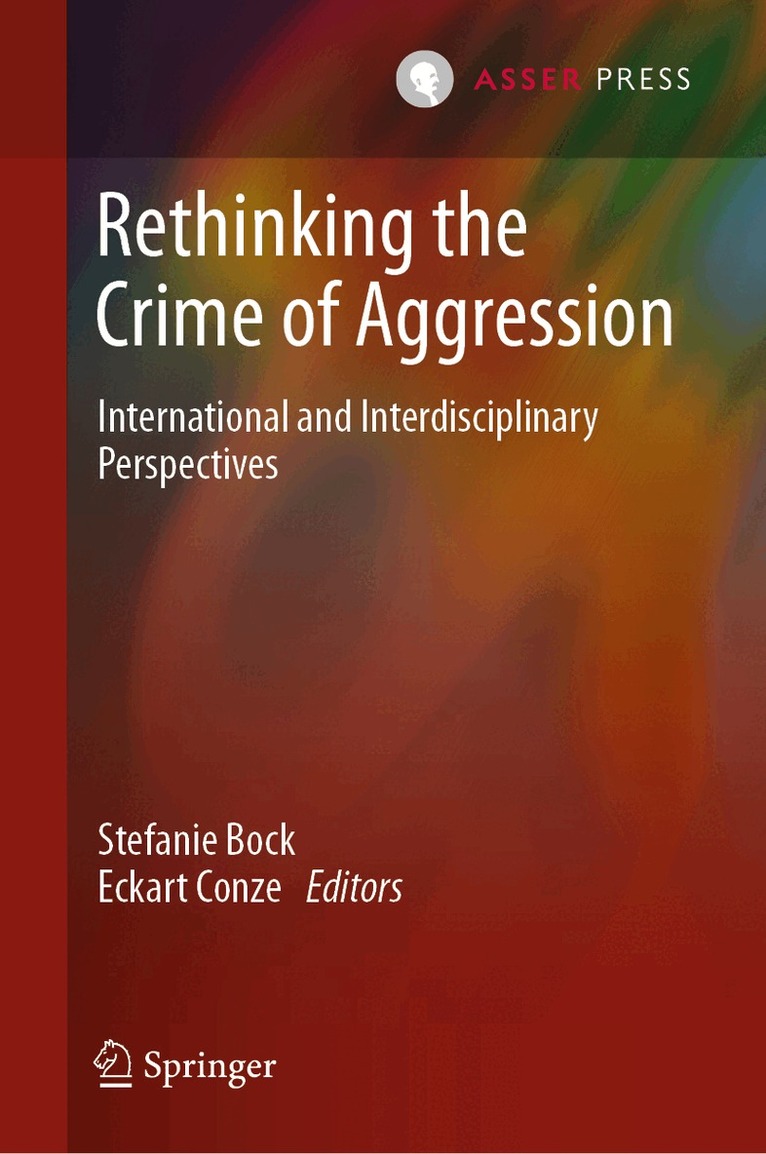
This book presents a selection of revised and updated papers presented in September 2018 at the International Conference ‘Rethinking the Crime of Aggression: International and Interdisciplinary Perspectives’, which was held in Marburg, Germany, and hosted by the International Research and Documentation Centre for War Crimes Trials (ICWC). In light of the activation of the jurisdiction of the International Criminal Court concerning the crime of aggression, international experts from various disciplines such as law, history, the social sciences, psychology and economics came together to enhance the understanding of this complex and challenging matter and thereby opened a cross-disciplinary dialogue regarding aggressive war and the crime of aggression: a dialogue that not only addresses the historical genesis of the current situation, the content of the new aggression provisions, their implementation in practice and their possible regulatory effects, but also instigates perspectives for investigating future developments and issues. Stefanie Bock is Professor of Criminal Law, Criminal Procedure, International Criminal Law and Comparative Law in the Department of Law at the Philipps University of Marburg in Germany and Co-Director of the International Research and Documentation Centre for War Crimes Trials. Eckart Conze is Professor of Modern and Contemporary History in the Department of History at the Philipps University of Marburg in Germany and Co-Director of the International Research and Documentation Centre for War Crimes Trials.
E-bok
Engelska, 20211 960 kr
Läs direkt efter köp
This book presents a selection of revised and updated papers presented in September 2018 at the International Conference ‘Rethinking the Crime of Aggression: International and Interdisciplinary Perspectives’, which was held in Marburg, Germany, and hosted by the International Research and Documentation Centre for War Crimes Trials (ICWC). In light of the activation of the jurisdiction of the International Criminal Court concerning the crime of aggression, international experts from various disciplines such as law, history, the social sciences, psychology and economics came together to enhance the understanding of this complex and challenging matter and thereby opened a cross-disciplinary dialogue regarding aggressive war and the crime of aggression: a dialogue that not only addresses the historical genesis of the current situation, the content of the new aggression provisions, their implementation in practice and their possible regulatory effects, but also instigates perspectives for investigating future developments and issues. Stefanie Bock is Professor of Criminal Law, Criminal Procedure, International Criminal Law and Comparative Law in the Department of Law at the Philipps University of Marburg in Germany and Co-Director of the International Research and Documentation Centre for War Crimes Trials. Eckart Conze is Professor of Modern and Contemporary History in the Department of History at the Philipps University of Marburg in Germany and Co-Director of the International Research and Documentation Centre for War Crimes Trials.
Häftad, Engelska, 2022
1 602 kr
Skickas inom 10-15 vardagar
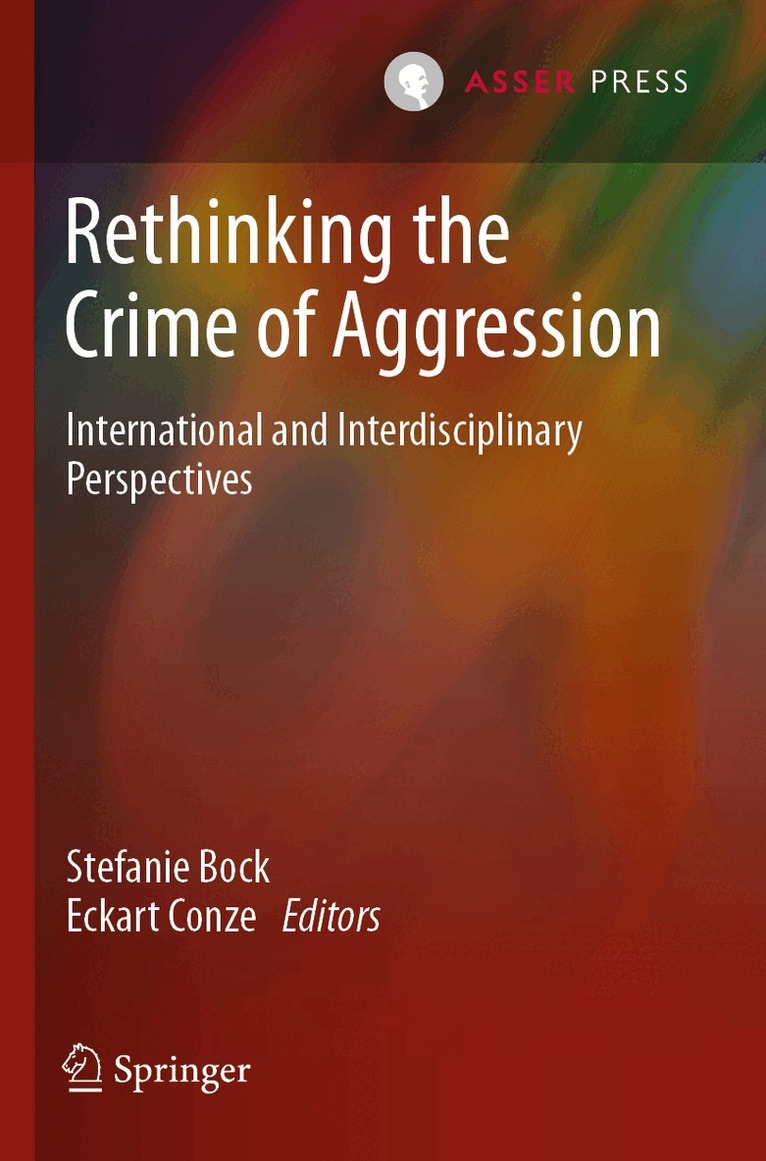
This book presents a selection of revised and updated papers presented in September 2018 at the International Conference ‘Rethinking the Crime of Aggression: International and Interdisciplinary Perspectives’, which was held in Marburg, Germany, and hosted by the International Research and Documentation Centre for War Crimes Trials (ICWC). In light of the activation of the jurisdiction of the International Criminal Court concerning the crime of aggression, international experts from various disciplines such as law, history, the social sciences, psychology and economics came together to enhance the understanding of this complex and challenging matter and thereby opened a cross-disciplinary dialogue regarding aggressive war and the crime of aggression: a dialogue that not only addresses the historical genesis of the current situation, the content of the new aggression provisions, their implementation in practice and their possible regulatory effects, but also instigates perspectives for investigating future developments and issues. Stefanie Bock is Professor of Criminal Law, Criminal Procedure, International Criminal Law and Comparative Law in the Department of Law at the Philipps University of Marburg in Germany and Co-Director of the International Research and Documentation Centre for War Crimes Trials. Eckart Conze is Professor of Modern and Contemporary History in the Department of History at the Philipps University of Marburg in Germany and Co-Director of the International Research and Documentation Centre for War Crimes Trials.