Stefanie von Hlatky – författare
1 228 kr
Läs direkt efter köp
408 kr
Skickas inom 5-8 vardagar
301 kr
Läs direkt efter köp
301 kr
Läs direkt efter köp
284 kr
Skickas inom 5-8 vardagar
1 999 kr
Skickas inom 3-6 vardagar
Total Defence Forces in the Twenty-First Century
1 543 kr
Skickas inom 5-8 vardagar
Total Defence Forces in the Twenty-First Century
487 kr
Skickas inom 5-8 vardagar
457 kr
Läs direkt efter köp
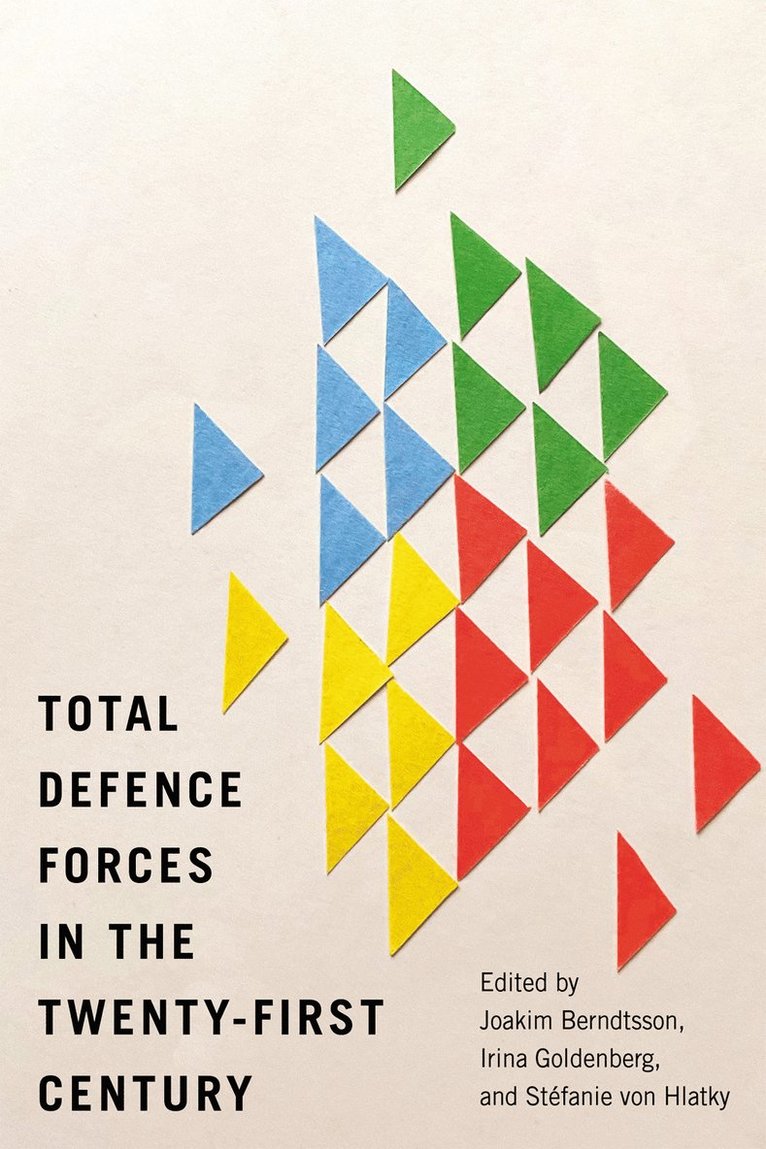
Total defence, as a concept, combines and extends military and civil defence: in a state of war or emergency, all social institutions mobilize to defend the state. Total defence forces, led by a diverse workforce of defence and security professionals, are critical to both national defence and international security goals.
Total Defence Forces in the Twenty-First Century looks at the various groups that make up this workforce: members of the military’s regular force, reservists, defence civil servants, and contractors working for private military and security companies. When civilian staff and military personnel work towards a common goal, their distinct professional cultures and identities can make integration challenging. Despite the often high levels of partnership, underlying differences affect the quality of the collaboration and, ultimately, organizational and operational effectiveness. Defence ministries around the world are increasingly recognizing the importance of optimizing the ways in which they employ and integrate civilian and military personnel.
This volume focuses on a critical question: what are the main challenges to workforce integration and collaboration, and how can such challenges be overcome to deliver the full potential of the total defence force? Together, scholars and practitioners provide some answers.
457 kr
Läs direkt efter köp
Total defence, as a concept, combines and extends military and civil defence: in a state of war or emergency, all social institutions mobilize to defend the state. Total defence forces, led by a diverse workforce of defence and security professionals, are critical to both national defence and international security goals.
Total Defence Forces in the Twenty-First Century looks at the various groups that make up this workforce: members of the military’s regular force, reservists, defence civil servants, and contractors working for private military and security companies. When civilian staff and military personnel work towards a common goal, their distinct professional cultures and identities can make integration challenging. Despite the often high levels of partnership, underlying differences affect the quality of the collaboration and, ultimately, organizational and operational effectiveness. Defence ministries around the world are increasingly recognizing the importance of optimizing the ways in which they employ and integrate civilian and military personnel.
This volume focuses on a critical question: what are the main challenges to workforce integration and collaboration, and how can such challenges be overcome to deliver the full potential of the total defence force? Together, scholars and practitioners provide some answers.
Transhumanizing War
Performance Enhancement and the Implications for Policy, Society, and the Soldier
509 kr
Skickas inom 10-15 vardagar
Transhumanizing War
Performance Enhancement and the Implications for Policy, Society, and the Soldier
414 kr
Läs direkt efter köp
Transhumanizing War
Performance Enhancement and the Implications for Policy, Society, and the Soldier
414 kr
Läs direkt efter köp
319 kr
Läs direkt efter köp
319 kr
Läs direkt efter köp
1 858 kr
Skickas inom 7-10 vardagar
624 kr
Skickas inom 7-10 vardagar
760 kr
Läs direkt efter köp
Are NATO’s mutual security commitments strong enough today to deter all adversaries? Is the nuclear umbrella as credible as it was during the Cold War? Backed by the full range of US and allied military capabilities, NATO’s mutual defense treaty has been enormously successful, but today’s commitments are strained by military budget cuts and antinuclear sentiment. The United States has also shifted its focus away from European security during the wars in Afghanistan and Iraq and more recently with the Asia rebalance. Will a resurgent Russia change this?
The Future of Extended Deterrence brings together experts and scholars from the policy and academic worlds to provide a theoretically rich and detailed analysis of post–Cold War nuclear weapons policy, nuclear deterrence, alliance commitments, nonproliferation, and missile defense in NATO but with implications far beyond. The contributors analyze not only American policy and ideas but also the ways NATO members interpret their own continued political and strategic role in the alliance.
In-depth and multifaceted, The Future of Extended Deterrence is an essential resource for policy practitioners and scholars of nuclear deterrence, arms control, missile defense, and the NATO alliance.
204 kr
Skickas inom 5-8 vardagar