Stefano Corbo – författare
Visar alla böcker från författaren Stefano Corbo. Handla med fri frakt och snabb leverans.
7 produkter
7 produkter
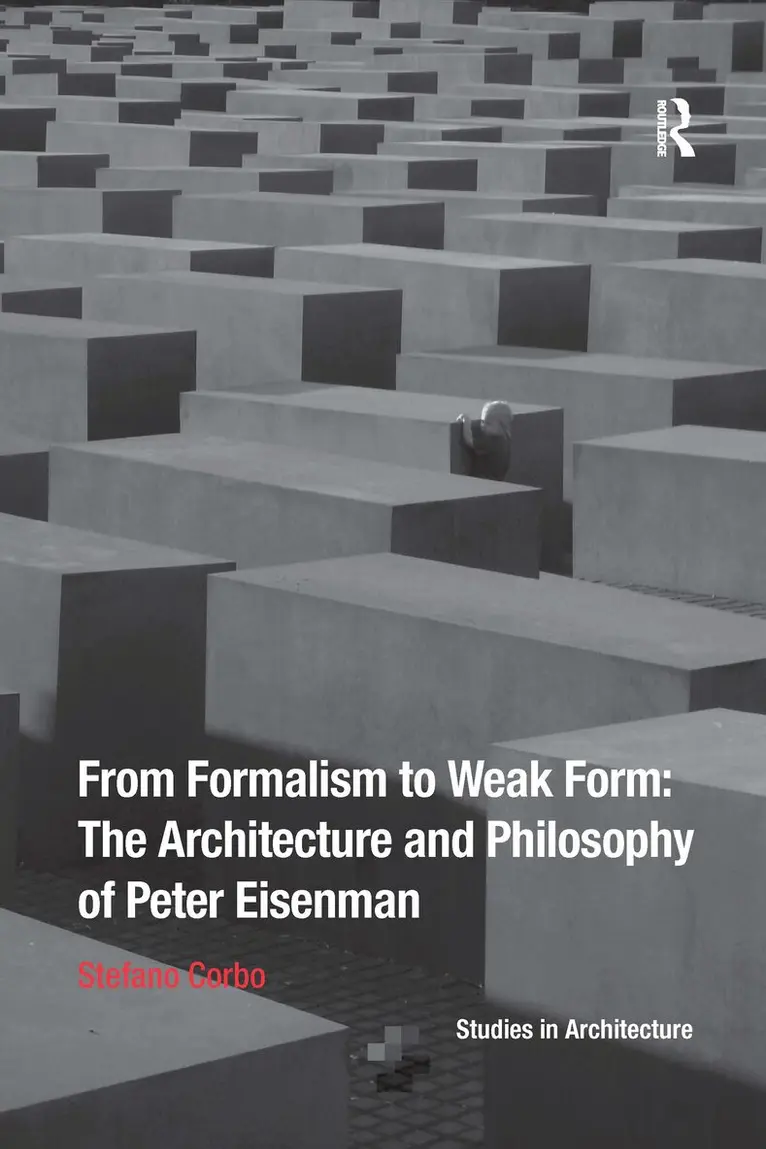
From Formalism to Weak Form: The Architecture and Philosophy of Peter Eisenman
Häftad, Engelska, 2020
635 kr
Skickas inom 10-15 vardagar
Peter Eisenman is one of the most controversial protagonists of the architectural scene, who is known as much for his theoretical essays as he is for his architecture. While much has been written about his built works and his philosophies, most books focus on one or the other aspect. By structuring this volume around the concept of form, Stefano Corbo links together Eisenman’s architecture with his theory. From Formalism to Weak Form: The Architecture and Philosophy of Peter Eisenman argues that form is the sphere of mediation between our body, our inner world and the exterior world and, as such, it enables connections to be made between philosophy and architecture. From the start of his career on, Eisenman has been deeply interested in the problem of form in architecture and has constantly challenged the classical concept of it. For him, form is not simply a cognitive tool that determines a physical structure, which discriminates all that is active from what is passive, what is inside from what is outside. He has always tried to connect his own work with the cultural manifestations of the time: firstly under the influence of Colin Rowe and his formalist studies; secondly, by re-interpreting Chomsky’s linguistic theories; in the 80’s, by collaborating with Derrida and his de-constructivist approach; more recently,by discovering Henri Bergson's idea of Time. These different moments underline different phases, different projects, different programmatic manifestos; and above all, an evolving notion of form. Taking a multi-disciplinary approach based on the intersections between architecture and philosophy, this book investigates all these definitions and, in doing so, provides new insights into and a deeper understanding of the complexity of Eisenman’s work.
296 kr
Skickas inom 3-6 vardagar
An architect digs into the physical and symbolic intrigue of "underworld" structures!
2 040 kr
Skickas inom 10-15 vardagar
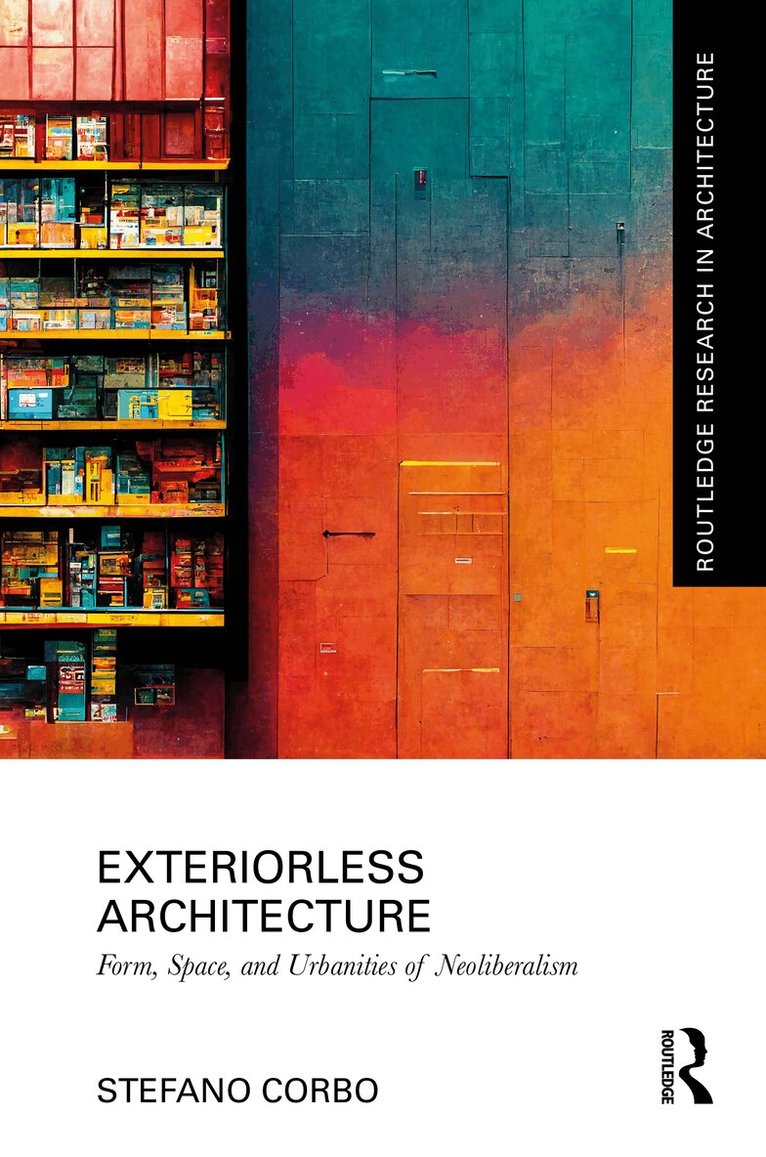
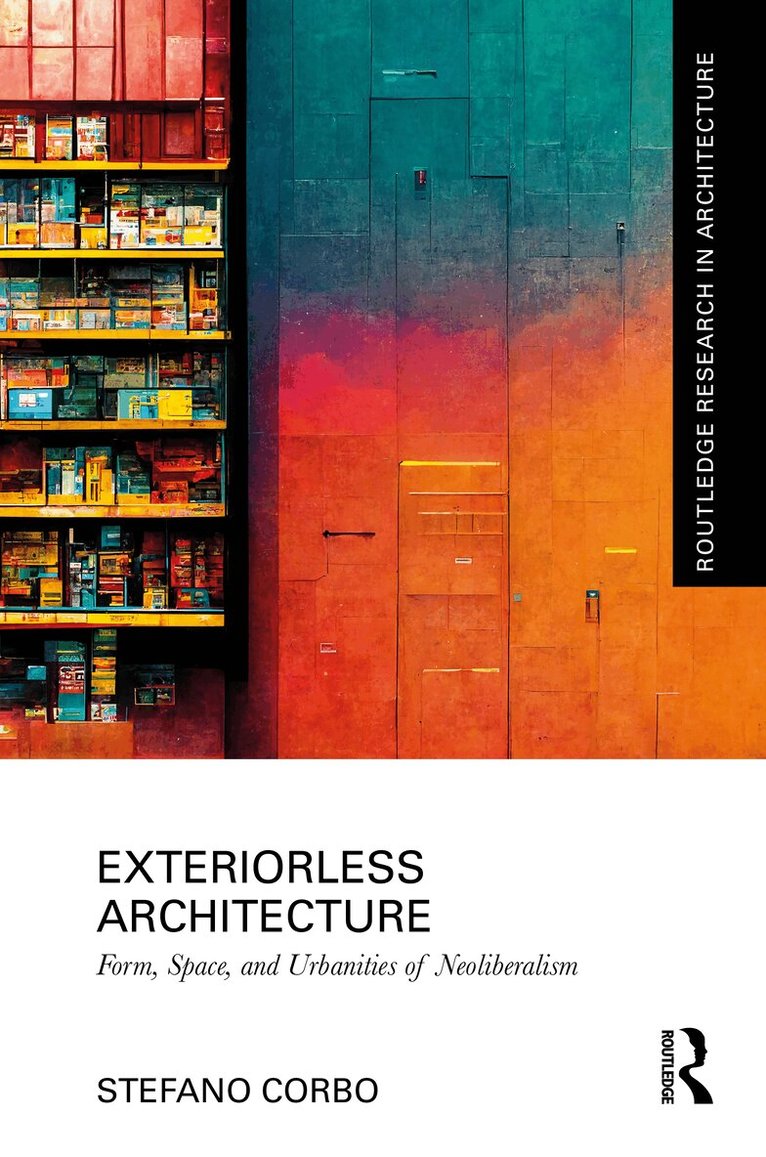
The current phase of capitalist development manifests itself through a very diverse range of spatial byproducts: data centers, warehouses, container terminals, logistics parks, and many others. Generally considered as mediocre and banal examples that sit outside of pre-established disciplinary canons, these architectural episodes are extremely relevant. They are relevant not for their aesthetic or historic qualities but for what they represent – for the system of values these spaces embed. They express specific power relations, exacerbate issues of labor, and generate dramatic processes of subjectivity. Most importantly, these architectures, despite their formal and typological heterogeneity, belong to a common paradigm: the EXTERIORLESS.How can an architecture of the EXTERIORLESS be defined? How does it differentiate from examples and manifestations of the past? How do notions of legibility, form versus function, typological articulation come into play? In situating the spatialities of contemporary capitalism within the larger debate on Anthropocene, Post-Anthropocene, and Capitalocene, the book attempts to answer those questions by delineating three main characteristics for an architecture of the EXTERIORLESS: its physical and symbolic role as interface; its ambiguous condition of being at the same time local and global, isolated and connected, compressed and expanded; and, lastly, its contribution to new forms of urbanity in absence of the traditional city. These three defining aspects constitute the main sections of the book. Each section includes two chapters covering a wide spectrum of themes and examples. In its tripartite organization, the book describes the influence that the experimental architecture of the 1960s has exerted on late-capitalist spatial byproducts; it analyzes the impact of logistics on the redesign of the territory; and it introduces the radical processes of urban transformation generated by the EXTERIORLESS.
596 kr
Skickas inom 10-15 vardagar
The current phase of capitalist development manifests itself through a very diverse range of spatial byproducts: data centers, warehouses, container terminals, logistics parks, and many others. Generally considered as mediocre and banal examples that sit outside of pre-established disciplinary canons, these architectural episodes are extremely relevant. They are relevant not for their aesthetic or historic qualities but for what they represent – for the system of values these spaces embed. They express specific power relations, exacerbate issues of labor, and generate dramatic processes of subjectivity. Most importantly, these architectures, despite their formal and typological heterogeneity, belong to a common paradigm: the EXTERIORLESS.How can an architecture of the EXTERIORLESS be defined? How does it differentiate from examples and manifestations of the past? How do notions of legibility, form versus function, typological articulation come into play? In situating the spatialities of contemporary capitalism within the larger debate on Anthropocene, Post-Anthropocene, and Capitalocene, the book attempts to answer those questions by delineating three main characteristics for an architecture of the EXTERIORLESS: its physical and symbolic role as interface; its ambiguous condition of being at the same time local and global, isolated and connected, compressed and expanded; and, lastly, its contribution to new forms of urbanity in absence of the traditional city. These three defining aspects constitute the main sections of the book. Each section includes two chapters covering a wide spectrum of themes and examples. In its tripartite organization, the book describes the influence that the experimental architecture of the 1960s has exerted on late-capitalist spatial byproducts; it analyzes the impact of logistics on the redesign of the territory; and it introduces the radical processes of urban transformation generated by the EXTERIORLESS.
From Formalism to Weak Form: The Architecture and Philosophy of Peter Eisenman
Inbunden, Engelska, 2014
2 180 kr
Skickas inom 10-15 vardagar
Peter Eisenman is one of the most controversial protagonists of the architectural scene, who is known as much for his theoretical essays as he is for his architecture. While much has been written about his built works and his philosophies, most books focus on one or the other aspect. By structuring this volume around the concept of form, Stefano Corbo links together Eisenman’s architecture with his theory. From Formalism to Weak Form: The Architecture and Philosophy of Peter Eisenman argues that form is the sphere of mediation between our body, our inner world and the exterior world and, as such, it enables connections to be made between philosophy and architecture. From the start of his career on, Eisenman has been deeply interested in the problem of form in architecture and has constantly challenged the classical concept of it. For him, form is not simply a cognitive tool that determines a physical structure, which discriminates all that is active from what is passive, what is inside from what is outside. He has always tried to connect his own work with the cultural manifestations of the time: firstly under the influence of Colin Rowe and his formalist studies; secondly, by re-interpreting Chomsky’s linguistic theories; in the 80’s, by collaborating with Derrida and his de-constructivist approach; more recently,by discovering Henri Bergson's idea of Time. These different moments underline different phases, different projects, different programmatic manifestos; and above all, an evolving notion of form. Taking a multi-disciplinary approach based on the intersections between architecture and philosophy, this book investigates all these definitions and, in doing so, provides new insights into and a deeper understanding of the complexity of Eisenman’s work.
434 kr
Tillfälligt slut
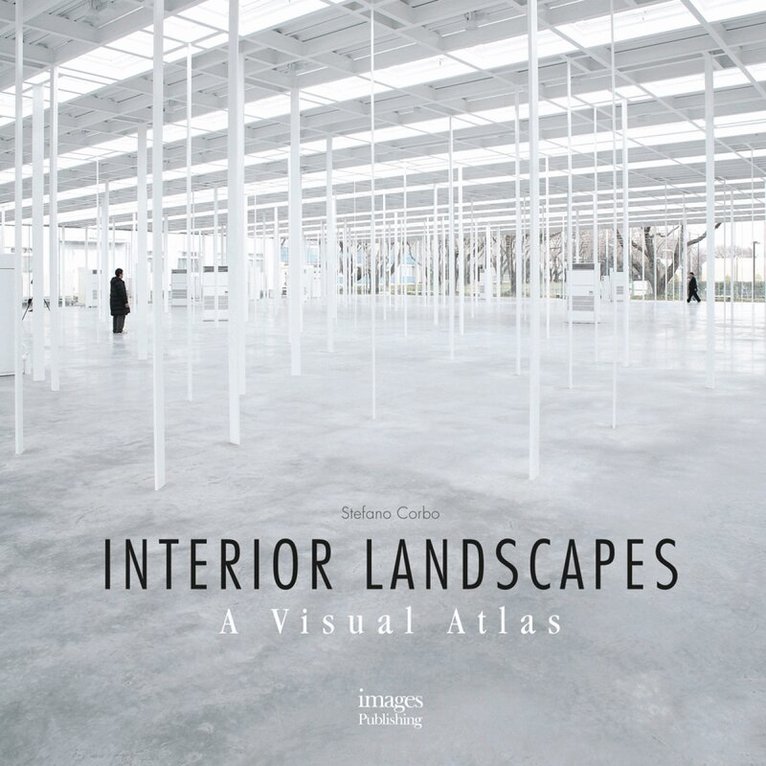
Contemporary architecture is often characterised by the total interpenetration of interior and exterior configurations: the differentiation between these two dialectical poles has become indistinguishable, boundaries blurry and the result of any design process is a hybrid product, based on the superposition of different and heterogeneous layers. The impossibility of separating interior and exterior permits a general reorganisation of some topics internal to the territory of architecture, and also expresses the necessity of a systemic analysis of the most recent episodes. If at first glance this interest for a new kind of dialectics may appear as the most evident epiphenomenon of a wider and recent tendency, under careful examination one can observe that the tension between interior and exterior has always been present in architecture, differently articulated over the centuries, and expressed through several means of representation. Starting from the 18th century, Interior Landscapes will describe the nature of such a relation, in order to unveil those invariant forms, principles or concepts that crossed the History of Architecture, laid hidden underneath the events flowing, and periodically re-emerged to shape contemporary episodes. Separation, inversion, interpenetration, dissolution - all of these categories periodically characterise the interior-exterior dialectics. By borrowing different interpretative elements - drawings, photographs, illustrations - Interior Landscapes is configured as a visual atlas, aimed to demonstrate how, through the contamination of interior and exterior, always-new architectural insights emerge.
483 kr
Kommande
Invisible Labour reveals the hidden work that makes architecture possible. Instead of focusing on finished buildings, the book highlights the often overlooked tasks that keep our built world standing and evolving. Moving across three scales—data, environment, and construction—it uncovers the human effort behind design, from the masons of Brunelleschi’s Dome to the “Harvard Computers” who mapped the stars, and from managed forests to the collaborative making of postwar housing. Through original essays and curated archival material, the book offers a new way to understand design in an age shaped by climate pressures and digital systems. It argues that the future of architecture depends on recognizing, valuing, and caring for the labour—both technical and social—that already sustains the spaces around us. By bringing this unseen work to light, Invisible Labour invites readers to rethink how buildings come to be and what it takes to keep them standing.