Stephan Henzler - Böcker
Visar alla böcker från författaren Stephan Henzler. Handla med fri frakt och snabb leverans.
4 produkter
4 produkter
1 064 kr
Skickas inom 10-15 vardagar
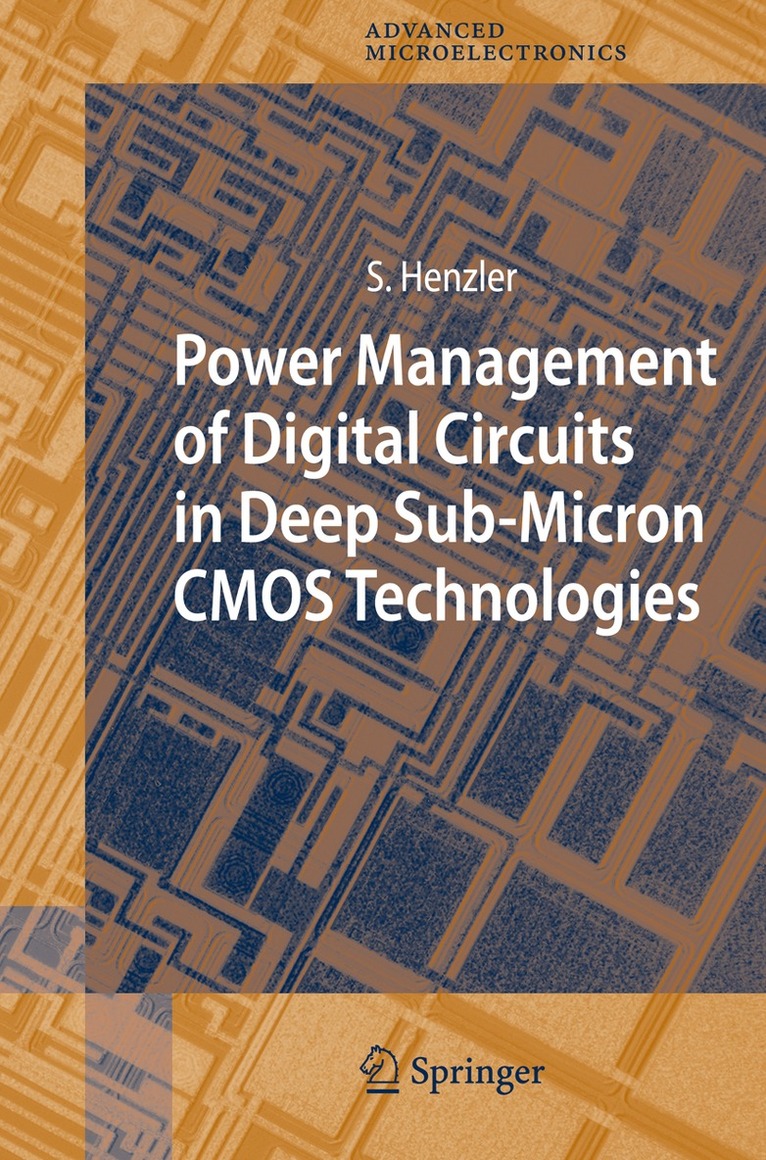
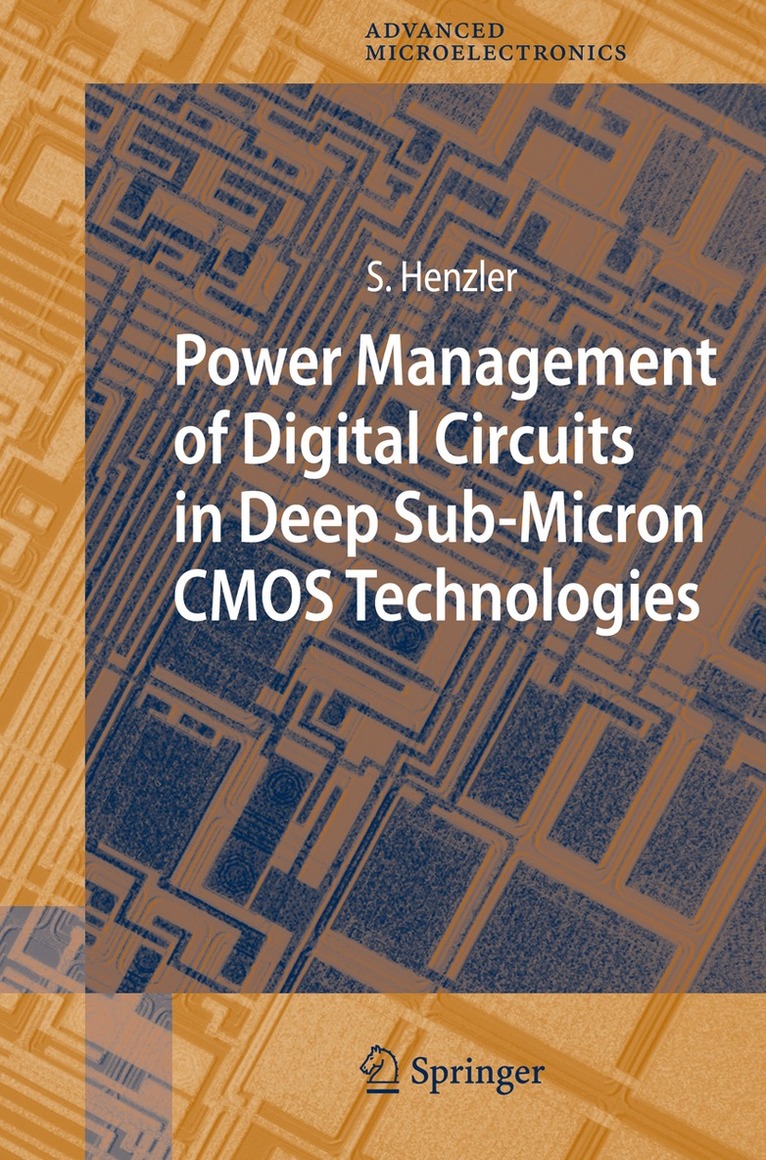
In the deep sub-micron regime, the power consumption has become one of the most important issues for competitive design of digital circuits. Due to dramatically increasing leakage currents, the power consumption does not take advantage of technology scaling as before. State-of-art power reduction techniques like the use of multiple supply and threshold voltages, transistor stack forcing and power gating are discussed with respect to implementation and power saving capability. Focus is given especially on technology dependencies, process variations and technology scaling. Design and implementation issues are discussed with respect to the trade-off between power reduction, performance degradation, and system level constraints. A complete top-down design flow is demonstrated for power gating techniques introducing new design methodologies for the switch sizing task and circuit blocks for data-retention and block activation. The leakage reduction ratio and the minimum power-down time are introduced as figures of merit to describe the power gating technique on system level and give a relation to physical circuit parameters. Power Management of Digital Circuits in Deep Sub-Micron CMOS Technologies mainly deals with circuit design but also addresses the interface between circuit and system level design on the one side and between circuit and physical design on the other side.
1 064 kr
Skickas inom 10-15 vardagar
In the deep sub-micron regime, the power consumption has become one of the most important issues for competitive design of digital circuits. Due to dramatically increasing leakage currents, the power consumption does not take advantage of technology scaling as before. State-of-art power reduction techniques like the use of multiple supply and threshold voltages, transistor stack forcing and power gating are discussed with respect to implementation and power saving capability. Focus is given especially on technology dependencies, process variations and technology scaling. Design and implementation issues are discussed with respect to the trade-off between power reduction, performance degradation, and system level constraints. A complete top-down design flow is demonstrated for power gating techniques introducing new design methodologies for the switch sizing task and circuit blocks for data-retention and block activation. The leakage reduction ratio and the minimum power-down time are introduced as figures of merit to describe the power gating technique on system level and give a relation to physical circuit parameters. Power Management of Digital Circuits in Deep Sub-Micron CMOS Technologies mainly deals with circuit design but also addresses the interface between circuit and system level design on the one side and between circuit and physical design on the other side.
1 578 kr
Skickas inom 10-15 vardagar
Micro-electronics and so integrated circuit design are heavily driven by technology scaling. The main engine of scaling is an increased system performance at reduced manufacturing cost (per system). In most systems digital circuits dominate with respect to die area and functional complexity. Digital building blocks take full - vantage of reduced device geometries in terms of area, power per functionality, and switching speed. On the other hand, analog circuits rely not on the fast transition speed between a few discrete states but fairly on the actual shape of the trans- tor characteristic. Technology scaling continuously degrades these characteristics with respect to analog performance parameters like output resistance or intrinsic gain. Below the 100 nm technology node the design of analog and mixed-signal circuits becomes perceptibly more dif cult. This is particularly true for low supply voltages near to 1V or below. The result is not only an increased design effort but also a growing power consumption. The area shrinks considerably less than p- dicted by the digital scaling factor. Obviously, both effects are contradictory to the original goal of scaling. However, digital circuits become faster, smaller, and less power hungry. The fast switching transitions reduce the susceptibility to noise, e. g. icker noise in the transistors. There are also a few drawbacks like the generation of power supply noise or the lack of power supply rejection.
1 578 kr
Skickas inom 10-15 vardagar
Micro-electronics and so integrated circuit design are heavily driven by technology scaling. The main engine of scaling is an increased system performance at reduced manufacturing cost (per system). In most systems digital circuits dominate with respect to die area and functional complexity. Digital building blocks take full - vantage of reduced device geometries in terms of area, power per functionality, and switching speed. On the other hand, analog circuits rely not on the fast transition speed between a few discrete states but fairly on the actual shape of the trans- tor characteristic. Technology scaling continuously degrades these characteristics with respect to analog performance parameters like output resistance or intrinsic gain. Below the 100 nm technology node the design of analog and mixed-signal circuits becomes perceptibly more dif cult. This is particularly true for low supply voltages near to 1V or below. The result is not only an increased design effort but also a growing power consumption. The area shrinks considerably less than p- dicted by the digital scaling factor. Obviously, both effects are contradictory to the original goal of scaling. However, digital circuits become faster, smaller, and less power hungry. The fast switching transitions reduce the susceptibility to noise, e. g. icker noise in the transistors. There are also a few drawbacks like the generation of power supply noise or the lack of power supply rejection.