
Stephanie O'Rourke – författare
Visar alla böcker från författaren . Handla med fri frakt och snabb leverans.
5 produkter
5 produkter
Inbunden, Engelska, 2025
393 kr
Skickas inom 5-8 vardagar
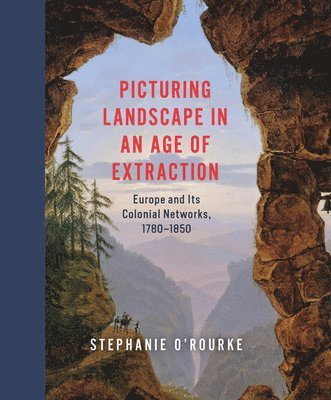
O’Rourke argues that artistic representations played a pivotal role in shaping how people thought about the natural world during the Industrial Revolution. In the late eighteenth and early nineteenth centuries, European artists confronted the emergence of a new way of thinking about and treating the Earth and its resources. Centered on extraction, this new paradigm was characterized by large-scale efforts to transform and monetize the physical environment across the globe. With this book, Stephanie O’Rourke considers such practices, looking at what was at stake in visual representations of the natural world during the first decades of Europe’s industrial revolutions. O’Rourke argues that key developments in the European landscape painting tradition were profoundly shaped by industries including mining and timber harvesting, as well as by interlinked ideas about race, climate, and waste. Focusing on developments in Britain, France, Germany, and across Europe’s colonial networks, she explores how artworks and technical illustrations portrayed landscapes in ways that promoted—or pushed against—the logic of resource extraction.
Häftad, Engelska, 2023
379 kr
Skickas inom 7-10 vardagar
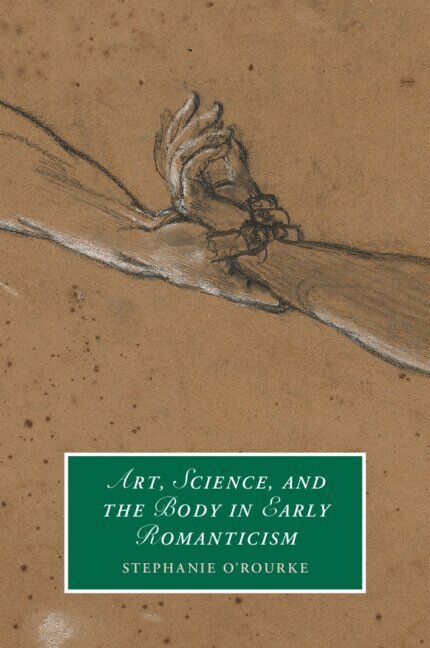
Can we really trust the things our bodies tell us about the world? This work reveals how deeply intertwined cultural practices of art and science questioned the authority of the human body in the late eighteenth and early nineteenth centuries. Focusing on Henry Fuseli, Anne-Louis Girodet and Philippe de Loutherbourg, it argues that romantic artworks participated in a widespread crisis concerning the body as a source of reliable scientific knowledge. Rarely discussed sources and new archival material illuminate how artists drew upon contemporary sciences and inverted them, undermining their founding empiricist principles. The result is an alternative history of romantic visual culture that is deeply embroiled in controversies around electricity, mesmerism, physiognomy and other popular sciences. This volume reorients conventional accounts of romanticism and some of its most important artworks, while also putting forward a new model for the kinds of questions that we can ask about them.
E-bok
Engelska, 2021437 kr
Läs direkt efter köp
Can we really trust the things our bodies tell us about the world? This work reveals how deeply intertwined cultural practices of art and science questioned the authority of the human body in the late eighteenth and early nineteenth centuries. Focusing on Henry Fuseli, Anne-Louis Girodet and Philippe de Loutherbourg, it argues that romantic artworks participated in a widespread crisis concerning the body as a source of reliable scientific knowledge. Rarely discussed sources and new archival material illuminate how artists drew upon contemporary sciences and inverted them, undermining their founding empiricist principles. The result is an alternative history of romantic visual culture that is deeply embroiled in controversies around electricity, mesmerism, physiognomy and other popular sciences. This volume reorients conventional accounts of romanticism and some of its most important artworks, while also putting forward a new model for the kinds of questions that we can ask about them.
E-bok
PDF, Engelska, 2021422 kr
Läs direkt efter köp
Can we really trust the things our bodies tell us about the world? This work reveals how deeply intertwined cultural practices of art and science questioned the authority of the human body in the late eighteenth and early nineteenth centuries. Focusing on Henry Fuseli, Anne-Louis Girodet and Philippe de Loutherbourg, it argues that romantic artworks participated in a widespread crisis concerning the body as a source of reliable scientific knowledge. Rarely discussed sources and new archival material illuminate how artists drew upon contemporary sciences and inverted them, undermining their founding empiricist principles. The result is an alternative history of romantic visual culture that is deeply embroiled in controversies around electricity, mesmerism, physiognomy and other popular sciences. This volume reorients conventional accounts of romanticism and some of its most important artworks, while also putting forward a new model for the kinds of questions that we can ask about them.
Inbunden, Engelska, 2021
1 276 kr
Skickas inom 7-10 vardagar
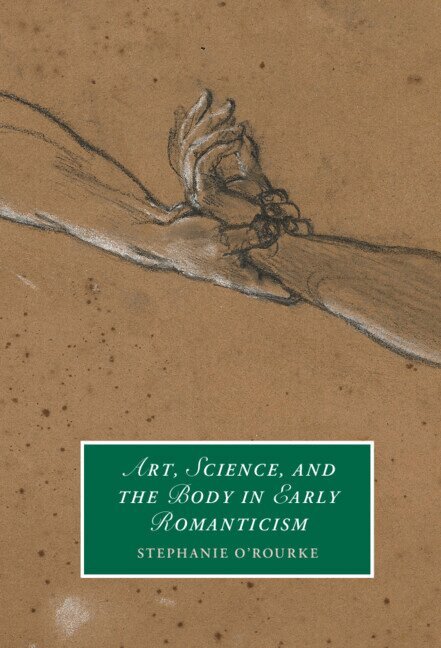
Can we really trust the things our bodies tell us about the world? This work reveals how deeply intertwined cultural practices of art and science questioned the authority of the human body in the late eighteenth and early nineteenth centuries. Focusing on Henry Fuseli, Anne-Louis Girodet and Philippe de Loutherbourg, it argues that romantic artworks participated in a widespread crisis concerning the body as a source of reliable scientific knowledge. Rarely discussed sources and new archival material illuminate how artists drew upon contemporary sciences and inverted them, undermining their founding empiricist principles. The result is an alternative history of romantic visual culture that is deeply embroiled in controversies around electricity, mesmerism, physiognomy and other popular sciences. This volume reorients conventional accounts of romanticism and some of its most important artworks, while also putting forward a new model for the kinds of questions that we can ask about them.