Stephanie Pearson – författare
195 kr
Skickas
69 kr
Läs direkt efter köp
381 kr
Skickas
317 kr
Skickas inom 5-8 vardagar
288 kr
Läs direkt efter köp
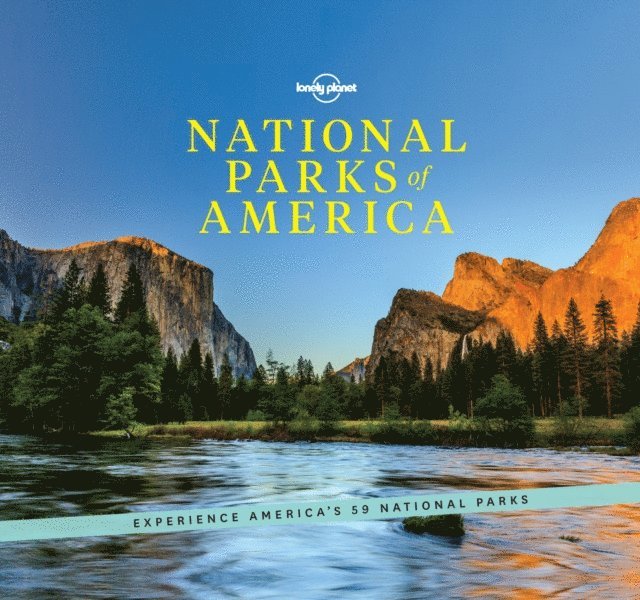
To celebrate America''s amazing national parks, Lonely Planet, the world''s leading travel publisher, takes you on an informative and gorgeous tour of all 59 parks with our lavishly finished hardcover gift guide packed with detailed itineraries and practical tips on what to do and see in each park to get you started planning your next adventure.
America''s national parks are full of timeless marvels that still rejuvenate the soul: the world''s largest trees in Sequoia; its most spectacular geothermal site in Yellowstone; the grandest canyon. Perhaps the movement''s most eloquent description that is still resonates came from national parks advocate John Muir: ''Thousands of tired, nerve-shaken, over-civilized people are beginning to find out that going to the mountains is going home; that wildness is a necessity...'' Fortunately for the nerve-shaken, over-civilized people of then and now, President Woodrow Wilson created the National Parks Service (NPS) on August 25, 1916, though the drive to protect some of America''s most remarkable wild spaces, to be ''used and preserved for the benefit of mankind'', began in the 1860s.
From Acadia to Zion, this beautiful introduction to America''s preserved natural treasures is packed with landscape photography, original wildlife illustrations, and practical information. You will surely be inspired to rediscover these incredible spaces and find out why they''re worth celebrating and you''ll have all the tools to plan the first of many exciting trips.
This book is intended to be a practical introduction to each of America''s 59 national parks, distilled by Lonely Planet''s expert authors. We highlight the best activities and trails, explain how to get there and where to stay, show you the wildlife to watch out for, and suggest ideal itineraries. Whether you''re lucky enough to have a park on your doorstep or need to travel further, we hope that the following pages inspire you both the iconic and lesser-known gems that make up the USA''s diversely breathtaking expanses.
Covers all 59 US National Parks:
Acadia American Samoa Arches Badlands Big Bend Biscayne Black Canyon of the Gunnison Bryce Canyon Canyonlands Capitol Reef Carlsbad Caverns Channel Islands Congaree Crater Lake Cuyahoga Valley Death Valley Denali Dry Tortugas Everglades Gates of the Arctic Glacier Glacier Bay Grand Canyon Grand Teton Great Basin Great Sand Dunes Great Smoky Mountains Guadalupe Mountains Haleakal? Hawaii Volcanoes Hot Springs Isle Royale Joshua Tree Katmai Kenai Fjords Kings Canyon Kobuk Valley Lake Clark Lassen Volcanic Mammoth Cave Mesa Verde Mt Rainier North Cascades Olympic Petrified Forest Pinnacles Redwood Rocky Mountain Saguaro Sequoia Shenandoah Theodore Roosevelt Virgin Islands Voyageurs Wind Cave Wrangell-St Elias Yellowstone Yosemite ZionAbout Lonely Planet: Started in 1973, Lonely Planet has become the world''s leading travel guide publisher with guidebooks to every destination on the planet, as well as an award-winning website, a suite of mobile and digital travel products, and a dedicated traveller community. Lonely Planet''s mission is to enable curious travellers to experience the world and to truly get to the heart of the places they find themselves in.
1 263 kr
Läs direkt efter köp
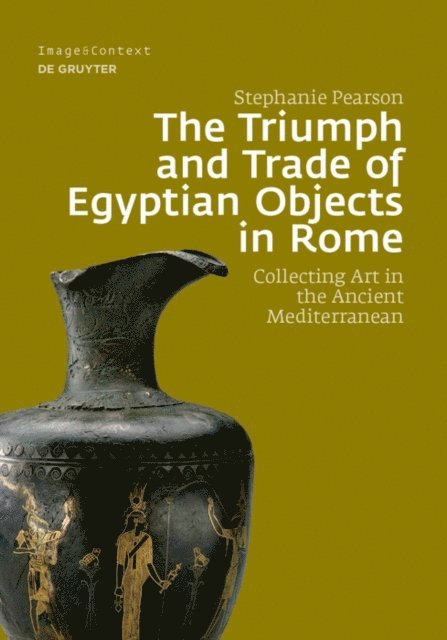
From gleaming hardstone statues to bright frescoes, the unexpected and often spectacular Egyptian objects discovered in Roman Italy have long presented an interpretive challenge. How they shaped and were shaped by religion, politics, and identity formation has now been well researched. But one crucial function of these objects remains to be explored: their role as precious goods in a collector’s economy. The Romans imported and recreated Egyptian goods in the most opulent materials available – gold, gems, expensive wood, ivory, luxurious textiles – and displayed them like true treasures. This is due in part to the way Romans encountered these items, as argued in this book: first as dazzling spolia from the war against Cleopatra, then as costly wares exchanged over the expanding Roman trade routes. In this respect, Romans treated Egyptian art surprisingly similarly to Greek art. By examining the concrete mechanisms through which Egyptian objects were acquired and displayed in Rome, this book offers a new understanding of this impressive material at the crossroads of Hellenistic, Roman, and Egyptian culture.