Stephen A. Royle – författare
Visar alla böcker från författaren Stephen A. Royle. Handla med fri frakt och snabb leverans.
8 produkter
Anglo-Korean Relations and the Port Hamilton Affair, 1885-1887
Häftad, 2021
725 kr
Lägg i varukorg
In April 1885 the British navy seized the small archipelago of Port Hamilton (now Geomundo) off Korea, an incident dubbed the Port Hamilton Affair. This was part of a larger story of Empire and East Asian geopolitics involving China, Japan, Korea and Russia. At the time Britain and Russia seemed …
Geography Of Islands
E-bok, 2002
831 kr
Lägg i varukorg
First Published in 2004. Islands have always fascinated people. They often seem remote and mysterious, set between the continents on which most people live. Indeed, many people choose islands for their perfect holiday idyll. In practice, however, the everyday social and economic reality is often …
Geography Of Islands
E-bok, 2002
831 kr
Lägg i varukorg
First Published in 2004. Islands have always fascinated people. They often seem remote and mysterious, set between the continents on which most people live. Indeed, many people choose islands for their perfect holiday idyll. In practice, however, the everyday social and economic reality is often …
Anglo-Korean Relations and the Port Hamilton Affair, 1885-1887
E-bok, 2017
856 kr
Lägg i varukorg
In April 1885 the British navy seized the small archipelago of Port Hamilton (now Geomundo) off Korea, an incident dubbed the Port Hamilton Affair. This was part of a larger story of Empire and East Asian geopolitics involving China, Japan, Korea and Russia. At the time Britain and Russia seemed …
Anglo-Korean Relations and the Port Hamilton Affair, 1885-1887
E-bok, 2017
831 kr
Lägg i varukorg
In April 1885 the British navy seized the small archipelago of Port Hamilton (now Geomundo) off Korea, an incident dubbed the Port Hamilton Affair. This was part of a larger story of Empire and East Asian geopolitics involving China, Japan, Korea and Russia. At the time Britain and Russia seemed …
Anglo-Korean Relations and the Port Hamilton Affair, 1885-1887
Inbunden, 2017
2578 kr
Lägg i varukorg
In April 1885 the British navy seized the small archipelago of Port Hamilton (now Geomundo) off Korea, an incident dubbed the Port Hamilton Affair. This was part of a larger story of Empire and East Asian geopolitics involving China, Japan, Korea and Russia. At the time Britain and Russia seemed …
Geography Of Islands
Inbunden, 2001
3055 kr
Lägg i varukorg
First Published in 2004. Islands have always fascinated people. They often seem remote and mysterious, set between the continents on which most people live. Indeed, many people choose islands for their perfect holiday idyll. In practice, however, the everyday social and economic reality is often …
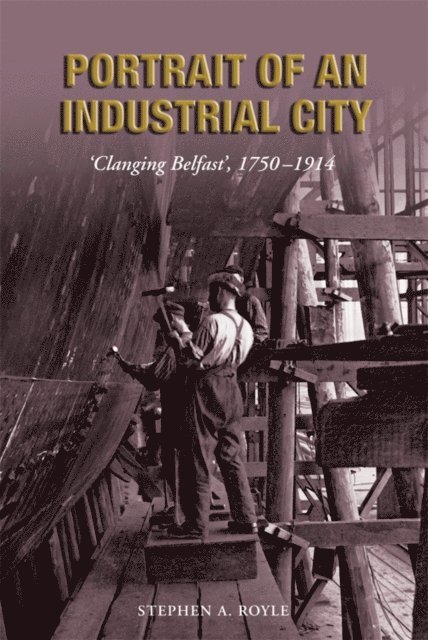
Portrait of an Industrial City
''Clanging Belfast'' 1750-1914
E-bok, 2012
114 kr
Lägg i varukorg
Clanging: Belfast in its industrial pomp must have been noisy: shipyards manipulating sheets of metal, the constant riveting being only one source of racket; the endless clatter from linen mills, the screeching of trams on unyielding rails, sirens and hooters marking time at the factories. There …