Stephen Howard Browne – författare
Visar alla böcker från författaren Stephen Howard Browne. Handla med fri frakt och snabb leverans.
4 produkter
4 produkter
Inbunden, Engelska, 2020
143 kr
Skickas inom 5-8 vardagar
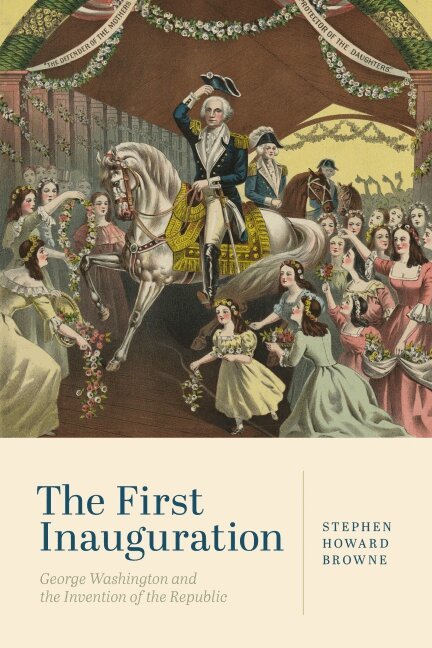
“Among the vicissitudes incident to life, no event could have filled me with greater anxieties than that of which the notification was transmitted by your order, and received on the fourteenth day of the present month.”With these words to the assembled members of the Senate and House of Representatives on April 30, 1789, George Washington inaugurated the American experiment. It was a momentous occasion and an immensely important moment for the nation. Never before had a people dared to invent a system of government quite like the one that Washington was preparing to lead, and the tensions between hope and skepticism ran high.In this book, distinguished scholar of early America Stephen Howard Browne chronicles the efforts of the first president of the United States of America to unite the nation through ceremony, celebrations, and oratory. The story follows Washington on his journey from Mount Vernon to the site of the inauguration in Manhattan, recounting the festivities—speeches, parades, dances, music, food, and flag-waving—that greeted the president-elect along the way. Considering the persuasive power of this procession, Browne captures in detail the pageantry, anxiety, and spirit of the nation to arrive at a more nuanced and richly textured perspective on what it took to launch the modern republican state. Compellingly written and artfully argued, The First Inauguration tells the story of the early republic—and of a president who, by his words and comportment, provides a model of leadership and democratic governance for today.
E-bok
PDF, Engelska, 2003138 kr
Läs direkt efter köp
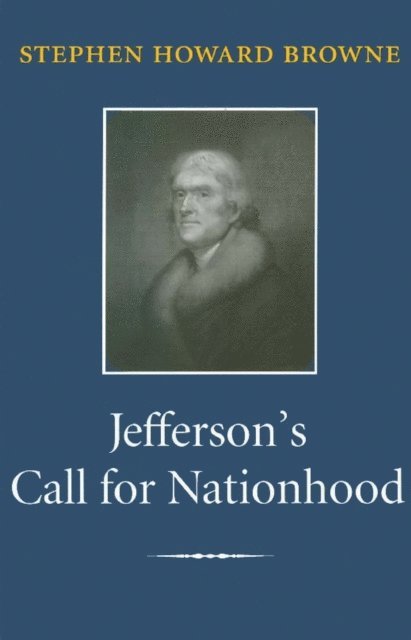
Widely celebrated in its own time, Thomas Jefferson’s first inaugural address commands the regard of Americans from across the political spectrum. Delivered as the young nation found itself embroiled in bitter partisan struggles, the speech has been hailed as the Sermon on the Mount of good government.Curiously, this masterpiece—the full text of which is reproduced in this volume—has never received sustained analysis. Here, Stephen Howard Browne describes its origins, composition, meaning, and delivery.His wellcrafted argument and accessible prose offer a model of analysis for rhetorical scholars and students and an added dimension to the history of the early republic and the understanding of American political thought.
Inbunden, Engelska, 2016
551 kr
Skickas inom 10-15 vardagar
History tells us that on a day when the forces of civil government confront the forces of military might, no one knows what may follow. Americans believe that they have avoided this moment, that whatever other challengesthe country has faced, at least it never has had to deal with the prospects of a coup d'état. Stephen Howard Brownemaintains that this view is mistaken, that in fact the United States faced such a crisis, at the very moment when thecountry announced its arrival on the world scene in the spring of 1783 in a rustic meeting hall along the Hudson River near Newburgh, New York. The crisis was resolved by George Washington, commander in chief of the U.S. Army, in an address he delivered to a roomful of restive and deeply disaffected officers.In The Ides of War, Browne examines the resolution of the first confrontation between the forces of American civil government and the American military--the Newburgh Crisis. He tells the story of what transpired on that day, examines what was said, and suggests what we might learn from the affair. Browne shows that George Washington's Newburgh Address is a stunning example of the power of human agency to broker one of our most persistent, mosttroublesome dilemmas: the rival claims to power of civil and military authorities. At stake in this story are biding questions about the meaning and legacy of revolution, the nature of republican government, and ultimately what kind of people we are and profess to be.Browne holds that although these are monolithic and vexed themes, they are vital and need to be confronted to obtain a coherent and convincing account of history. The Newburgh Crisis offers an unmatched opportunity to examine these themes, as well as the role of rhetoric in the founding of the world's first modern republic.
E-bok
Engelska, 2016159 kr
Läs direkt efter köp
A history and analysis of how George Washington stopped an attempted military coup at the end of the American Revolutionary War.History tells us that on a day when the forces of civil government confront the forces of military might, no one knows what may follow. Americans believe that they have avoided this moment, that whatever other challenges the country has faced, at least it never has had to deal with the prospects of a coup d’état. Stephen Howard Browne maintains that this view is mistaken, that in fact the United States faced such a crisis, at the very moment when the country announced its arrival on the world scene in the spring of 1783 in a rustic meeting hall along the Hudson River near Newburgh, New York. The crisis was resolved by George Washington, commander in chief of the US Army, in an address he delivered to a roomful of restive and deeply disaffected officers.In The Ides of War, Browne examines the resolution of the first confrontation between the forces of American civil government and the American military—the Newburgh Crisis. He tells the story of what transpired on that day, examines what was said, and suggests what we might learn from the affair. Browne shows that George Washington’s Newburgh Address is a stunning example of the power of human agency to broker one of our most persistent, most troublesome dilemmas: the rival claims to power of civil and military authorities. At stake in this story are biding questions about the meaning and legacy of revolution, the nature of republican government, and ultimately what kind of people we are and profess to be.Browne holds that although these are monolithic and vexed themes, they are vital and need to be confronted to obtain a coherent and convincing account of history. The Newburgh Crisis offers an unmatched opportunity to examine these themes, as well as the role of rhetoric in the founding of the world’s first modern republic.“Few speeches have shaped the course of American history more than George Washington’s address to his potentially mutinous officers in Newburgh, New York, on March 15, 1783. In this splendid book, Browne deftly brings to life the Newburgh conspiracy, Washington’s masterful response to it, and the lasting implications of both for civil-military relations in a republican government.” —Stephen Lucas, Evjue-Bascom Professor in the Humanities, University of Wisconsin“This elegant and persuasive book expands our knowledge of a little known but hugely significant turning point in American history, one that set it on course toward liberty and democracy. In the process, Browne brings new understanding to the founding of the United States, its military system, and its first commander in chief.” —Richard H. Kohn, professor emeritus of history and peace, war, and defense, University of North Carolina at Chapel Hill