Steve Dunne – författare
Visar alla böcker från författaren Steve Dunne. Handla med fri frakt och snabb leverans.
5 produkter
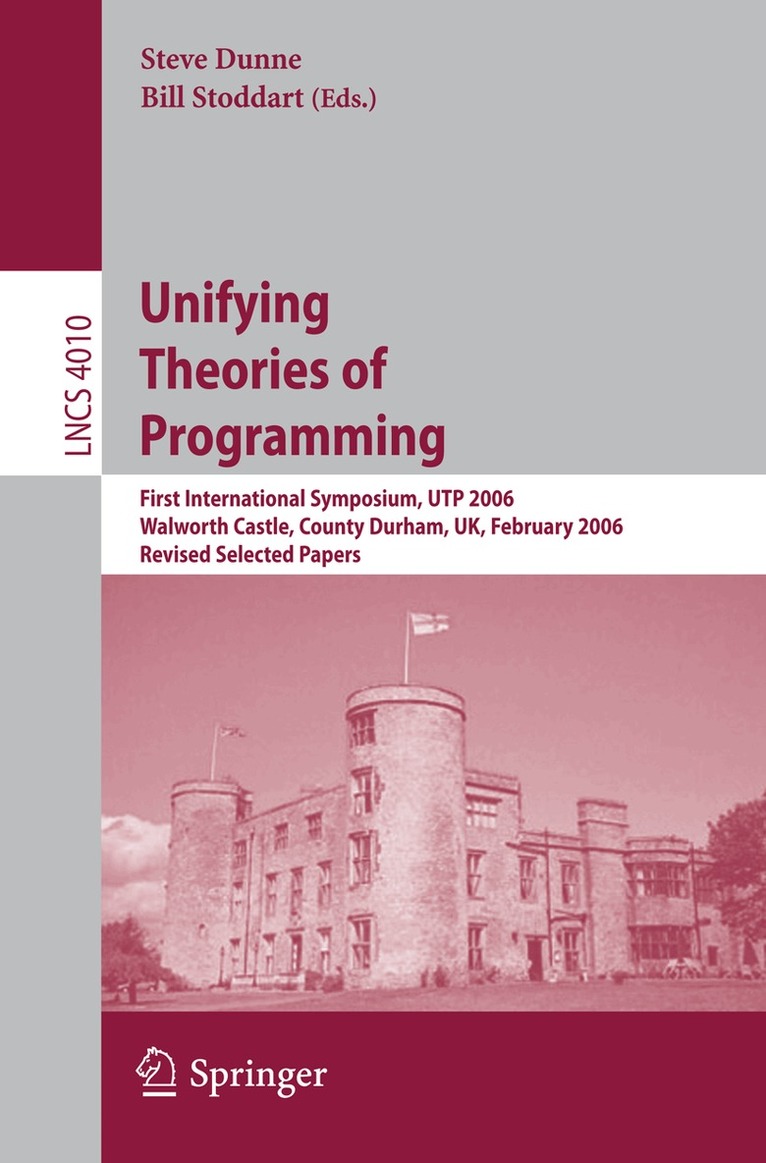
Unifying Theories of Programming
First International Symposium, UTP 2006, Walworth Castle, County Durham, UK, February 5-7, 2006, Revised Selected Papers
Häftad, 2006
566 kr
Lägg i varukorg
This book constitutes the thoroughly refereed post-proceedings of the First International Symposium on Unifying Theories of Programming, UTP 2006, held at Walworth Castle, County Durham, UK, in February 2006. The book presents 14 revised full papers. Based on the pioneering work on unifying …
Unifying Theories of Programming
First International Symposium, UTP 2006, Walworth Castle, County Durham, UK, February 5-7, 2006, Revised Selected Papers
E-bok, 2006
755 kr
Lägg i varukorg
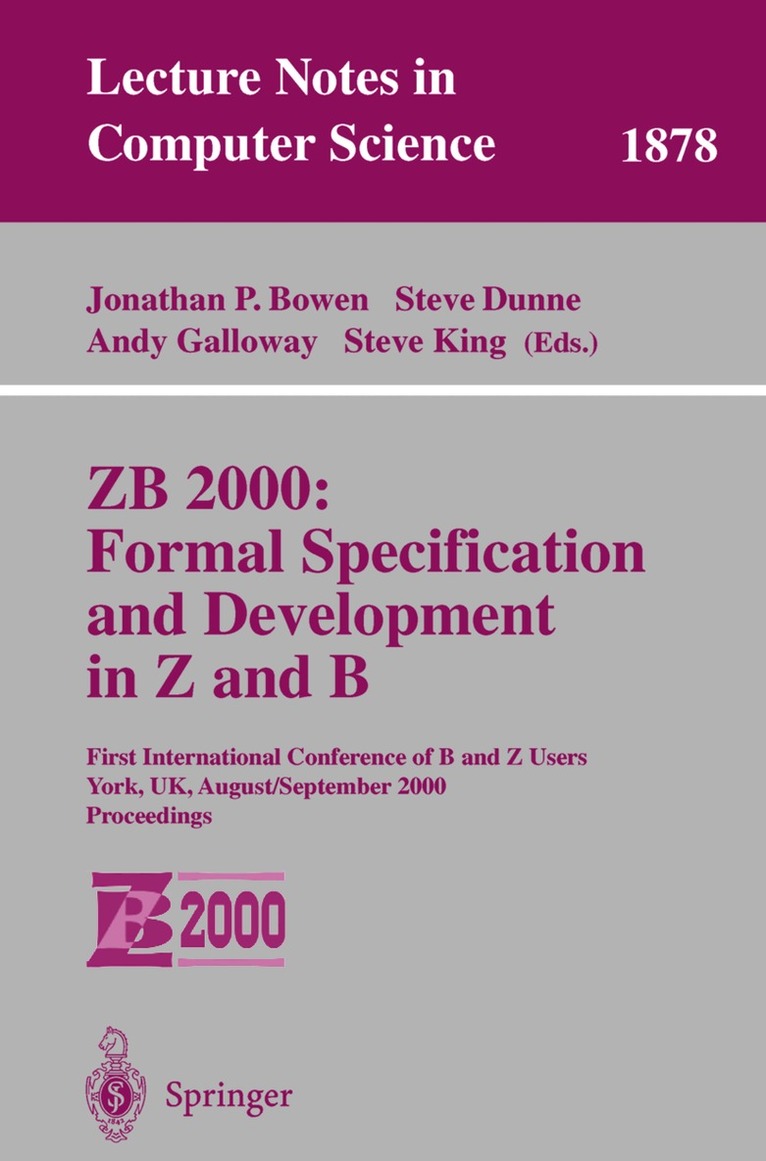
ZB 2000: Formal Specification and Development in Z and B
First International Conference of B and Z Users York, UK, August 29 - September 2, 2000 Proceedings
Av Steve King, Andy Galloway m. fl.
E-bok, 2003
755 kr
Lägg i varukorg
This book constitutes the refereed proceedings of the First International Conference of B and Z Users, ZB 2000, held in York, UK in August/September 2000. The 25 revised full papers presented together with four invited contributions were carefully reviewed and selected for inclusion in the book. …
ZB 2000: Formal Specification and Development in Z and B
First International Conference of B and Z Users York, UK, August 29 - September 2, 2000 Proceedings
Av Jonathan P. Bowen, Steve Dunne m. fl.
Häftad, 2000
566 kr
Lägg i varukorg
This book constitutes the refereed proceedings of the First International Conference of B and Z Users, ZB 2000, held in York, UK in August/September 2000.The 25 revised full papers presented together with four invited contributions were carefully reviewed and selected for inclusion in the book. The …
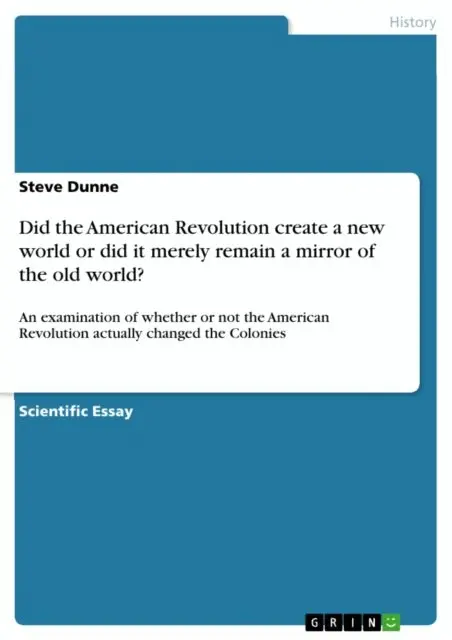
Did the American Revolution create a new world or did it merely remain a mirror of the old world?
An examination of whether or not the American Revolution actually changed the Colonies
Av Steve Dunne
E-bok, 2011
200 kr
Lägg i varukorg
Scientific Essay from the year 2011 in the subject History - America, , course: American Revolution, language: English, abstract: On 4th July 1776, outside Independence Hall, Philadelphia, the first official reading of the Declaration of Independence commenced and for the first time the American …