Steve Fiffer – författare
Visar alla böcker från författaren Steve Fiffer. Handla med fri frakt och snabb leverans.
7 produkter
7 produkter
Häftad, Engelska, 1986
184 kr
Skickas inom 5-8 vardagar
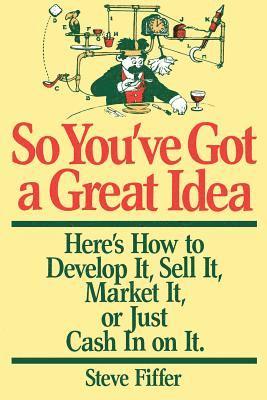
Have you ever had a million-dollar idea that someone else made a million on? So You've Got a Great Idea can help you be that one person who cashes in on an innovative product, service, business, or novelty item. Like Marvin Rosenblum, who made the most of Spiro Agnew's reputation(he also produced the movie "1984"), and ann Moore, who created the Snugli, you too, can take your idea from the drawing board to the bank.Steve Fiffer shows you how to tell whether your idea is a winner or a clunker and, through entertaining profiles of successful innovators, helps you decide how to follow through on it: Should you sell the idea to an established business or go into business for yourself? Do you want to work on the idea full-time or part-time? At home or in an office? You'll also discover the advantages and disadvantages of professional services, whether to apply for a patent, how to use government agencies and find financing.Here are stories of ordinary people who have had extraordinary ideas that have changed their lives.You will read about:Gordon and Carole Segal, who were struck with the idea for Crate and Barrel over their kitchen sinkKip Fuller, who created the Servitron Robot because he couldn't afford a caterer at his Christmas partyJeffrey Ullman, who combined his talent for making documentaries with a knack for sales and opened one of the first video dating services in America.Lynn Tatar, whose talent for chocolate novelties transformed her kitchen into The Amazing Chocolate Factoryand moreHaving a great idea is one thing; making a great idea make money is what this book is all about.

Häftad, Engelska, 2000
270 kr
Skickas inom 3-6 vardagar
E-bok
Engelska, 1999182 kr
Läs direkt efter köp
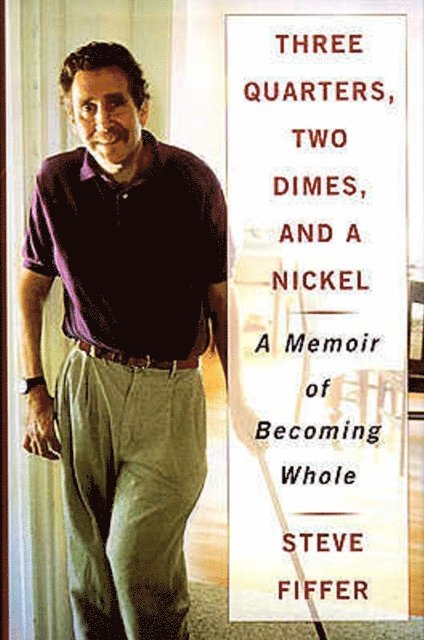
What would you do if you were seventeen years old and broke your neck? It''s tough enough to stand on the verge of adulthood without the extra burden of not being able to stand at all. Steve Fiffer had his whole life ahead of him in December 1967 when he fractured his fifth cervical vertebra in a wrestling accident at school, shattering his dreams. The diagnosis was quadriplegia, and his parents were told that he would never walk again. Steve, however, was not content to accept such a fate. He had always been taught that he was a leader, not a follower, and he was not going to take this news lying down. Within five months he was out of the hospital, within seven he was on crutches, and within nine he was beginning his freshman year at Yale University. And most remarkable of all, he never lost his wisecracking sense of humor or his hunger for all that life has to offer. Three Quarters, Two Dimes, and a Nickel is Steve Fiffer''s story of his coming of age, and of how he created a normal life for himself despite his injury. Steve refused to be consumed or defined by his physical condition; he may not be a dollar bill, he explains, but he''s still "three quarters, two dimes, and a nickel." His battle to come back from his injury casts into sharp relief the drama of becoming an adult and wrestling with issues of identity, relationships, and ambition. We join him around the dinner table as he rebuilds his once-distant relationship with his father and gains a new appreciation of their bond; we agonize with him as he tries to find true love (or at least lose his virginity) despite his self-consciousness about his physical awkwardness, and we join him at the Lawson YMCA in downtown Chicago, where he rebuilds his body under the watchful eye of the manic physical-fitness coach Dick Woit, a retired football star who puts Steve through a sort of boot camp to raise his sights even higher and propel him off his crutches for good. Part guru, part drill instructor, Woit helps Steve to develop the mental toughness to put the injury behind him and to embrace adulthood and all its responsibilities. By turns poignant, darkly comic, and ultimately triumphant, Three Quarters, Two Dimes, and a Nickel is an affirmation of how the ordinary joys of life can win out even in extraordinary circumstances.
Häftad, Engelska, 2001
280 kr
Skickas inom 3-6 vardagar
Inbunden, Engelska, 2015
389 kr
Skickas inom 3-6 vardagar
In the spring of 2001, George W. Bush selected Dallas attorney Robert W. Jordan as the ambassador to Saudi Arabia. Jordan's nomination sped through Congress in the wake of the terrorist attacks on 9/11, and he was at his post by early October, though with no prior diplomatic experience, as Saudi Arabia mandates that the U.S. Ambassador be a political appointee with the ear of the president. Hence Jordan had to learn on the job how to run an embassy, deal with a foreign culture, and protect U.S. interests, all following the most significant terrorist attacks on the United States in history.From 2001 through 2003, Jordan worked closely with Crown Prince Abdullah and other Saudi leaders on sensitive issues of terrorism and human rights, all the while trying to maintain a positive relationship to ensure their cooperation with the war in Afghanistan and the invasion of Iraq. At the same time he worked with top officials in Washington, including President Bush, Dick Cheney, Colin Powell, Donald Rumsfeld, Condoleezza Rice, George Tenet, and Tommy Franks. Desert Diplomat discusses these relationships as well as the historic decisions of Jordan's tenure and provides a candid and thoughtful assessment of the sometimes distressing dysfunction in the conduct of American foreign policy, warfare, and intelligence gathering. Still involved in the Middle East, Jordan also offers important insights into the political, economic, and social changes occurring in this critical region, particularly Saudi Arabia.
E-bok
PDF, Engelska, 2015339 kr
Läs direkt efter köp
In the spring of 2001, George W. Bush selected Dallas attorney Robert W. Jordan as the ambassador to Saudi Arabia. Jordan's nomination sped through Congress in the wake of the terrorist attacks on 9/11, and he was at his post by early October, though with no prior diplomatic experience, as Saudi Arabia mandates that the U.S. Ambassador be a political appointee with the ear of the president. Hence Jordan had to learn on the job how to run an embassy, deal with a foreign culture, and protect U.S. interests, all following the most significant terrorist attacks on the United States in history.From 2001 through 2003, Jordan worked closely with Crown Prince Abdullah and other Saudi leaders on sensitive issues of terrorism and human rights, all the while trying to maintain a positive relationship to ensure their cooperation with the war in Afghanistan and the invasion of Iraq. At the same time he worked with top officials in Washington, including President Bush, Dick Cheney, Colin Powell, Donald Rumsfeld, Condoleezza Rice, George Tenet, and Tommy Franks. Desert Diplomat discusses these relationships as well as the historic decisions of Jordan's tenure and provides a candid and thoughtful assessment of the sometimes distressing dysfunction in the conduct of American foreign policy, warfare, and intelligence gathering. Still involved in the Middle East, Jordan also offers important insights into the political, economic, and social changes occurring in this critical region, particularly Saudi Arabia.
170 kr
Läs direkt efter köp
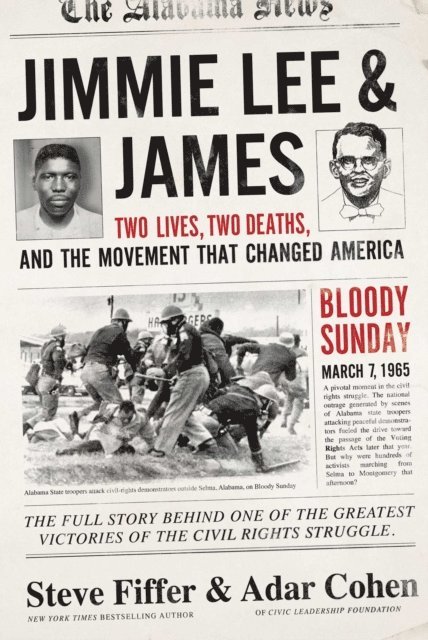
In the early months of 1965, the killings of two civil rights activists inspired the Selma-to-Montgomery marches, which became the driving force behind the passage of the Voting Rights Act. This is their story.“Bloody Sunday”—March 7, 1965—was a pivotal moment in the civil rights struggle. The national outrage generated by scenes of Alabama state troopers attacking peaceful demonstrators fueled the drive toward the passage of the Voting Rights Acts later that year. But why were hundreds of activists marching from Selma to Montgomery that afternoon? Days earlier, during the crackdown on another protest in nearby Marion, a state trooper, claiming self-defense, shot Jimmie Lee Jackson, a 26-year-old unarmed deacon and civil rights protester. Jackson’s subsequent death spurred local civil rights leaders to make the march to Montgomery; when that day also ended in violence, the call went out to activists across the nation to join in the next attempt. One of the many who came down was a minister from Boston named James Reeb. Shortly after his arrival, he was attacked in the street by racist vigilantes, eventually dying of his injuries. Lyndon Johnson evoked Reeb’s memory when he brought his voting rights legislation to Congress, and the national outcry over the brutal killings ensured its passage. Most histories of the civil rights movement note these two deaths briefly, before moving on to the more famous moments. Jimmie Lee and James is the first book to give readers a deeper understanding of the events that galvanized an already-strong civil rights movement to one of its greatest successes, along with the herculean efforts to bring the killers of these two men to justice—a quest that would last more than four decades.