Steve Talbott – författare
215 kr
Läs direkt efter köp
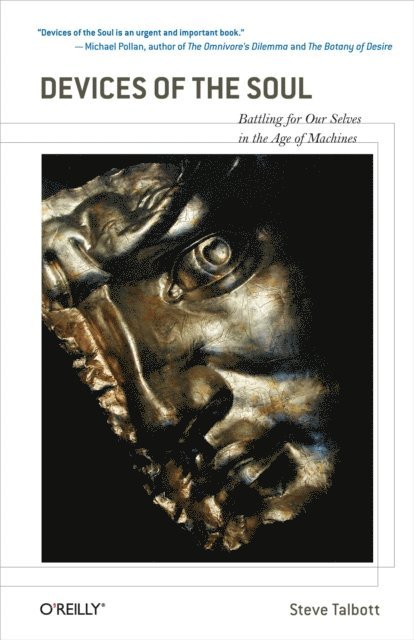
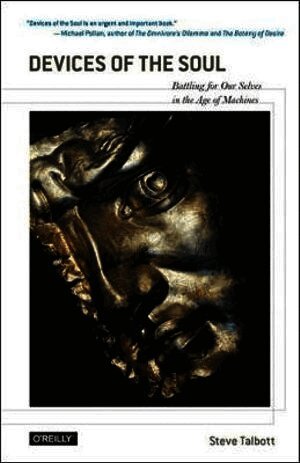
"Self-forgetfulness is the reigning temptation of the technological era. This is why we so readily give our assent to the absurd proposition that a computer can add two plus two, despite the obvious fact that it can do nothing of the sort--not if we have in mind anything remotely resembling what we do when we add numbers. In the computer''s case, the mechanics of addition involve no motivation, no consciousness of the task, no mobilization of the will, no metabolic activity, no imagination. And its performance brings neither the satisfaction of accomplishment nor the strengthening of practical skills and cognitive capacities."In this insightful book, author Steve Talbott, software programmer and technical writer turned researcher and editor for The Nature Institute, challenges us to step back and take an objective look at the technology driving our lives. At a time when 65 percent of American consumers spend more time with their PCs than they do with their significant others, according to a recent study, Talbott illustrates that we''re forgetting one important thing--our Selves, the human spirit from which technology stems.Whether we''re surrendering intimate details to yet another database, eschewing our physical communities for online social networks, or calculating our net worth, we freely give our power over to technology until, he says, "we arrive at a computer''s-eye view of the entire world of industry, commerce, and society at large...an ever more closely woven web of programmed logic."Digital technology certainly makes us more efficient. But when efficiency is the only goal, we have no way to know whether we''re going in the right or wrong direction. Businesses replace guiding vision with a spreadsheet''s bottom line. Schoolteachers are replaced by the computer''s dataflow. Indigenous peoples give up traditional skills for the dazzle and ease of new gadgets. Even the Pentagon''s zeal to replace "boots on the ground" with technology has led to the mess in Iraq. And on it goes.The ultimate danger is that, in our willingness to adapt ourselves to technology, "we will descend to the level of the computational devices we have engineered--not merely imagining ever new and more sophisticated automatons, but reducing ourselves to automatons."To transform our situation, we need to see it in a new and unaccustomed light, and that''s what Talbott provides by examining the deceiving virtues of technology--how we''re killing education, socializing our machines, and mechanizing our society.Once you take this eye-opening journey, you will think more clearly about how you consume technology and how you allow it to consume you."Nothing is as rare or sorely needed in our tech-enchanted culture right now as intelligent criticism of technology, and Steve Talbott is exactly the critic we''ve been waiting for: trenchant, sophisticated, and completely original. Devices of the Soul is an urgent and important book."--Michael Pollan, author of The Omnivore''s Dilemma: A Natural History of Four Meals and The Botany of Desire: A Plant''s Eye View of the World"Steve Talbott is a rare voice of clarity, humanity, and passion in a world enthralled by machines and calculation. His new book, Devices of the Soul, lays out a frightening and at the same time inspiring analysis of what computers and computer-like thinking are doing to us, our children, and the future of our planet. Talbott is no Luddite. He fully understands and appreciates the stunning power of technology for both good and evil. His cool and precise skewering of the fuzzy thinking and mindless enthusiasm of the technology true believers is tempered by his modesty, the elegance of his writing, and his abiding love for the world of nature and our capacity for communion with it. "--Edward Miller, Former editor, Harvard Education Letter"Those who care about the healthy and wholesome lives of children can gain much from Steve Talbott''s wisdom. He examines the need to help children spend more time touching nature and real life and less touching keyboards. He eloquently questions the assumption that speeding up learning is a good thing. Is, after all, a sped-up life a well-lived life? Most importantly, he reminds all of us that technology is just one part of life and ought not to overshadow the life of self and soul."--Joan Almon, Coordinator, Alliance for Childhood"One of the most original and provocative writers of our time, Steve Talbott offers a rich assortment of insightful reflections on the nature of our humanity, challenging our own thinking and conventional wisdom about advances in technology."--Dorothy E. Denning, Department of Defense Analysis, Naval Postgraduate School, Monterey, CA"Are you experiencing growing unease as computational metaphors have seized our discourse? Steve Talbott offers immediate relief. You are not losing your mind! Chapter after chapter, he shows how to draw on the powers of technology without losing your soul or breaking your heart."--Peter Denning, Past President of ACM, Monterey, California"Steve Talbott is a rare writer whose words can alter one''s entire perception of the world. He is our most original and perceptive defender of the wholeness of life against the onslaught of mechanism. Devices of the Soul is written with Talbott''s typical grace and clarity. It displays a quality hardly found anymore in our high tech culture--wisdom. "--Lowell Monke, Associate Professor of Education, Wittenberg University
215 kr
Läs direkt efter köp
"Self-forgetfulness is the reigning temptation of the technological era. This is why we so readily give our assent to the absurd proposition that a computer can add two plus two, despite the obvious fact that it can do nothing of the sort--not if we have in mind anything remotely resembling what we do when we add numbers. In the computer''s case, the mechanics of addition involve no motivation, no consciousness of the task, no mobilization of the will, no metabolic activity, no imagination. And its performance brings neither the satisfaction of accomplishment nor the strengthening of practical skills and cognitive capacities."In this insightful book, author Steve Talbott, software programmer and technical writer turned researcher and editor for The Nature Institute, challenges us to step back and take an objective look at the technology driving our lives. At a time when 65 percent of American consumers spend more time with their PCs than they do with their significant others, according to a recent study, Talbott illustrates that we''re forgetting one important thing--our Selves, the human spirit from which technology stems.Whether we''re surrendering intimate details to yet another database, eschewing our physical communities for online social networks, or calculating our net worth, we freely give our power over to technology until, he says, "we arrive at a computer''s-eye view of the entire world of industry, commerce, and society at large...an ever more closely woven web of programmed logic."Digital technology certainly makes us more efficient. But when efficiency is the only goal, we have no way to know whether we''re going in the right or wrong direction. Businesses replace guiding vision with a spreadsheet''s bottom line. Schoolteachers are replaced by the computer''s dataflow. Indigenous peoples give up traditional skills for the dazzle and ease of new gadgets. Even the Pentagon''s zeal to replace "boots on the ground" with technology has led to the mess in Iraq. And on it goes.The ultimate danger is that, in our willingness to adapt ourselves to technology, "we will descend to the level of the computational devices we have engineered--not merely imagining ever new and more sophisticated automatons, but reducing ourselves to automatons."To transform our situation, we need to see it in a new and unaccustomed light, and that''s what Talbott provides by examining the deceiving virtues of technology--how we''re killing education, socializing our machines, and mechanizing our society.Once you take this eye-opening journey, you will think more clearly about how you consume technology and how you allow it to consume you."Nothing is as rare or sorely needed in our tech-enchanted culture right now as intelligent criticism of technology, and Steve Talbott is exactly the critic we''ve been waiting for: trenchant, sophisticated, and completely original. Devices of the Soul is an urgent and important book."--Michael Pollan, author of The Omnivore''s Dilemma: A Natural History of Four Meals and The Botany of Desire: A Plant''s Eye View of the World"Steve Talbott is a rare voice of clarity, humanity, and passion in a world enthralled by machines and calculation. His new book, Devices of the Soul, lays out a frightening and at the same time inspiring analysis of what computers and computer-like thinking are doing to us, our children, and the future of our planet. Talbott is no Luddite. He fully understands and appreciates the stunning power of technology for both good and evil. His cool and precise skewering of the fuzzy thinking and mindless enthusiasm of the technology true believers is tempered by his modesty, the elegance of his writing, and his abiding love for the world of nature and our capacity for communion with it. "--Edward Miller, Former editor, Harvard Education Letter"Those who care about the healthy and wholesome lives of children can gain much from Steve Talbott''s wisdom. He examines the need to help children spend more time touching nature and real life and less touching keyboards. He eloquently questions the assumption that speeding up learning is a good thing. Is, after all, a sped-up life a well-lived life? Most importantly, he reminds all of us that technology is just one part of life and ought not to overshadow the life of self and soul."--Joan Almon, Coordinator, Alliance for Childhood"One of the most original and provocative writers of our time, Steve Talbott offers a rich assortment of insightful reflections on the nature of our humanity, challenging our own thinking and conventional wisdom about advances in technology."--Dorothy E. Denning, Department of Defense Analysis, Naval Postgraduate School, Monterey, CA"Are you experiencing growing unease as computational metaphors have seized our discourse? Steve Talbott offers immediate relief. You are not losing your mind! Chapter after chapter, he shows how to draw on the powers of technology without losing your soul or breaking your heart."--Peter Denning, Past President of ACM, Monterey, California"Steve Talbott is a rare writer whose words can alter one''s entire perception of the world. He is our most original and perceptive defender of the wholeness of life against the onslaught of mechanism. Devices of the Soul is written with Talbott''s typical grace and clarity. It displays a quality hardly found anymore in our high tech culture--wisdom. "--Lowell Monke, Associate Professor of Education, Wittenberg University
387 kr
Läs direkt efter köp
In 2001 the Human Genome Project announced that it had successfully mapped the entire genetic content of human DNA. Scientists, politicians, theologians, and pundits speculated about what would follow, conjuring everything from nightmare scenarios of state-controlled eugenics to the hope of engineering disease-resistant newborns. As with debates surrounding stem-cell research, the seemingly endless possibilities of genetic engineering will continue to influence public opinion and policy into the foreseeable future.
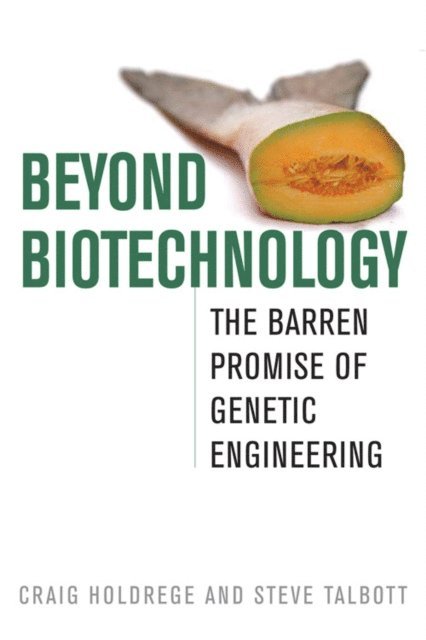
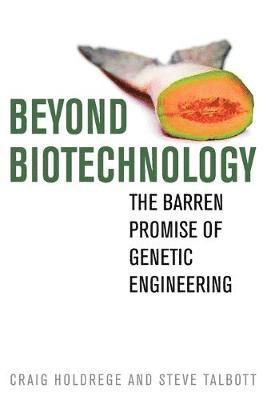
Beyond Biotechnology: The Barren Promise of Genetic Engineering distinguishes between the hype and reality of this technology and explains the nuanced and delicate relationship between science and nature. Authors Craig Holdrege and Steve Talbott evaluate the current state of genetic science and examine its potential applications, particularly in agriculture and medicine, as well as the possible dangers. The authors show how the popular view of genetics does not include an understanding of the ways in which genes actually work together in organisms.
Simplistic and reductionist views of genes lead to unrealistic expectations and, ultimately, disappointment in the results that genetic engineering actually delivers. The authors explore new developments in genetics, from the discovery of "non-Darwinian" adaptative mutations in bacteria to evidence that suggests that organisms are far more than mere collections of genetically driven mechanisms. While examining these issues, the authors also answer vital questions that get to the essence of genetic interaction with human biology: Does DNA "manage" an organism any more than the organism manages its DNA? Should genetically engineered products be labeled as such? Do the methods of the genetic engineer resemble the centuries-old practices of animal husbandry?
Written for lay readers, Beyond Biotechnology is an accessible introduction to the complicated issues of genetic engineering and its potential applications. In the unexplored space between nature and laboratory, a new science is waiting to emerge. Technology-based social and environmental solutions will remain tenuous and at risk of reversal as long as our culture is alienated from the plants and animals on which all life depends.
445 kr
Läs direkt efter köp
In 2001 the Human Genome Project announced that it had successfully mapped the entire genetic content of human DNA. Scientists, politicians, theologians, and pundits speculated about what would follow, conjuring everything from nightmare scenarios of state-controlled eugenics to the hope of engineering disease-resistant newborns. As with debates surrounding stem-cell research, the seemingly endless possibilities of genetic engineering will continue to influence public opinion and policy into the foreseeable future.
Beyond Biotechnology: The Barren Promise of Genetic Engineering distinguishes between the hype and reality of this technology and explains the nuanced and delicate relationship between science and nature. Authors Craig Holdrege and Steve Talbott evaluate the current state of genetic science and examine its potential applications, particularly in agriculture and medicine, as well as the possible dangers. The authors show how the popular view of genetics does not include an understanding of the ways in which genes actually work together in organisms.
Simplistic and reductionist views of genes lead to unrealistic expectations and, ultimately, disappointment in the results that genetic engineering actually delivers. The authors explore new developments in genetics, from the discovery of "non-Darwinian" adaptative mutations in bacteria to evidence that suggests that organisms are far more than mere collections of genetically driven mechanisms. While examining these issues, the authors also answer vital questions that get to the essence of genetic interaction with human biology: Does DNA "manage" an organism any more than the organism manages its DNA? Should genetically engineered products be labeled as such? Do the methods of the genetic engineer resemble the centuries-old practices of animal husbandry?
Written for lay readers, Beyond Biotechnology is an accessible introduction to the complicated issues of genetic engineering and its potential applications. In the unexplored space between nature and laboratory, a new science is waiting to emerge. Technology-based social and environmental solutions will remain tenuous and at risk of reversal as long as our culture is alienated from the plants and animals on which all life depends.
507 kr
Skickas inom 3-6 vardagar
178 kr
Skickas inom 5-8 vardagar
295 kr
Tillfälligt slut