Steven D. Fraade - Böcker
Visar alla böcker från författaren Steven D. Fraade. Handla med fri frakt och snabb leverans.
3 produkter
3 produkter
1 200 kr
Skickas inom 5-8 vardagar
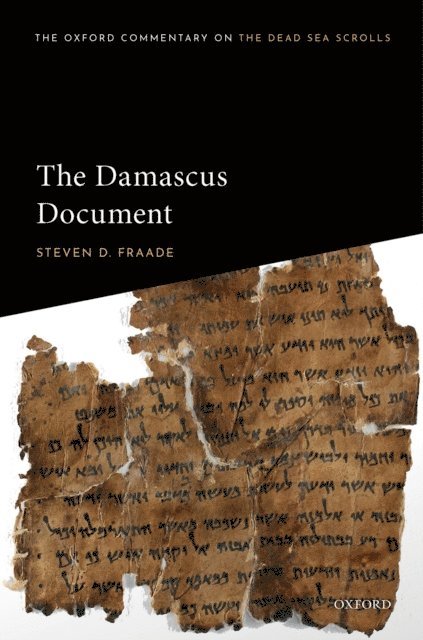
Steve D. Fraade offers a new translation, with notes, and detailed commentary to the Dead Sea Scroll most commonly called the Damascus Document, based on both ancient manuscripts from caves along the western shore of the Dead Sea, and medieval manuscripts from the Cairo Geniza. The text is one of the longest and most important of the Dead Sea Scrolls. Its importance derives from several aspects of its contents: its extensive collections of laws, both for the sectarian community that authored it and for the rest of Israel; some of the oldest examples of scriptural interpretation, both legal and narrative, both implicit and explicit, with important implications for our understanding of the evolving status of the Hebrew canon; some of the clearest expressions, often in hortatory form, of the community's self-understanding as an elect remnant of Israel that understands itself in dualistic opposition to the rest of Israel, its practices, and its leaders; important expressions of the community's self-understanding as a priestly alternative to the sacrificial worship in the Jerusalem Temple; expressions of an apocalyptic, eschatological understanding of living as the true Israel in the "end of days;" important expressions of attitudes toward woman, sexual activity, and marriage; importance for our understanding of ancient modes of teaching and of ritual practice; importance for the study of the history of the Hebrew language and its scribal practices. The volume contains a substantial introduction, dealing with these aspects of the Damascus Document and locating its place within the Dead Sea Scrolls more broadly as well as the historical context of ancient Judaism that gave rise to this text.
From Tradition to Commentary
Torah and Its Interpretation in the Midrash Sifre to Deuteronomy
Häftad, Engelska, 1991
372 kr
Skickas inom 7-10 vardagar
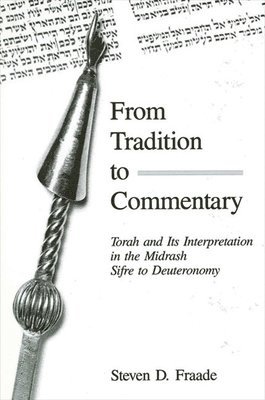
This book examines Torah and its interpretation both as a recurring theme in the early rabbinic commentary and as the very practice of the commentary. It studies the phenomenon of ancient rabbinic scriptural commentary in relation to the perspectives of literary and historical criticisms and their complex intersection. The author discusses extensively the nature of ancient commentary, comparing and contrasting it with the antecedents in the pesharim of the Dead Sea Scrolls and the allegorical commentaries of Philo of Alexandria. He develops a model for a dynamic understanding of the literary structure and sociohistorical function of early rabbinic commentary, and then applies this model to the Sifre - to the oldest extant running commentary to Deuteronomy and one of the oldest rabbinic collections of exegesis.Fraade examines the commentary's representation of revelation and its reception at Mt. Sinai, with particular attention to its fractured refiguration and interrelation of Scripture, tradition, and history. He discusses the commentary's discursive empowering of the class of sages in their collective self-understanding as Israel's authorized teachers, leaders, legislators, and judges. The author also probes the tension between Torah and nature as witnesses to Israel's covenant with God.
1 126 kr
Skickas inom 7-10 vardagar
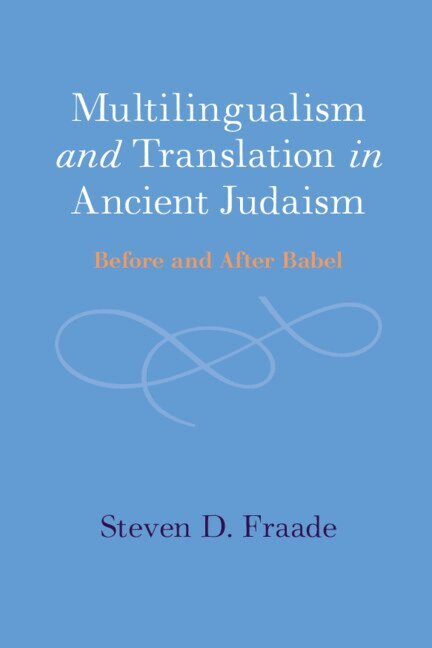
In this book, Steven Fraade explores the practice and conception of multilingualism and translation in ancient Judaism. Interrogating the deep and dialectical relationship between them, he situates representative scriptural and other texts within their broader synchronic - Greco-Roman context, as well as diachronic context - the history of Judaism and beyond. Neither systematic nor comprehensive, his selection of Hebrew, Aramaic, and Greek primary sources, here fluently translated into clear English, best illustrate the fundamental issues and the performative aspects relating to translation and multilingualism. Fraade scrutinizes and analyzes the texts to reveal the inner dynamics and the pedagogical-social implications that are implicit when multilingualism and translation are paired. His book demonstrates the need for a more thorough and integrated treatment of these topics, and their relevance to the study of ancient Judaism, than has been heretofore recognized.