Steven F. Perry - Böcker
Visar alla böcker från författaren Steven F. Perry. Handla med fri frakt och snabb leverans.
3 produkter
3 produkter
1 304 kr
Skickas inom 5-8 vardagar
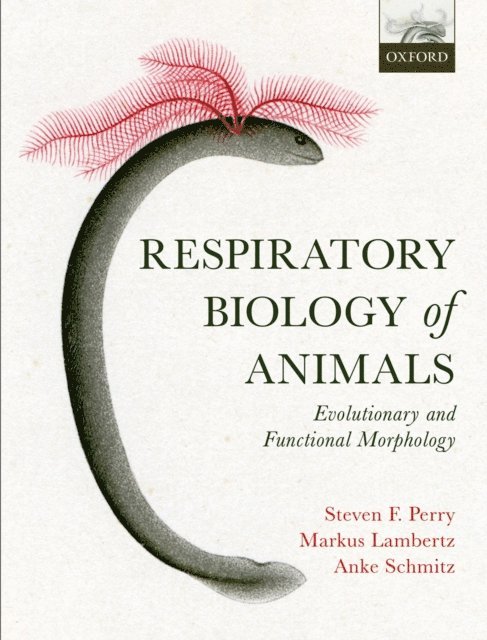
Oxygen uptake for metabolic energy demand and the elimination of the resulting carbon dioxide is one of the essential processes in all higher life forms; in the case of animals, everything from protozoans to insects and vertebrates including humans. Respiratory Biology of Animals provides a contemporary and truly integrative approach to the topic, adopting a strong evolutionary theme. It covers aerobic metabolism at all levels, from gas exchange organs such as skin, gills, and lungs to mitochondria - the site of cellular respiration. The book also describes the functional morphology and physiology of the circulatory system, which often contains gas-carrying pigments and is important for pH regulation in the organism. A final section describes the evolution of animal respiratory systems. Throughout the book, examples are selected from the entire breadth of the animal kingdom, identifying common themes that transcend taxonomy. Respiratory Biology of Animals is an accessible supplementary text suitable for both senior undergraduate and graduate students taking courses in respiratory biology, comparative animal physiology, and environmental physiology. It is also of relevance and use to the many professional academics requiring a concise but authoritative overview of the topic.
653 kr
Skickas inom 5-8 vardagar
Oxygen uptake for metabolic energy demand and the elimination of the resulting carbon dioxide is one of the essential processes in all higher life forms; in the case of animals, everything from protozoans to insects and vertebrates including humans. Respiratory Biology of Animals provides a contemporary and truly integrative approach to the topic, adopting a strong evolutionary theme. It covers aerobic metabolism at all levels, from gas exchange organs such as skin, gills, and lungs to mitochondria - the site of cellular respiration. The book also describes the functional morphology and physiology of the circulatory system, which often contains gas-carrying pigments and is important for pH regulation in the organism. A final section describes the evolution of animal respiratory systems. Throughout the book, examples are selected from the entire breadth of the animal kingdom, identifying common themes that transcend taxonomy. Respiratory Biology of Animals is an accessible supplementary text suitable for both senior undergraduate and graduate students taking courses in respiratory biology, comparative animal physiology, and environmental physiology. It is also of relevance and use to the many professional academics requiring a concise but authoritative overview of the topic.
Del 79 - Advances in Anatomy, Embryology and Cell Biology
Reptilian Lungs
Functional Anatomy and Evolution
Häftad, Engelska, 1983
1 094 kr
Skickas inom 10-15 vardagar
This monograph has attempted to bring together morphological and physiological studies of reptilian lungs, to analyze the nature of the resulting correlations, and to risk some speculations regarding the evolution of reptilian lung structure. Central to this work is the morphometric evaluation of the lungs in two species of lizard: "the teju (Tupinambis nigropunctatus Spix) and the savanna monitor (Varanus exanthema- ticus [Bosc]) which is presented here for the first time. These two species are similar in body form, and both are diurnally active predators, but their lungs are of basic- ally different structural types. The teju possesses relatively small, single-chambered (unicameral) lungs in which the homeycomb-like (faveolar) parenchyma is more or less evenly distributed along their length. In the monitor the lungs are large and many-chambered (multicameral), the individual chambers connecting to an unbranched, intrapulmonary bronchus. The parenchyma is in the form of shallow cubicles (ediculae), which are elaborated on the intercameral septa.The parenchyma is heterogeneously distributed within the lungs, tending to be most concentrated near the intrapulmonary bronchus and the middle third of the lung length. The ventral and caudal portions of these lungs are thin-walled and highly flexible. In both species those portions of the lungs which are most exposed to air convection possess dense capillary nets which almost completely cover both sides of the parenchymal partitions. In more distal regions of the parenchy- ma or of the lung, the intercapillary spaces become larger, creating a pseudo-single capillary net.