Steven Pifer – författare
Visar alla böcker från författaren Steven Pifer. Handla med fri frakt och snabb leverans.
5 produkter
5 produkter
E-bok
Engelska, 2012302 kr
Läs direkt efter köp
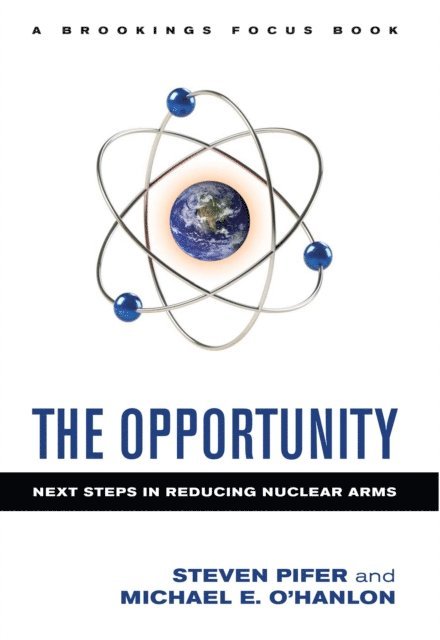
For some observers, nuclear arms control is either a relic of the cold war, or a utopian dream about a denuclearized planet decades in the future. But, as Brookings scholars Steven Pifer and Michael O'Hanlon argue in The Opportunity, arms control can address some key security challenges facing Washington today and enhance both American and global security.Pifer and O'Hanlon make a compelling case for further arms control measuresto reduce the nuclear threat to the United States and its allies, to strengthen strategic stability, to promote greater transparency regarding secretive nuclear arsenals, to create the possibility for significant defense budget savings, to bolster American credibility in the fight to curb nuclear proliferation, and to build a stronger and more sustainable U.S.-Russia relationship.President Obama gave priority to nuclear arms control early in his first term and, by all accounts, would like to be transformational on these questions. Can there be another major U.S.-Russia arms treaty? Can the tactical and surplus strategic nuclear warheads that have so far escaped controls be brought into such a framework? Can a modus vivendi be reached between the two countries on missile defense? And what of multilateral accords on nuclear testing and production of fissile materials for nuclear weapons? Pifer and O'Hanlon concisely frame the issues, the background, and the choices facing the president; provide practical policy recommendations, and put it all in clear and readable prose that will be easily understood by the layman.
Häftad, Engelska, 2014
229 kr
Skickas inom 10-15 vardagar
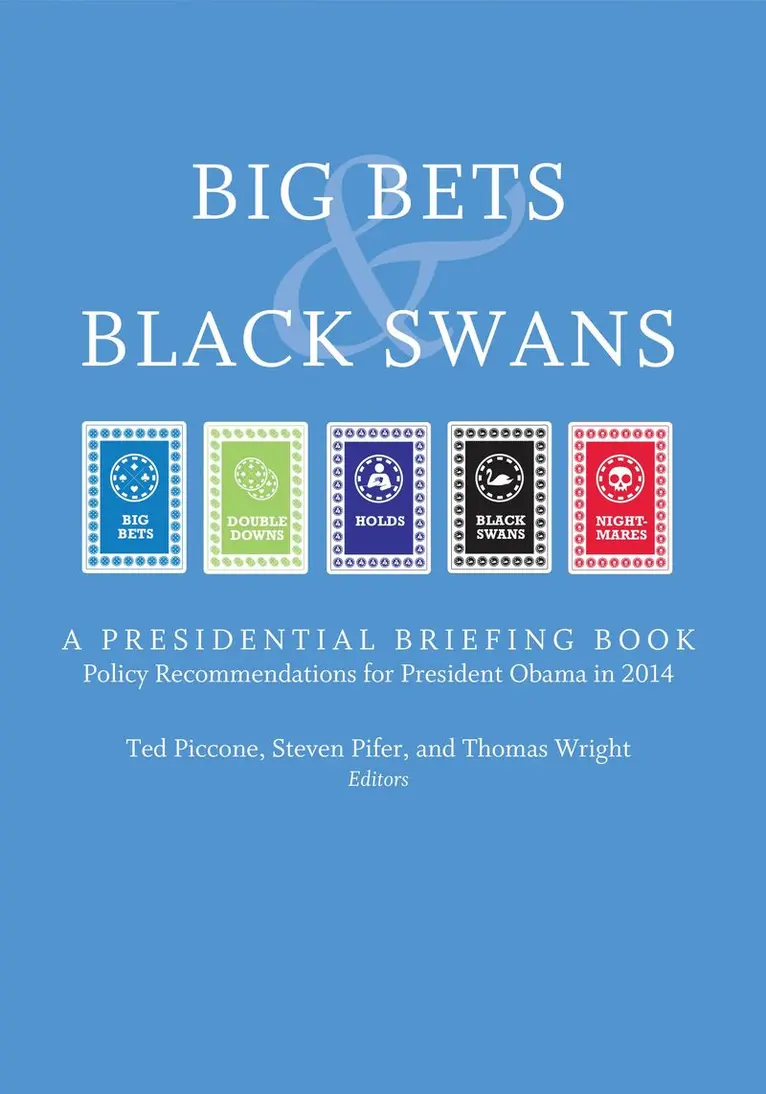
President Obama has just three years left in office to define his legacy in world affairs. He's facing a number of critical challengesthe ongoing war in Syria, the Iran nuclear negotiations, an enigmatic North Korea and other significant crises in world affairs. The president's advisors are busy devising policy recommendations aimed at grappling with these thorny issues. From these, the president must decide which priorities to pursue and how to best exercise U.S. power and influence to manage and shape the global order.This book presents a set of policy analysis and recommendations from The Foreign Policy scholars at the Brookings Institution. Designed to provide the White House with innovative and actionable policy initiatives, the book is constructed as a series of memos to President Obama. This year, the memos are divided into five categories: Big Bets are issues where the president should consider investing his power, time and prestige in major efforts that can have a transformational impact on America and the world. Double Downs are derived from the Big Bets from last year's recommendations that the president should redouble his efforts on. Black Swans are those low-probability but high-impact events that can divert the president and his administration's higher purposes, such as dramatic negative events that he will want to take steps in advance to avoid or to mitigate their consequences. Nightmares are events that look more likely than a Black Swan and could prove particularly troublesome for U.S. interests and the global order, and for which the administration should prepare. Holds are updated policy recommendations to stay the course on approaches suggested last year.
E-bok
Engelska, 2014242 kr
Läs direkt efter köp
President Obama has just three years left in office to define his legacy in world affairs. He's facing a number of critical challengesthe ongoing war in Syria, the Iran nuclear negotiations, an enigmatic North Korea and other significant crises in world affairs. The president's advisors are busy devising policy recommendations aimed at grappling with these thorny issues. From these, the president must decide which priorities to pursue and how to best exercise U.S. power and influence to manage and shape the global order.This book presents a set of policy analysis and recommendations from The Foreign Policy scholars at the Brookings Institution. Designed to provide the White House with innovative and actionable policy initiatives, the book is constructed as a series of memos to President Obama. This year, the memos are divided into five categories: Big Bets are issues where the president should consider investing his power, time and prestige in major efforts that can have a transformational impact on America and the world. Double Downs are derived from the Big Bets from last year's recommendations that the president should redouble his efforts on. Black Swans are those low-probability but high-impact events that can divert the president and his administration's higher purposes, such as dramatic negative events that he will want to take steps in advance to avoid or to mitigate their consequences. Nightmares are events that look more likely than a Black Swan and could prove particularly troublesome for U.S. interests and the global order, and for which the administration should prepare. Holds are updated policy recommendations to stay the course on approaches suggested last year.
Inbunden, Engelska, 2017
380 kr
Skickas inom 10-15 vardagar
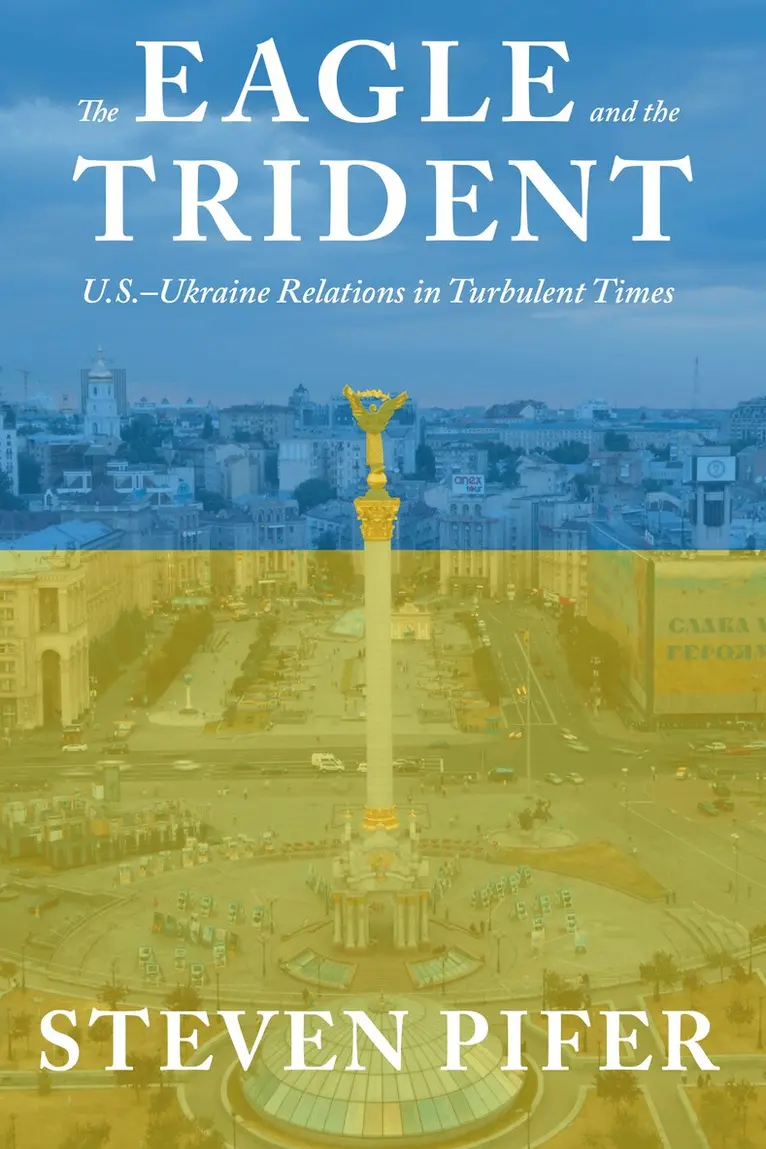
An insider's account of the complex relations between the United States and post-Soviet UkraineThe Eagle and the Trident provides the first comprehensive account of the development of U.S. diplomatic relations with an independent Ukraine, covering the years 1992 through 2004 following the collapse of the Soviet Union. The United States devoted greater attention to Ukraine than any other post-Soviet state (except Russia) after the breakup of the Soviet Union. Steven Pifer, a career Foreign Service officer, worked on U.S.-Ukraine relations at the State Department and the White House during that period and also served as ambassador to Ukraine. With this volume he has written the definitive narrative of the ups and downs in the relationship between Washington and newly independent Ukraine.The relationship between the two countries moved from heady days in the mid- 1990s, when they declared a strategic partnership, to troubled times after 2002. During the period covered by the book, the United States generally succeeded in its major goals in Ukraine, notably the safe transfer of nearly 2,000 strategic nuclear weapons left there after the Soviet collapse. Washington also provided robust support for Ukraine's effort to develop into a modern, democratic, market-oriented state. But these efforts aimed at reforming the state proved only modestly successful, leaving a nation that was not resilient enough to stand up to Russian aggression in Crimea in 2014.The author reflects on what worked and what did not work in the various U.S. approaches toward Ukraine. He also offers a practitioner's recommendations for current U.S. policies in the context of ongoing uncertainty about the political stability of Ukraine and Russia's long-term intentions toward its smaller but important neighbor.
E-bok
Engelska, 2017406 kr
Läs direkt efter köp
An insider''s account of the complex relations between the United States and post-Soviet UkraineThe Eagle and the Trident provides the first comprehensive account of the development of U.S. diplomatic relations with an independent Ukraine, covering the years 1992 through 2004 following the collapse of the Soviet Union. The United States devoted greater attention to Ukraine than any other post-Soviet state (except Russia) after the breakup of the Soviet Union. Steven Pifer, a career Foreign Service officer, worked on U.S.-Ukraine relations at the State Department and the White House during that period and also served as ambassador to Ukraine. With this volume he has written the definitive narrative of the ups and downs in the relationship between Washington and newly independent Ukraine.The relationship between the two countries moved from heady days in the mid- 1990s, when they declared a strategic partnership, to troubled times after 2002. During the period covered by the book, the United States generally succeeded in its major goals in Ukraine, notably the safe transfer of nearly 2,000 strategic nuclear weapons left there after the Soviet collapse. Washington also provided robust support for Ukraine''s effort to develop into a modern, democratic, market-oriented state. But these efforts aimed at reforming the state proved only modestly successful, leaving a nation that was not resilient enough to stand up to Russian aggression in Crimea in 2014.The author reflects on what worked and what did not work in the various U.S. approaches toward Ukraine. He also offers a practitioner''s recommendations for current U.S. policies in the context of ongoing uncertainty about the political stability of Ukraine and Russia''s long-term intentions toward its smaller but important neighbor.