Steven R. Schmid – författare
Visar alla böcker från författaren Steven R. Schmid. Handla med fri frakt och snabb leverans.
4 produkter
4 produkter
2 317 kr
Skickas inom 10-15 vardagar
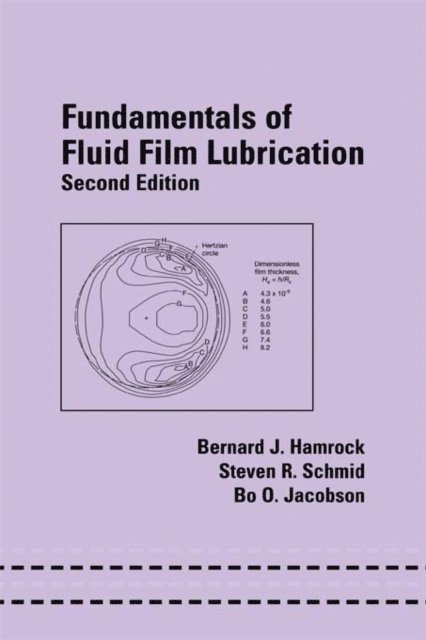
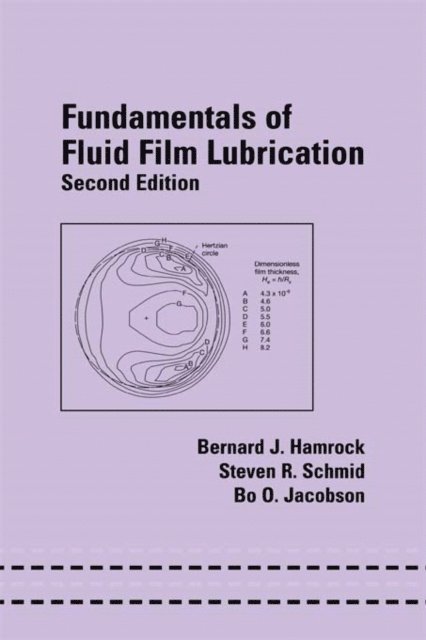
Specifically focusing on fluid film, hydrodynamic, and elastohydrodynamic lubrication, this edition studies the most important principles of fluid film lubrication for the correct design of bearings, gears, and rolling operations, and for the prevention of friction and wear in engineering designs. It explains various theories, procedures, and equations for improved solutions to machining challenges. Providing more than 1120 display equations and an introductory section in each chapter, Fundamentals of Fluid Film Lubrication, Second Edition facilitates the analysis of any machine element that uses fluid film lubrication and strengthens understanding of critical design concepts.
2 521 kr
Skickas inom 10-15 vardagar
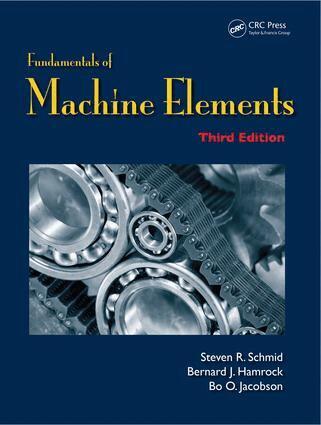
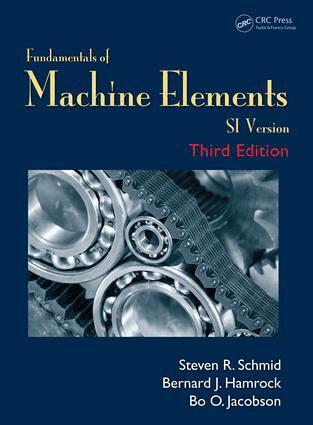
Fundamentals of Machine Elements, Third Edition offers an in-depth understanding of both the theory and application of machine elements. Design synthesis is carefully balanced with design analysis, an approach developed through the use of case studies, worked examples, and chapter problems that address all levels of learning taxonomies. Machine design is also linked to manufacturing processes, an element missing in many textbooks.The third edition signifies a major revision from the second edition. The contents have been greatly expanded and organized to benefit students of all levels in design synthesis and analysis approaches.What’s New in This Edition: Balances synthesis and analysis with strong coverage of modern design theory Links coverage of mechanics and materials directly to earlier courses, with expansion to advanced topics in a straightforward manner Aids students of all levels, and includes tie-in to engineering practice through the use of case studies that highlight practical uses of machine elements Contains questions, qualitative problems, quantitative problems, and synthesis, design, and projects to address all levels of learning taxonomies Includes a solutions manual, book website, and classroom presentations in full color, as well as an innovative "tear sheet" manual that allows instructors to present example problems in lectures in a time-saving manner Expands contents considerably, Topics: the importance of the heat affected zone in welding; design synthesis of spur, bevel, and worm gears; selection of multiple types of rolling element bearings (including deep groove, angular contact, toroidal, needle, and cylindrical and tapered roller) using a standard unified approach; consideration of advanced welding approaches such as brazing, friction welding and spot welding; expansion of fatigue coverage including the use of the staircase method to obtain endurance limit; and design of couplings, snap rings, wave and gas springs, and hydrostatic bearings Provides case studies that demonstrate the real-world application of machine elements. For example, the use of rolling element bearings in windmills, powder metal gears, welds in blisks, and roller coaster brake designs are all new case studies in this edition that represent modern applications of these machine elements. Fundamentals of Machine Elements, Third Editioncan be used as a reference by practicing engineers or as a textbook for a third- or fourth-year engineering course/module. It is intended for students who have studied basic engineering sciences, including physics, engineering mechanics, and materials and manufacturing processes.
1 532 kr
Skickas inom 10-15 vardagar
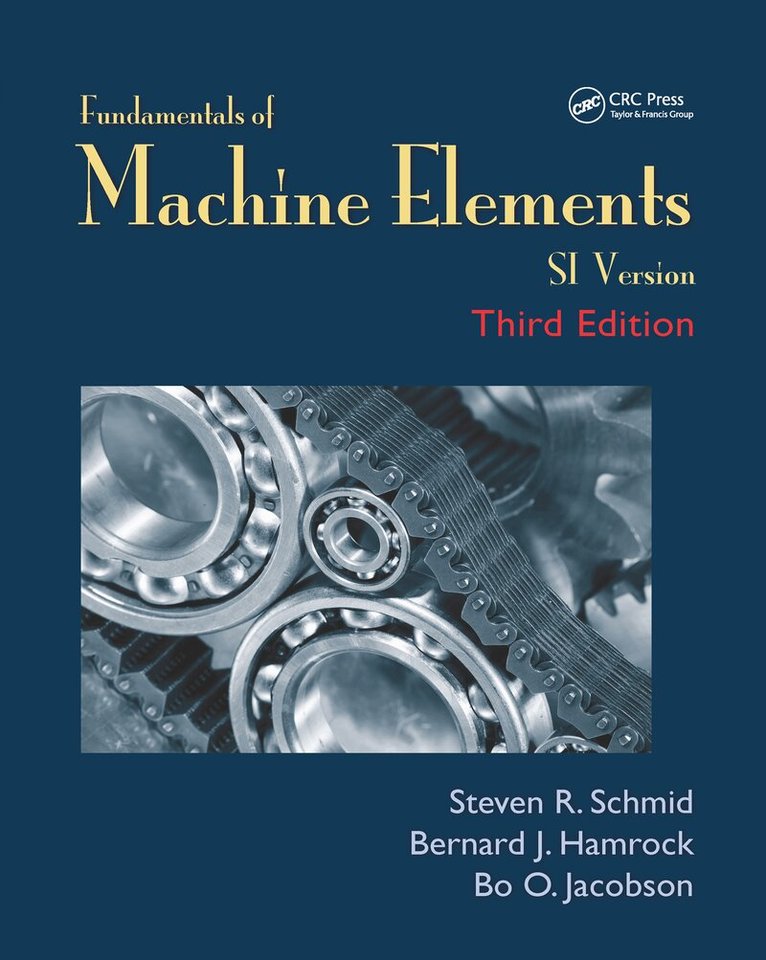
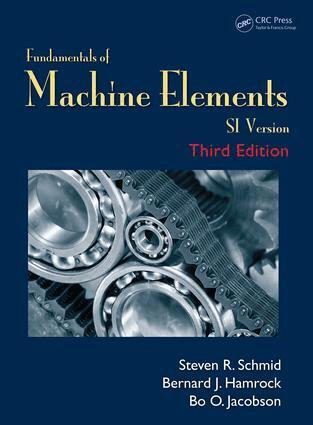
New and Improved SI Edition—Uses SI Units Exclusively in the TextAdapting to the changing nature of the engineering profession, this third edition of Fundamentals of Machine Elements aggressively delves into the fundamentals and design of machine elements with an SI version. This latest edition includes a plethora of pedagogy, providing a greater understanding of theory and design. Significantly Enhanced and Fully IllustratedThe material has been organized to aid students of all levels in design synthesis and analysis approaches, to provide guidance through design procedures for synthesis issues, and to expose readers to a wide variety of machine elements. Each chapter contains a quote and photograph related to the chapter as well as case studies, examples, design procedures, an abstract, list of symbols and subscripts, recommended readings, a summary of equations, and end-of-chapter problems. What’s New in the Third Edition:Covers life cycle engineeringProvides a description of the hardness and common hardness testsOffers an inclusion of flat groove stress concentration factorsAdds the staircase method for determining endurance limits and includes Haigh diagrams to show the effects of mean stressDiscusses typical surface finishes in machine elements and manufacturing processes used to produce themPresents a new treatment of spline, pin, and retaining ring design, and a new section on the design of shaft couplingsReflects the latest International Standards Organization standardsSimplifies the geometry factors for bevel gearsIncludes a design synthesis approach for worm gearsExpands the discussion of fasteners and weldsDiscusses the importance of the heat affected zone for weld qualityDescribes the classes of welds and their analysis methodsConsiders gas springs and wave springsContains the latest standards and manufacturer’s recommendations on belt design, chains, and wire ropesThe text also expands the appendices to include a wide variety of material properties, geometry factors for fracture analysis, and new summaries of beam deflection.
2 749 kr
Skickas inom 7-10 vardagar
Schey's Tribology in Metalworking: Friction, Lubrication, and Wear is an update to the seminal text Tribology in Metalworking by John Schey, originally published by ASM International in 1983.The 1983 first edition served as a recognized essential resource for researchers in the fields of manufacturing tribology and metal forming for many decades. This 2023 update preserves the essential information in that first edition but provides a thorough update, including a description of the significant advances in tribological research and detailed information for every metal forming process.The tribology of metal forming is very different from other sub disciplines of tribology such as in machine design, micromachine or biomedical applications. Metalforming tribology requires understanding of the implications of elevated temperature and the lubricants that are suitable at those temperatures; the complex interactions between oxide-free workpiece and tooling; the use of conversion coatings or engineered surfaces to help entrain lubricant in demanding applications; the use of emulsions, solid lubricants, cryogenics, and phase change lubricants; contact mechanics for plastically deforming workpieces; and many other considerations.The book is written in an approachable, practical style and each chapter has hundreds of references. Chapters and sections are logically arranged, and the comprehensive indexes are complete. Topics covered include fundamentals of metalworking; surfaces and friction; wear; theory of lubrication; metalworking lubricants; measurement techniques; rolling; drawing; extrusion; forging; sheet metalworking; metal removal; and much more.Author Steven R. Schmid is a Distinguished Professor at the University of North Carolina at Charlotte and has performed research on metalworking tribology for 30 years. He has won numerous best paper and teaching awards and served as President of the North American Manufacturing Research Institute from 2015 to 2016 and an International Delegate to SME from 2019 to 2020. He received the SME Gold Medal in 2019, a lifetime achievement award from MESIC (Spain) in 2020, and the David Dornfeld Innovation Award in 2023.