Steven Rose – författare
Visar alla böcker från författaren Steven Rose. Handla med fri frakt och snabb leverans.
21 produkter
21 produkter
Häftad, Engelska, 1999
151 kr
Skickas
First published in 1966, THE CHEMISTRY OF LIFE has held its own as a clear and authoritative introduction to the world of biochemistry. This fourth edition has been fully updated and revised to include the latest developments in DNA and protein synthesis, cell regulation, and their social and medical implications.
E-bok
Engelska, 1999122 kr
Läs direkt efter köp
First published in 1966, THE CHEMISTRY OF LIFE has held its own as a clear and authoritative introduction to the world of biochemistry. This fourth edition has been fully updated and revised to include the latest developments in DNA and protein synthesis, cell regulation, and their social and medical implications.
Häftad, Engelska, 2003
1 322 kr
Skickas inom 3-6 vardagar
Häftad, Engelska, 2006
434 kr
Skickas inom 3-6 vardagar
Häftad, Engelska, 2004
856 kr
Skickas inom 7-10 vardagar
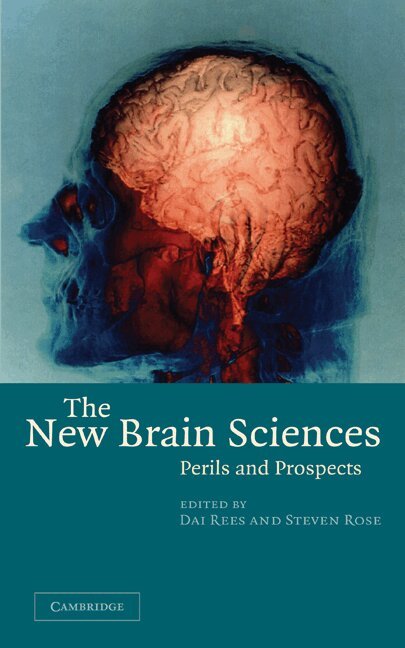
The last 20 years have seen an explosion of research and development in the neurosciences. Indeed, some have called this first decade of the 21st century 'the decade of the mind'. An all-encompassing term, the neurosciences cover such fields as biology, psychology, neurology, psychiatry and philosophy and include anatomy, physiology, molecular biology, genetics and behaviour. It is now a major industry with billions of dollars of funding invested from both public and private sectors. Huge progress has been made in our understanding of the brain and its functions. However, with progress comes controversy, responsibility and dilemma. The New Brain Sciences: Perils and Prospects examines the implications of recent discoveries in terms of our sense of individual responsibility and personhood. With contributing chapters from respected and influential names in neuroscience, law, psychology, philosophy and sociology, The New Brain Sciences should kick-start a discussion of where neuroscience is headed.
Inbunden, Engelska, 2004
1 959 kr
Skickas inom 7-10 vardagar
The last 20 years have seen an explosion of research and development in the neurosciences. Indeed, some have called this first decade of the 21st century 'the decade of the mind'. An all-encompassing term, the neurosciences cover such fields as biology, psychology, neurology, psychiatry and philosophy and include anatomy, physiology, molecular biology, genetics and behaviour. It is now a major industry with billions of dollars of funding invested from both public and private sectors. Huge progress has been made in our understanding of the brain and its functions. However, with progress comes controversy, responsibility and dilemma. The New Brain Sciences: Perils and Prospects examines the implications of recent discoveries in terms of our sense of individual responsibility and personhood. With contributing chapters from respected and influential names in neuroscience, law, psychology, philosophy and sociology, The New Brain Sciences should kick-start a discussion of where neuroscience is headed.
Inbunden, Engelska, 2016
748 kr
Skickas inom 5-8 vardagar
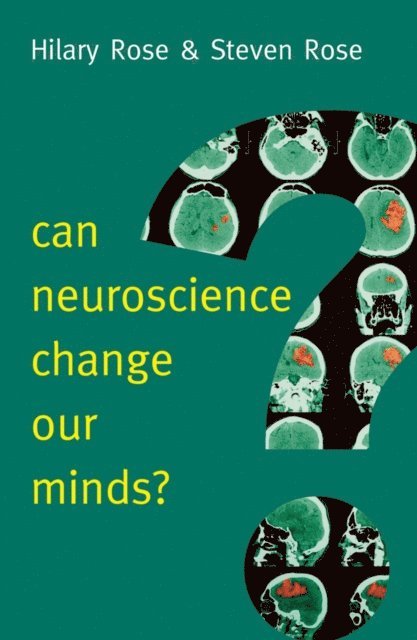
Neuroscience, with its astounding new technologies, is uncovering the workings of the brain and with this perhaps the mind. The 'neuro' prefix spills out into every area of life, from neuroaesthetics to neuroeconomics, neurogastronomy and neuroeducation. With its promise to cure physical and social ills, government sees neuroscience as a tool to increase the 'mental capital' of the children of the deprived and workless. It sets aside intensifying poverty and inequality, instead claiming that basing children's rearing and education on brain science will transform both the child's and the nation's health and wealth. Leading critic of such neuropretensions, neuroscientist Steven Rose and sociologist of science Hilary Rose take a sceptical look at these claims and the science underlying them, sifting out the sensible from the snake oil. Examining the ways in which science is shaped by and shapes the political economy of neoliberalism, they argue that neuroscience on its own is not able to bear the weight of these hopes.
Häftad, Engelska, 2016
233 kr
Skickas inom 5-8 vardagar
Neuroscience, with its astounding new technologies, is uncovering the workings of the brain and with this perhaps the mind. The 'neuro' prefix spills out into every area of life, from neuroaesthetics to neuroeconomics, neurogastronomy and neuroeducation. With its promise to cure physical and social ills, government sees neuroscience as a tool to increase the 'mental capital' of the children of the deprived and workless. It sets aside intensifying poverty and inequality, instead claiming that basing children's rearing and education on brain science will transform both the child's and the nation's health and wealth. Leading critic of such neuropretensions, neuroscientist Steven Rose and sociologist of science Hilary Rose take a sceptical look at these claims and the science underlying them, sifting out the sensible from the snake oil. Examining the ways in which science is shaped by and shapes the political economy of neoliberalism, they argue that neuroscience on its own is not able to bear the weight of these hopes.
E-bok
Engelska, 2016245 kr
Läs direkt efter köp
Neuroscience, with its astounding new technologies, is uncovering the workings of the brain and with this perhaps the mind. The ''neuro'' prefix spills out into every area of life, from neuroaesthetics to neuroeconomics, neurogastronomy and neuroeducation. With its promise to cure physical and social ills, government sees neuroscience as a tool to increase the ''mental capital'' of the children of the deprived and workless. It sets aside intensifying poverty and inequality, instead claiming that basing children''s rearing and education on brain science will transform both the child''s and the nation''s health and wealth. Leading critic of such neuropretensions, neuroscientist Steven Rose and sociologist of science Hilary Rose take a sceptical look at these claims and the science underlying them, sifting out the sensible from the snake oil. Examining the ways in which science is shaped by and shapes the political economy of neoliberalism, they argue that neuroscience on its own is not able to bear the weight of these hopes.
E-bok
Engelska, 2010144 kr
Läs direkt efter köp
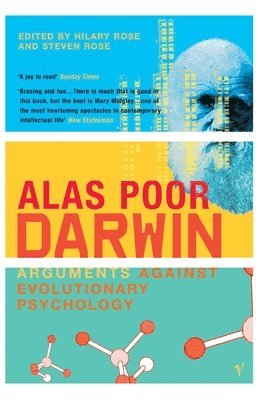
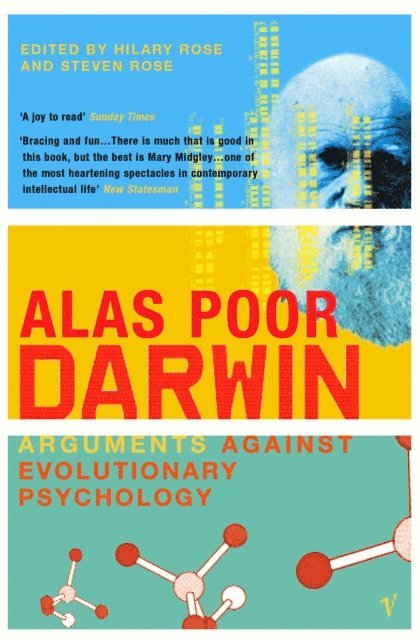
Today, genes are called upon to explain almost every aspect of our lives, from social inequalities to health, sexual preference and criminality. Based on Darwin's theory of evolution and natural selection, Evolutionary Psychology with its claim that 'it's all in our genes' has become the most popular scientific theory of the late 20th century. Books such as Richard Dawkins's The Selfish Gene, Edward O.Wilson's Consilience and Steven Pinker's The Language Instinct have become bestsellers and frame the public debate on human life and development: we can see their influence as soon as we open a Sunday newspaper. In recent years, however, many biologists and social scientists have begun to contest this new biological determinism and shown that Evolutionary Psychology rests on shaky empirical evidence, flawed premises and unexamined political presuppositions. In this provocative and ground-breaking book, Hilary and Steven Rose have gathered together the most eminent and outspoken critics of this fashionable ideology, ranging from Stephen Jay Gould and Patrick Bateson to Mary Midgley, Tim Ingold and Annette Karmiloff-Smith. What emerges is a new perspective on human development which acknowledges the complexity of life by placing at its centre the living organism rather than the gene.
E-bok
Engelska, 2012144 kr
Läs direkt efter köp
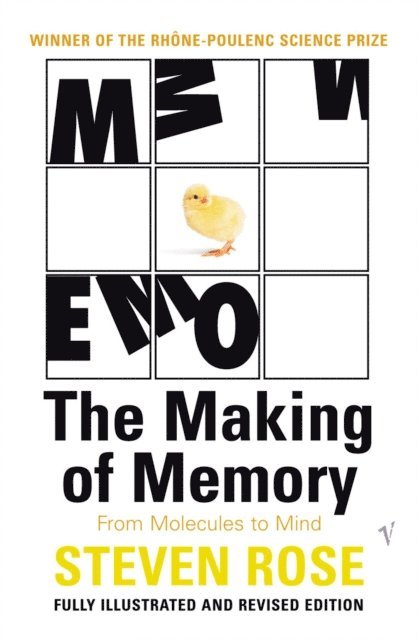
Steven Rose's The Making of Memory is about just that, in both its senses: the biological processes by which we humans - and other animals - learn and remember, and how researchers can explore these mechanisms. But it is also about much more. When the first edition of this fascinating book won the Science book Prize in 1993, the judges described it as 'a riveting read...a first-hand account by a practicing scientist working at the forefront of medical research and Rose does not duck the issues which that raises.' Now ten years on, research has itself moved forward, and Rose has taken the opportunity to fully revise the book. But this is more than mere revision. Where ten years ago he argued the case for research on memory because it is the most extraordinary of human attributes, Rose's own research has now opened the doors to a potential new treatment for Alzheimer's Disease undreamed of a decade ago, and in an entirely new chapter he describes how this potential breakthrough has occurred.
Häftad, Engelska, 2014
315 kr
Skickas inom 5-8 vardagar
E-bok
Engelska, 201459 kr
Läs direkt efter köp
Steve''s poems will capture your heart like no other. You are drawn into the imagery, finding yourself spell-bound.From Love to Vietnam, his topics touch everyone.Titles include Comrades in Vietnam, I Can''t Take That Touch Away, The Moon is On the River,Words on Awakening, Ancient Window Blinds, Angels, and As I See It Greta.This is a must have for anyone who enjoys poetry.
Häftad, Engelska, 2017
245 kr
Skickas inom 3-6 vardagar
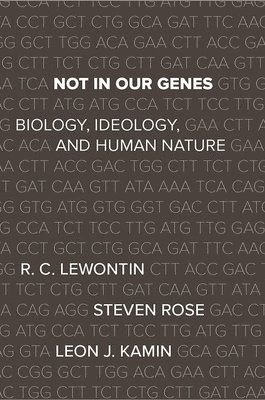
Not in our Genes systematically exposes and dismantles the claims that inequalities class, race, gender are the products of biological, genetic inheritances. 'Informative, entertaining, lucid, forceful, frequently witty... never dull... should be read and remembered for a long time.' - New York Times Book Review. 'The authors argue persuasively that biological explanations for why we act as we do are based on faulty (in some cases, fabricated) data and wild speculation... It is debunking at its best.' - Psychology Today
Häftad, Engelska, 2014
156 kr
Skickas inom 7-10 vardagar
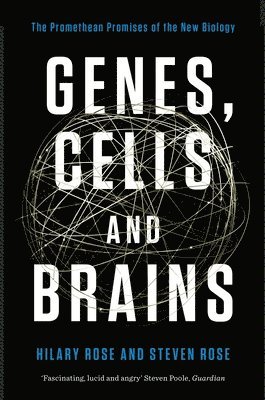
Our fates lie in our genes and not in the stars, said James Watson, co-discoverer of the structure of DNA. But Watson could not have predicted the scale of the industry now dedicated to this new frontier. Since the launch of the multibillion-dollar Human Genome Project, the biosciences have promised miraculous cures and radical new ways of understanding who we are. But where is the new world we were promised? Now updated with a new afterword, Genes, Cells and Brains asks why the promised cornucopia of health benefits has failed to emerge and reveals the questionable enterprise that has grown out of bioethics. The authors, feminist sociologist Hilary Rose and neuroscientist Steven Rose, examine the establishment of biobanks, the rivalries between public and private gene sequencers, and the rise of stem cell research. The human body is becoming a commodity, and the unfulfilled promises of the science behind this revolution suggest profound failings in genomics itself.
E-bok
Engelska, 2013127 kr
Läs direkt efter köp
Our fates lie in our genes and not in the stars, said James Watson, co-discoverer of the structure of DNA. But Watson could not have predicted the scale of the industry now dedicated to this new frontier. Since the launch of the multibillion-dollar Human Genome Project, the biosciences have promised miraculous cures and radical new ways of understanding who we are. But where is the new world we were promised? Now updated with a new afterword, Genes, Cells and Brains asks why the promised cornucopia of health benefits has failed to emerge and reveals the questionable enterprise that has grown out of bioethics. The authors, feminist sociologist Hilary Rose and neuroscientist Steven Rose, examine the establishment of biobanks, the rivalries between public and private gene sequencers, and the rise of stem cell research. The human body is becoming a commodity, and the unfulfilled promises of the science behind this revolution suggest profound failings in genomics itself.
Häftad, Engelska, 2025
252 kr
Skickas inom 5-8 vardagar
Inbunden, Engelska, 2025
315 kr
Skickas inom 5-8 vardagar
E-bok
Spanska, 2017136 kr
Läs direkt efter köp
El prefijo neuro está de moda y se aplica a toda clase de especialidades. Esto explica los excesos del neurocentrismo, de las neuroculturas y de las neurotecnociencias y los peligros asociados de tratar de reducir a procesos neuronales la riqueza de nuestros pensamientos, sentimientos, recuerdos y conductas. El poder seductor de este tipo de investigaciones reduccionistas coincide con una consolidación del neoliberalismo y es compatible con sus necesidades e intereses. Se prescinde de lo social, de la ciudadanía y de la polis y se explican las conductas y motivaciones de las personas como procesos neuronales; se redefine la pobreza cuya solución se le ofrece a la neurociencia y no se considera la desigualdad social que la origina. La neurociencia aparece así como una especialidad muy útil para la teoría del Capital Humano y para las políticas educativas que trabajan con esta filosofía de fondo. Uno de los objetivos prioritarios se centra en llevar a cabo intervenciones tempranas para aumentar el capital mental, mejorar el rendimiento académico y modificar conductas infantiles inadecuadas para que así, el día de mañana, todos podamos contribuir al crecimiento económico. La comprensión del cerebro y de sus aprendizajes nos dirá cómo maximizar el potencial de la infancia, reemplazando la complejidad sociológica por la certeza biológica; ahí está, por ejemplo, el crecimiento de los aparatos y juegos de entrenamiento cerebral. La visión conjunta de Hilary y Steven ROSE que auna sociología y neurociencia, es escéptica con las afirmaciones de que la neurociencia puede informar a la educación y las políticas de intervención temprana, y les preocupa el mal uso que la política neoliberal está haciendo de sus líneas de investigación.
Inbunden, Engelska, 1990
4 280 kr
Skickas inom 3-6 vardagar
Häftad, Engelska, 1990
1 252 kr
Skickas inom 3-6 vardagar