Strobe Talbott – författare
Visar alla böcker från författaren Strobe Talbott. Handla med fri frakt och snabb leverans.
15 produkter
15 produkter
E-bok
Engelska, 200789 kr
Läs direkt efter köp
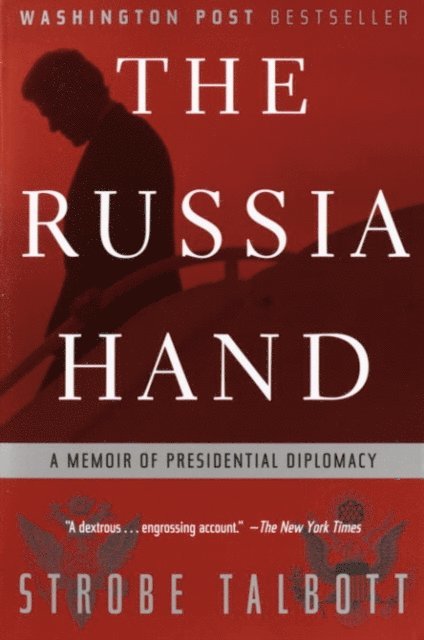
During the past ten years, few issues have mattered more to America’s vital interests or to the shape of the twenty-first century than Russia’s fate. To cheer the fall of a bankrupt totalitarian regime is one thing; to build on its ruins a stable democratic state is quite another. The challenge of helping to steer post-Soviet Russia-with its thousands of nuclear weapons and seething ethnic tensions-between the Scylla of a communist restoration and the Charybdis of anarchy fell to the former governor of a poor, landlocked Southern state who had won national election by focusing on domestic issues. No one could have predicted that by the end of Bill Clinton’s second term he would meet with his Kremlin counterparts more often than had all of his predecessors from Harry Truman to George Bush combined, or that his presidency and his legacy would be so determined by his need to be his own Russia hand.With Bill Clinton at every step was Strobe Talbott, the deputy secretary of state whose expertise was the former Soviet Union. Talbott was Clinton’s old friend, one of his most trusted advisers, a frequent envoy on the most sensitive of diplomatic missions and, as this book shows, a sharp-eyed observer. The Russia Hand is without question among the most candid, intimate and illuminating foreign-policy memoirs ever written in the long history of such books. It offers unparalleled insight into the inner workings of policymaking and diplomacy alike. With the scope of nearly a decade, it reveals the hidden play of personalities and the closed-door meetings that shaped the most crucial events of our time, from NATO expansion, missile defense and the Balkan wars to coping with Russia’s near-meltdown in the wake of the Asian financial crisis. The book is dominated by two gifted, charismatic and flawed men, Bill Clinton and Boris Yeltsin, who quickly formed one of the most intense and consequential bonds in the annals of statecraft. It also sheds new light on Vladimir Putin, as well as the altered landscape after September 11, 2001.The Russia Hand is the first great memoir about war and peace in the post-cold war world.From the Hardcover edition.
Häftad, Engelska, 2002
178 kr
Skickas inom 5-8 vardagar
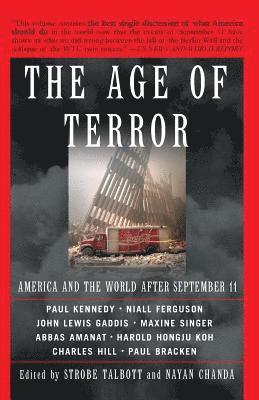
September 11 marked the beginning of a new era- an age of terror in which counter-terrorism will be one of the highest priorities of national governments and international institutions. How we proceed in this new war depends in large measure on the answer to a prior question: what exactly happened here and why? In The Age of Terror, eight leading historians and policymakers address this question and examine the considerations and objectives of policy decisions in post-September 11 America. Co-published with the Yale centre for the Study of Globalization
Häftad, Engelska, 2009
379 kr
Skickas inom 3-6 vardagar
Häftad, Engelska, 2003
360 kr
Skickas inom 3-6 vardagar
E-bok
PDF, Engelska, 2010333 kr
Läs direkt efter köp
""Those of us alive today are the first generation to know that we live in the Age of Global Warming. We may also be the last generation to have any chance of doing something about it. Our forebears had the excuse of ignorance. Our descendants will have the excuse of helplessness. We have no excuse.""From Chapter OneFast Forward is equal parts science primer, history lesson, policy prescription, and ethical treatise. This pithy and compelling book makes clear what we know and don't know about global warming; why the threat demands prudent and urgent action; why the transition to a low-carbon economy will be the most difficult political and economic transaction in history; and how it requires nothing less than a revolution in our sense of civic responsibility.William Antholis and Strobe Talbott guide the reader through two decades of climate change diplomacy, explaining the national and international factors that have influenced and often impeded the negotiations. Their brisk narrative includes behind-the-scenes coverage of Barack Obama's impromptu meeting with key leaders in Copenhagen that broke a logjam and salvaged an agreement. The near-disaster of that summit demonstrated how the United Nations cannot move forward fast enough to produce a global deal. Instead, the ""Big Four"" of the United States, the European Union, China, and India must drive the next stage of the process. Antholis and Talbott also recommend a new international mechanism modeled on the General Agreement on Tariffs and Trade that would monitor national commitments and create incentives for other countries to coordinate their efforts to cut emissions.Antholis and Talbott put their recommendations for immediate congressional and diplomatic action into the larger context of our obligation to future generations. They note that this theme is stressed by a diverse coalition of religious leaders who are calling for ambitious political action on climate change. The world we leave to our children and grandchildren is not an abstraction, or even just a legacy; we must think about what kind of world that will be in deciding how liveand acttoday.
E-bok
PDF, Engelska, 2010292 kr
Läs direkt efter köp
In this revised edition of the highly praised Engaging India, Strobe Talbott updates his bestselling diplomatic account of America's parallel negotiations with India and Pakistan over nuclear proliferation in the late 1990s. The update looks at recent nuclear dealings between India and the United States, including Indian Prime Minister Manmohan Singh's 2005 visit to America. Under the highly controversial agreement that emerged, the United States would give India access to U.S. nuclear technology and conventional weapons systems. In exchange, India would place its civilian nuclear program under international monitoring and continue the ban on nuclear testing. Praise for the hardback edition "A fascinating study of how diplomatic dialogue can slowly broaden to include subtle considerations of the domestic politics and foreign policies of both countries involved." Foreign Affairs "An important addition to the literature of modern diplomatic history."Choice "Detailed and revealing... an honest behind-the-scenes look at how countries make and defend policies.... A must-read for any student of diplomacy."Outlook (India) "A rapidly engrossing work and a welcome addition to modern world history shelves."Reviewer's Bookwatch "A highly engaging book; lucid, informative and at times, amusing."International Affairs
Häftad, Engelska, 2011
283 kr
Skickas inom 10-15 vardagar
Fast Forward is equal parts science primer, history lesson, policy prescription, and ethical treatise. This pithy and compelling book makes clear what we know and don't know about global warming; why the threat demands prudent and urgent action; why the transition to a low-carbon economy will be the most difficult political and economic transaction in history; and how it requires nothing less than a revolution in our sense of civic responsibility.William Antholis and Strobe Talbott guide the reader through two decades of climate change politics and diplomacy, explaining the national and international factors that have influenced and often impeded domestic climate legislation and global negotiations. Recent United Nationssponsored summits have demonstrated that the world cannot wait for a binding global treaty. Instead, the authors believe that the ""Big Four"" of America, the European Union, China, and India must lead the way forward. They recommend a new international mechanism modeled on the General Agreement on Tariffs and Trade that would monitor national commitments and create incentives for other countries to coordinate their efforts to cut emissions.Antholis and Talbott put their recommendations for legislative and diplomatic action into the larger context of our obligation to future generations, echoing a theme stressed by a diverse coalition of religious leaders calling for ambitious action on climate change. The world we leave to our children and grandchildren is not an abstraction, or even just a legacy; we must think about what kind of world that will be in deciding how we liveand acttoday.Praise for Fast Forward""William Antholis and Strobe Talbott brilliantly explode the economic and scientific myths about climate change while elevating the political debate to a transgenerational moral crisis. Their synthesis of science, economics, religion, and philosophy is a clarion call to action for anyone interested in the future of the planetwhich means all of us.""Andrea Mitchell, NBC News""In their very timely and fast-paced account of where we are today on the politics of global warming, the authors see Copenhagen as having pointed up the futility of relying on the United Nations as the only vehicle through which to tackle climate change.""Ed Luce, Financial Times""Strobe Talbott and Bill Antholis have made an admirable and important effort to move beyond the recent political rancor in Washington. They have a plan for leaders who want to be serious about energy and climate.""Senator Richard G. Lugar (R-Ill.)
E-bok
Engelska, 2011292 kr
Läs direkt efter köp
Fast Forward is equal parts science primer, history lesson, policy prescription, and ethical treatise. This pithy and compelling book makes clear what we know and don't know about global warming; why the threat demands prudent and urgent action; why the transition to a low-carbon economy will be the most difficult political and economic transaction in history; and how it requires nothing less than a revolution in our sense of civic responsibility.William Antholis and Strobe Talbott guide the reader through two decades of climate change politics and diplomacy, explaining the national and international factors that have influenced and often impeded domestic climate legislation and global negotiations. Recent United Nationssponsored summits have demonstrated that the world cannot wait for a binding global treaty. Instead, the authors believe that the ""Big Four"" of America, the European Union, China, and India must lead the way forward. They recommend a new international mechanism modeled on the General Agreement on Tariffs and Trade that would monitor national commitments and create incentives for other countries to coordinate their efforts to cut emissions.Antholis and Talbott put their recommendations for legislative and diplomatic action into the larger context of our obligation to future generations, echoing a theme stressed by a diverse coalition of religious leaders calling for ambitious action on climate change. The world we leave to our children and grandchildren is not an abstraction, or even just a legacy; we must think about what kind of world that will be in deciding how we liveand acttoday.Praise for Fast Forward""William Antholis and Strobe Talbott brilliantly explode the economic and scientific myths about climate change while elevating the political debate to a transgenerational moral crisis. Their synthesis of science, economics, religion, and philosophy is a clarion call to action for anyone interested in the future of the planetwhich means all of us.""Andrea Mitchell, NBC News""In their very timely and fast-paced account of where we are today on the politics of global warming, the authors see Copenhagen as having pointed up the futility of relying on the United Nations as the only vehicle through which to tackle climate change.""Ed Luce, Financial Times""Strobe Talbott and Bill Antholis have made an admirable and important effort to move beyond the recent political rancor in Washington. They have a plan for leaders who want to be serious about energy and climate.""Senator Richard G. Lugar (R-Ill.)
E-bok
Engelska, 201438 kr
Läs direkt efter köp
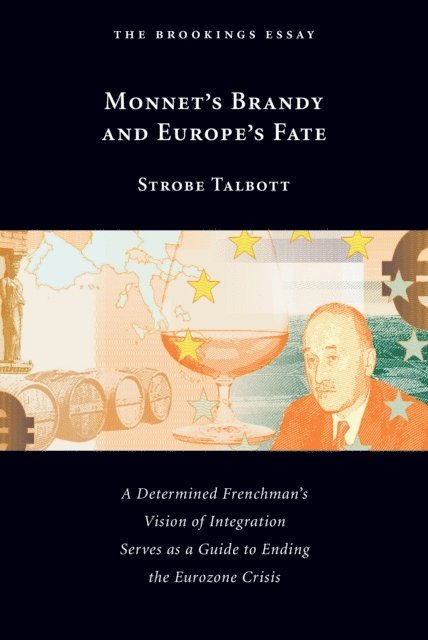
The past five years have been turbulent for the eurozone. Yet leaders such as Angela Merkel and François Hollande are determined to keep The European Project intact, and even among one-time critics there is a broad consensus that the eurozone will have to hang together. Strobe Talbott introduces the extraordinary life and vision of Jean Monnetthe man credited as the architect of European unity. Monnet died in 1979, long before the euro went into circulation, and his relevance today is all the more striking in light of his idiosyncratic career. He was born in 1888 to a long line of brandy artisans. He had no formal training as an economist, yet he is ranked alongside Keynes. He was never elected to public office, and his fellow countrymen sometimes mocked him as the great American.” Ironically, some believed that Monnet’s arguments were particularly effective with FDR, and later speculated that they might even have helped shorten World War II by a year. In this essay, Talbott demonstrates how Monnet’s vision of integration may serve as a guide to ending the current eurozone crisis. With minds in key capitals now focused on cobbling together institutional measures of the sort that Monnet believed necessary for monetary union, his vision of a united Europe may well survive and, over time, succeed.
E-bok
Engelska, 2020286 kr
Läs direkt efter köp
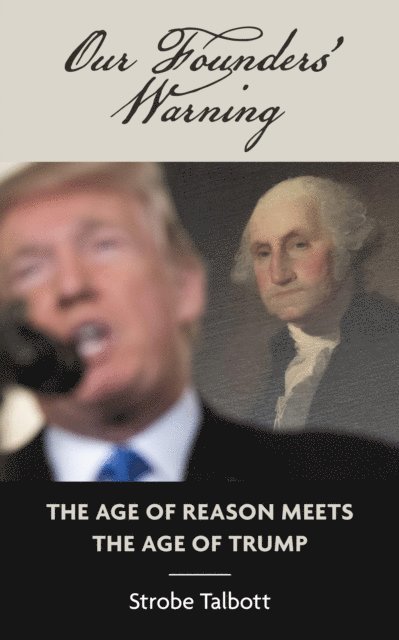
The presidency of Donald Trump has wreaked havoc on American democracy, divided American society, unsettled foreign allies and partners, and heartened dictators around the world. The damage at home and abroad is likely to cast a long shadow into the future. Trump has also defiled the past, most notably America''s origin and its soul.The Founders counted on their successors to protect and perfect their prodigy with its fundamental ideals, laws, and procedures. They also aspired to a code of personal morals and character. Paramount were honesty, rationality, empathy, and responsibility to the citizenry.These liberal, revolutionary criteria for public service and leadership derived from the European Enlightenment. The spirit of that movement and its American version is alien to Trump, and many of his predecessors would find him abhorrent and dangerous.Strobe Talbott tells that story from the vantage of the Age of Trump, bringing out the stark contrast between the 45th president and the first sixWashington, Adams, Jefferson, Madison, Monroe, John Quincy Adams, who were children of the Age of Reason.Amid myriad books on the Trump phenomenon in these dark days, Talbott shines a light on our history in hope that the Founders' legacy, now in peril, will be vindicated.
Häftad, Engelska, 2006
285 kr
Skickas inom 10-15 vardagar
In this revised edition of the highly praised Engaging India, Strobe Talbott updates his bestselling diplomatic account of America's parallel negotiations with India and Pakistan over nuclear proliferation in the late 1990s. The update looks at recent nuclear dealings between India and the United States, including Indian Prime Minister Manmohan Singh's 2005 visit to America. Under the highly controversial agreement that emerged, the United States would give India access to U.S. nuclear technology and conventional weapons systems. In exchange, India would place its civilian nuclear program under international monitoring and continue the ban on nuclear testing. Praise for the hardback edition ""A fascinating study of how diplomatic dialogue can slowly broaden to include subtle considerations of the domestic politics and foreign policies of both countries involved."" Foreign Affairs ""An important addition to the literature of modern diplomatic history.""Choice ""Detailed and revealing... an honest behind-the-scenes look at how countries make and defend policies.... A must-read for any student of diplomacy.""Outlook (India) ""A rapidly engrossing work and a welcome addition to modern world history shelves.""Reviewer's Bookwatch ""A highly engaging book; lucid, informative and at times, amusing.""International Affairs
E-bok
PDF, Engelska, 2004393 kr
Läs direkt efter köp
On May 11, 1998, three nuclear devices detonated under the Thar Desert in India shook the surrounding villagesand the rest of the world. The immediate effect was to plunge U.S.-India relations, already vexed by decades of tension and estrangement, into a new crisis. The situation deteriorated further when Pakistan responded in kind two weeks later, testing a nuclear weapon for the first time. Engaging India is the firsthand story of the diplomacy conducted between the United States and the two South Asian neighbors after the nuclear tests. In this book, the American point man for the dialogue takes us behind the scenes of one of the most suspenseful and consequential diplomatic dramas of our time, reconstructing what happenedand whywith narrative verve, rich human detail, and penetrating analysis. From June 1998 to September 2000, in what was the most extensive dialogue ever between the United States and India, Deputy Secretary of State Strobe Talbott and Indian Minister of External Affairs Jaswant Singh met fourteen times in seven countries on three continents. They discussed both the immediate items on the security and nonproliferation agenda, as well as their wider visions for the U.S.-India relationship and the potential for economic and strategic cooperation between the two countries. As the relationship improved over the course of the talks, the United States was to able play a role in averting the possibility of nuclear war over the contested territory of Kashmir in the summer of 1999the specifics of which are included for the first time in this book, told in way only a protagonist can. The Talbott-Singh diplomacy laid the groundwork for the transformational visit of President Bill Clinton to India in March 2000 and helped end fifty years of estrangement between the world's two largest democracies. As pursuit of Islamic militants continues across South Asia, the increased cooperation established by Talbott and Singh will be an invaluable
E-bok
Engelska, 200878 kr
Läs direkt efter köp
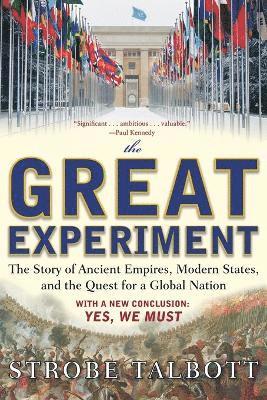
This dramatic narrative of breathtaking scope and riveting focus puts the "story" back into history. It is the saga of how the most ambitious of big ideas -- that a world made up of many nations can govern itself peacefully -- has played out over the millennia. Humankind''s "Great Experiment" goes back to the most ancient of days -- literally to the Garden of Eden -- and into the present, with an eye to the future. Strobe Talbott looks back to the consolidation of tribes into nations -- starting with Israel -- and the absorption of those nations into the empires of Hammurabi, the Pharaohs, Alexander, the Caesars, Charlemagne, Genghis Khan, the Ottomans, and the Hapsburgs, through incessant wars of territory and religion, to modern alliances and the global conflagrations of the twentieth century. He traces the breakthroughs and breakdowns of peace along the way: the Pax Romana, the Treaty of Westphalia, the Concert of Europe, the false start of the League of Nations, the creation of the flawed but indispensable United Nations, the effort to build a "new world order" after the cold war, and America''s unique role in modern history as "the master builder" of the international system. Offering an insider''s view of how the world is governed today, Talbott interweaves through this epic tale personal insights and experiences and takes us with him behind the scenes and into the presence of world leaders as they square off or cut deals with each other. As an acclaimed journalist, he covered the standoff between the superpowers for more than two decades; as a high-level diplomat, he was in the thick of tumultuous events in the 1990s, when the bipolar equilibrium gave way to chaos in the Balkans, the emergence of a new breed of international terrorist, and America''s assertiveness during its "unipolar moment" -- which he sees as the latest, but not the last, stage in the Great Experiment. Talbott concludes with a trenchant critique of the worldview and policies of George W. Bush, whose presidency he calls a "consequential aberration" in the history of American foreign policy. Then, looking beyond the morass in Iraq and the battle for the White House, he argues that the United States can regain the trust of the world by leading the effort to avert the perils of climate change and nuclear catastrophe.
E-bok
Engelska, 2016150 kr
Läs direkt efter köp
The landmark story of Bush-Gorbachev diplomacy: “No one has ever given as complete and compelling an account of the higher reaches of foreign policy” (Time). December 1989. The Berlin Wall had fallen. Millions across the Eastern Bloc were enjoying new freedoms. And the USSR was falling apart. But the peaceful end of the Cold War was far from assured, requiring the leaders of rival superpowers to look beyond the animosities of the past and embrace an uncertain future. At the Highest Levels is the fascinating story of that unlikely partnership, a real-time exposé of the negotiations between US President George H. W. Bush and Soviet Premier Mikhail Gorbachev. Granted extraordinary access to private conversations and closed-door meetings at the Kremlin, White House, Pentagon, CIA, and KGB, Michael Beschloss and Strobe Talbott reveal the high-stakes international diplomacy that ended the nuclear arms race and decades of proxy wars. The result is “an accurate first draft of the Cold War’s last days,” wrote David Remnick in the New Yorker, “filled with gaudy historical riches.” Each an acclaimed author in his own right, Beschloss and Talbott together deliver journalism at its best: an “intimate and utterly absorbing” record of this critical meeting of minds (The New York Times).
E-bok
Engelska, 2018193 kr
Läs direkt efter köp
Riveting accounts of the Cold War power struggles from the New York Times–bestselling author and “nation’s leading presidential historian” (Newsweek). The Crisis Years: A national bestseller on the complex relationship between President John F. Kennedy and Soviet Premier Nikita Khrushchev, this “definitive” history covers the tumultuous period from 1960 through 1963 when the Berlin Wall was built, and the Bay of Pigs invasion and the Cuban Missile Crisis brought the United States and Soviet Union to the brink of nuclear war (David Remnick, The New Yorker). “Impressively researched and engrossingly narrated.” —Los Angeles Times Mayday: On May Day 1960, Soviet forces downed a CIA U-2 spy plane flown by Francis Gary Powers, two weeks before a crucial summit. This forced President Dwight Eisenhower to decide whether to admit to Nikita Khrushchev—and the world—that he had secretly ordered the flight. Drawing on previously unavailable CIA documents, diaries, and letters, as well as the recollections of Eisenhower’s aides, Beschloss reveals the full high-stakes drama. “One of the best stories yet written about just how those grand men of diplomacy and intrigue conducted our business.” —Time At the Highest Levels: Cowritten with Strobe Talbott, At the Highest Levels exposes the complex negotiations between President George Bush and Soviet Premier Mikhail Gorbachev. In December 1989, the Berlin Wall had fallen, millions across the Eastern Bloc were enjoying new freedoms, and the USSR was crumbling. But a peaceful end to the Cold War was far from assured, requiring an unlikely partnership, as the leaders of rival superpowers had to look beyond the animosities of the past and embrace an uncertain future. “Intimate and utterly absorbing.” —The New York Times