Stu Woolman – författare
Visar alla böcker från författaren Stu Woolman. Handla med fri frakt och snabb leverans.
4 produkter
4 produkter
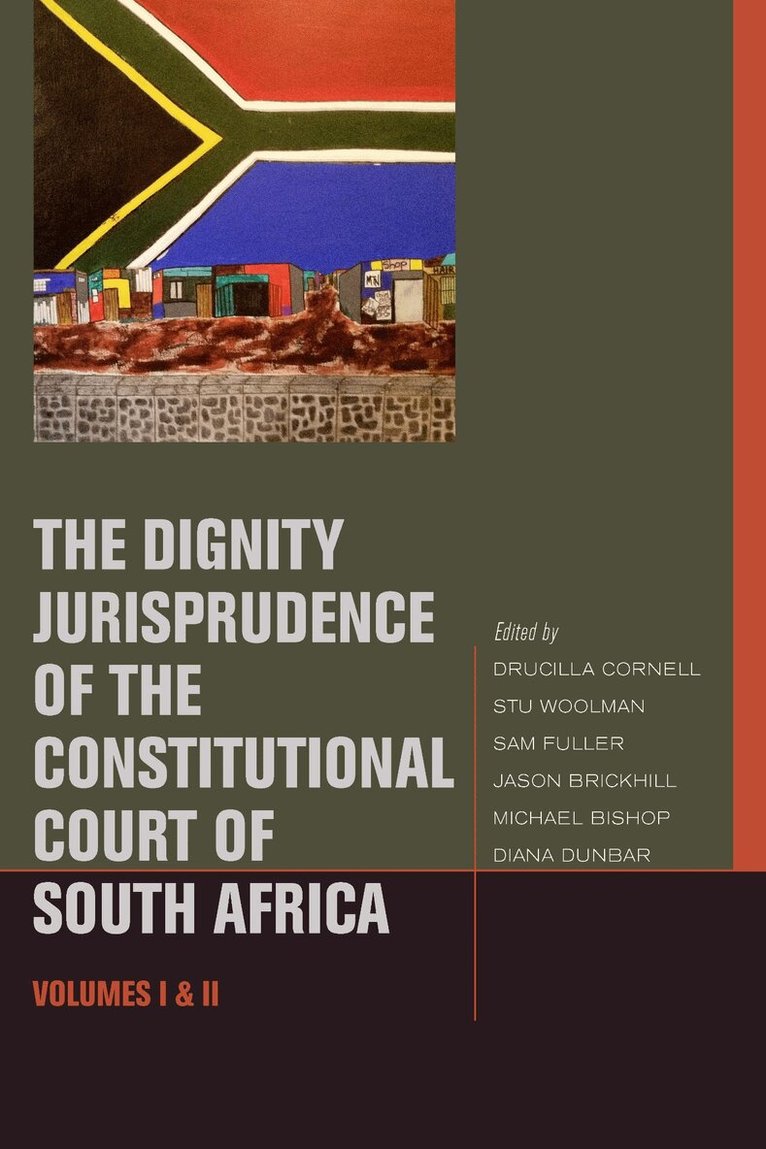
Dignity Jurisprudence of the Constitutional Court of South Africa
Cases and Materials, Volumes I & II
Inbunden, Engelska, 2013
2 224 kr
Skickas inom 5-8 vardagar
Since the Second World War, dignity has increasingly been recognized as an important moral and legal value. Although important examples of dignity-based arguments can be found in western European and North American case law and legal theory, the dignity jurisprudence of the Constitutional Court of South African is widely considered to be the most sweeping in the world. In part, this is related to the unique provisions of the South African Constitution in areas such as socioeconomic rights and allowing dignity to be taken into the sphere of economic justice as well as that of human rights. This book brings together the first sixteen years of constitutional jurisprudence addressing the meaning, role, and reach of dignity in the law of South Africa as a multiracial democracy. The case law is coupled with analysis from a range of selected contributors. The book will therefore be a crucial source for anyone seeking to evaluate dignity, whether in law or in human life more broadly.
Häftad, Engelska, 2021
905 kr
Skickas inom 5-8 vardagar
Häftad, Engelska, 2021
881 kr
Skickas inom 5-8 vardagar
E-bok
PDF, Engelska, 20211 054 kr
Läs direkt efter köp
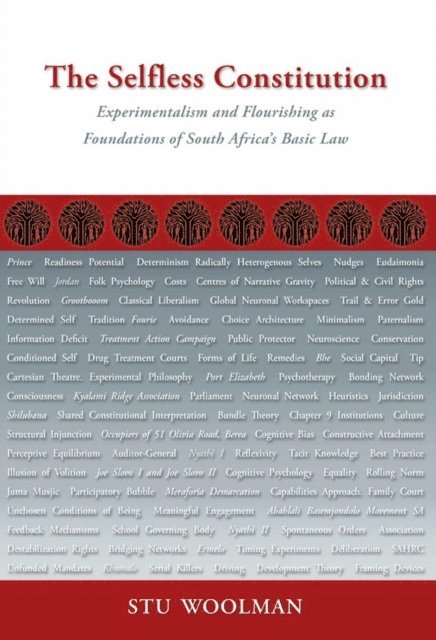
Do you possess 'freedom'-the will to do as you choose-as an individual, as a participant in social affairs or as a citizen in the political realm? Well, no. Not really. At least not as most of us understand a term loaded down with metaphysical baggage. Don't worry. You've got something better: a neurological system capable of carrying out the most complex analytical and computational tasks; membership in innumerable communities that provide you with huge stores of knowledge and wisdom; and a politico-constitutional order that ought to provide the material and the immaterial conditions that will enable you to pursue a life worth valuing. Drop the simplistic folk-psychology of unfettered freedom, whilst holding on to intentionality, and you might be inclined to adopt a set of social practices and political arrangements that enhance the chances that you and your compatriots will flourish. As many recent studies of consciousness reveal our neurological systems are complex feedback mechanisms designed to create myriad for trial and error and (if you survive) the production of new stores of knowledge. Individuals-comprised of numerous radically heterogeneous, naturally and socially determined selves-are always experimenting, attempting to divine through reflection and action, what 'works' best: even when 'best' means fully embracing who we already are. Choice architects, those persons charged with constructing the environments within which we operate daily, should (if responsible) regularly run experiments that attempt to eliminate biases, and ultimately, deliver norms that nudge us away from negative defaults toward more optimal ends. A constitutional democracy, made up of millions of radically heterogeneous, densely populated individuals, constantly strives to determine what works best for most of its many constituents. Because South Africa's Constitution states (at an extremely high level of generality) only some of the norms that govern our lives, it remains for citizens, representatives and judges to create doctrines and institutions that serve its capaciously framed ends best. After canvassing the relevant literature in neuroscience, empirical philosophy, behavioural psychology, social capital theory, development economics, and emergent experimental governance, this work suggests that manifold experiments in living that fall within the accepted parameters of our shared constitutional norms are likely, over time, to produce more optimal ways of being that can be replicated by other members of our polity. Our reflexive stance toward best practices-a linchpin of this book's take on experimental governance-when inextricably linked to a commitment to flourishing and to the expansion of individual capabilities, should cause us to alter the content of the fundamental norms that shape our lives and bind us to one another. A political order founded upon experimental constitutionalism and flourishing promises an egalitarian pluralist reformation of South African society. The book spins out its novel thesis against the concrete backdrop of political arrangements and judicial doctrines that have emerged during the first 20 years of our truly vibrant constitutional democracy. Its trenchant analysis of political institutions and constitutional case law shows us how far we have come, and how far we still have to go.