Stuart A. Kauffman – författare
Visar alla böcker från författaren Stuart A. Kauffman. Handla med fri frakt och snabb leverans.
13 produkter
13 produkter
Inbunden, Engelska, 2019
448 kr
Skickas inom 3-6 vardagar
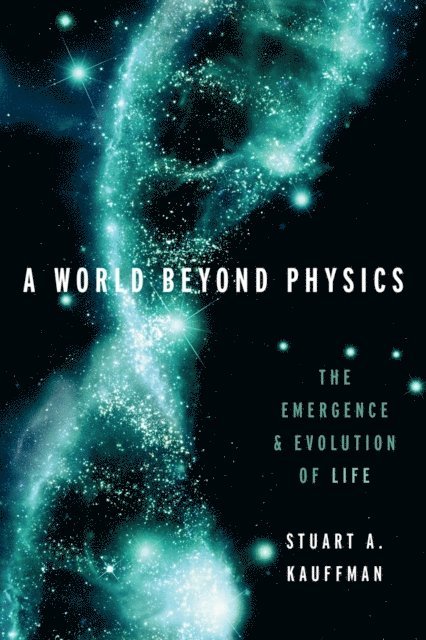
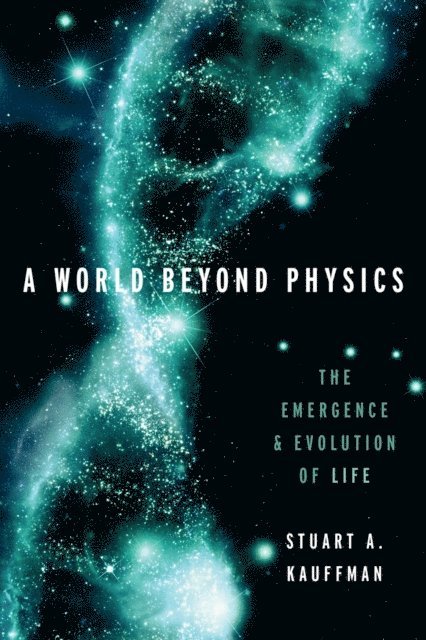
How did life start? Is the evolution of life describable by any physics-like laws? Stuart Kauffman's latest book offers an explanation-beyond what the laws of physics can explain-of the progression from a complex chemical environment to molecular reproduction, metabolism and to early protocells, and further evolution to what we recognize as life. Among the estimated one hundred billion solar systems in the known universe, evolving life is surely abundant. That evolution is a process of "becoming" in each case. Since Newton, we have turned to physics to assess reality. But physics alone cannot tell us where we came from, how we arrived, and why our world has evolved past the point of unicellular organisms to an extremely complex biosphere.Building on concepts from his work as a complex systems researcher at the Santa Fe Institute, Kauffman focuses in particular on the idea of cells constructing themselves and introduces concepts such as "constraint closure." Living systems are defined by the concept of "organization" which has not been focused on in enough in previous works. Cells are autopoetic systems that build themselves: they literally construct their own constraints on the release of energy into a few degrees of freedom that constitutes the very thermodynamic work by which they build their own self creating constraints. Living cells are "machines" that construct and assemble their own working parts. The emergence of such systems-the origin of life problem-was probably a spontaneous phase transition to self-reproduction in complex enough prebiotic systems. The resulting protocells were capable of Darwin's heritable variation, hence open-ended evolution by natural selection. Evolution propagates this burgeoning organization. Evolving living creatures, by existing, create new niches into which yet further new creatures can emerge. If life is abundant in the universe, this self-constructing, propagating, exploding diversity takes us beyond physics to biospheres everywhere.
E-bok
PDF, Engelska, 2019214 kr
Läs direkt efter köp
How did life start? Is the evolution of life describable by any physics-like laws? Stuart Kauffman''s latest book offers an explanation-beyond what the laws of physics can explain-of the progression from a complex chemical environment to molecular reproduction, metabolism and to early protocells, and further evolution to what we recognize as life. Among the estimated one hundred billion solar systems in the known universe, evolving life is surely abundant. That evolution is a process of "becoming" in each case. Since Newton, we have turned to physics to assess reality. But physics alone cannot tell us where we came from, how we arrived, and why our world has evolved past the point of unicellular organisms to an extremely complex biosphere.Building on concepts from his work as a complex systems researcher at the Santa Fe Institute, Kauffman focuses in particular on the idea of cells constructing themselves and introduces concepts such as "constraint closure." Living systems are defined by the concept of "organization" which has not been focused on in enough in previous works. Cells are autopoetic systems that build themselves: they literally construct their own constraints on the release of energy into a few degrees of freedom that constitutes the very thermodynamic work by which they build their own self creating constraints. Living cells are "machines" that construct and assemble their own working parts. The emergence of such systems-the origin of life problem-was probably a spontaneous phase transition to self-reproduction in complex enough prebiotic systems. The resulting protocells were capable of Darwin''s heritable variation, hence open-ended evolution by natural selection. Evolution propagates this burgeoning organization. Evolving living creatures, by existing, create new niches into which yet further new creatures can emerge. If life is abundant in the universe, this self-constructing, propagating, exploding diversity takes us beyond physics to biospheres everywhere.
E-bok
Engelska, 2019214 kr
Läs direkt efter köp
How did life start? Is the evolution of life describable by any physics-like laws? Stuart Kauffman''s latest book offers an explanation-beyond what the laws of physics can explain-of the progression from a complex chemical environment to molecular reproduction, metabolism and to early protocells, and further evolution to what we recognize as life. Among the estimated one hundred billion solar systems in the known universe, evolving life is surely abundant. That evolution is a process of "becoming" in each case. Since Newton, we have turned to physics to assess reality. But physics alone cannot tell us where we came from, how we arrived, and why our world has evolved past the point of unicellular organisms to an extremely complex biosphere.Building on concepts from his work as a complex systems researcher at the Santa Fe Institute, Kauffman focuses in particular on the idea of cells constructing themselves and introduces concepts such as "constraint closure." Living systems are defined by the concept of "organization" which has not been focused on in enough in previous works. Cells are autopoetic systems that build themselves: they literally construct their own constraints on the release of energy into a few degrees of freedom that constitutes the very thermodynamic work by which they build their own self creating constraints. Living cells are "machines" that construct and assemble their own working parts. The emergence of such systems-the origin of life problem-was probably a spontaneous phase transition to self-reproduction in complex enough prebiotic systems. The resulting protocells were capable of Darwin''s heritable variation, hence open-ended evolution by natural selection. Evolution propagates this burgeoning organization. Evolving living creatures, by existing, create new niches into which yet further new creatures can emerge. If life is abundant in the universe, this self-constructing, propagating, exploding diversity takes us beyond physics to biospheres everywhere.
Häftad, Engelska, 1993
1 131 kr
Skickas inom 5-8 vardagar
In what will certainly be one of the key works in the emerging science of complexity, Kauffman here presents a brilliant new paradigm for evolutionary biology. It extends the basic concepts of Darwinian evolution to accommodate recent findings and perspectives from the fields of biology, physics, chemistry, and mathematics. The book drives to the heart of the exciting debate on the origins of life and maintenance of order in complex biological systems. It focuses on the concept of self-organization - the first time this concept has been incorporated into evolutionary theory. The book shows how complex systems, contrary to expectations, can spontaneously exhibit stunning degrees of order, and how this order in turn is essential for the emergence and development of life on Earth. Origins of Order will advance our understanding of evolution and provoke considerable discussion among evolutionary, molecular, and developmental biologists.
Häftad, Engelska, 1996
418 kr
Skickas inom 3-6 vardagar
Inbunden, Engelska, 2016
366 kr
Skickas inom 5-8 vardagar
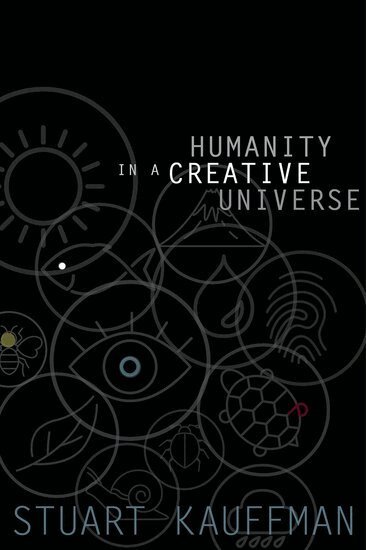
In the hard sciences, which can often feel out of grasp for many lay readers, there are "great thinkers" who go far beyond the equations, formulas, and research. Minds such as Stephen Hawking philosophize about the functions and nature of the universe, the implications of our existence, and other impossibly fascinating, yet difficult questions. Stuart A. Kauffman is one of those great thinkers. He has dedicated his lifetime to researching "complex systems" at prestigious institutions and now writes his treatise on the most complex system of all: our universe. A recent Scientific American article claims that "philosophy begins where physics ends, and physics begins where philosophy ends," and perhaps no better quote sums up what Kauffman's latest book offers. Grounded in his rigorous training and research background, Kauffman is inter-disciplinary in every sense of the word, sorting through the major questions and theories in biology, physics, and philosophy. Best known for his philosophy of evolutionary biology, Kauffman coined the term "prestatability" to call into question whether science can ever accurately and precisely predict the future development of biological features in organisms. As evidenced by the title's mention of creativity, the book refreshingly argues that our preoccupation to explain all things with scientific law has deadened our creative natures. In this fascinating read, Kauffman concludes that the development of life on earth is not entirely predictable, because no theory could ever fully account for the limitless variations of evolution. Sure to cause a stir, this book will be discussed for years to come and may even set the tone for the next "great thinker."
E-bok
PDF, Engelska, 2016206 kr
Läs direkt efter köp
In the hard sciences, which can often feel out of grasp for many lay readers, there are "great thinkers" who go far beyond the equations, formulas, and research. Minds such as Stephen Hawking philosophize about the functions and nature of the universe, the implications of our existence, and other impossibly fascinating, yet difficult questions. Stuart A. Kauffman is one of those great thinkers. He has dedicated his lifetime to researching "complex systems" at prestigious institutions and now writes his treatise on the most complex system of all: our universe. A recent Scientific American article claims that "philosophy begins where physics ends, and physics begins where philosophy ends," and perhaps no better quote sums up what Kauffman''s latest book offers. Grounded in his rigorous training and research background, Kauffman is inter-disciplinary in every sense of the word, sorting through the major questions and theories in biology, physics, and philosophy. Best known for his philosophy of evolutionary biology, Kauffman coined the term "prestatability" to call into question whether science can ever accurately and precisely predict the future development of biological features in organisms. As evidenced by the title''s mention of creativity, the book refreshingly argues that our preoccupation to explain all things with scientific law has deadened our creative natures. In this fascinating read, Kauffman concludes that the development of life on earth is not entirely predictable, because no theory could ever fully account for the limitless variations of evolution. Sure to cause a stir, this book will be discussed for years to come and may even set the tone for the next "great thinker."
E-bok
Engelska, 2016206 kr
Läs direkt efter köp
In the hard sciences, which can often feel out of grasp for many lay readers, there are "great thinkers" who go far beyond the equations, formulas, and research. Minds such as Stephen Hawking philosophize about the functions and nature of the universe, the implications of our existence, and other impossibly fascinating, yet difficult questions. Stuart A. Kauffman is one of those great thinkers. He has dedicated his lifetime to researching "complex systems" at prestigious institutions and now writes his treatise on the most complex system of all: our universe. A recent Scientific American article claims that "philosophy begins where physics ends, and physics begins where philosophy ends," and perhaps no better quote sums up what Kauffman''s latest book offers. Grounded in his rigorous training and research background, Kauffman is inter-disciplinary in every sense of the word, sorting through the major questions and theories in biology, physics, and philosophy. Best known for his philosophy of evolutionary biology, Kauffman coined the term "prestatability" to call into question whether science can ever accurately and precisely predict the future development of biological features in organisms. As evidenced by the title''s mention of creativity, the book refreshingly argues that our preoccupation to explain all things with scientific law has deadened our creative natures. In this fascinating read, Kauffman concludes that the development of life on earth is not entirely predictable, because no theory could ever fully account for the limitless variations of evolution. Sure to cause a stir, this book will be discussed for years to come and may even set the tone for the next "great thinker."
E-bok
PDF, Engelska, 2000161 kr
Läs direkt efter köp
"It may be that I have stumbled upon an adequate description of life itself." These modest yet profound words trumpet an imminent paradigm shift in scientific, economic, and technological thinking. In the tradition of Schrödinger''s classic What Is Life?, Kauffman''s Investigations is a tour-de-force exploration of the very essence of life itself, with conclusions that radically undermine the scientific approaches on which modern science rests--the approaches of Newton, Boltzman, Bohr, and Einstein. Building on his pivotal ideas about order and evolution in complex life systems, Kauffman finds that classical science does not take into account that physical systems--such as people in a biosphere--effect their dynamic environments in addition to being affected by them. These systems act on their own behalf as autonomous agents, but what defines them as such? In other words, what is life? Kauffman supplies a novel answer that goes beyond traditional scientific thinking by defining and explaining autonomous agents and work in the contexts of thermodynamics and of information theory. Much of Investigations unpacks the progressively surprising implications of his definition. Significantly, he sets the stages for a technological revolution in the coming decades. Scientists and engineers may soon seek to create autonomous agents--both organic and mechanical--that can not only construct things and work, but also reproduce themselves! Kauffman also lays out a foundation for a new concept of organization, and explores the requirements for the emergence of a general biology that will transcend terrestrial biology to seek laws governing biospheres anywhere in the cosmos. Moreover, he presents four candidate laws to explain how autonomous agents co-create their biosphere and the startling idea of a "co-creating" cosmos. A showcase of Kauffman''s most fundamental and significant ideas, Investigations presents a new way of thinking about the fundamentals of general biology that will change the way we understand life itself--on this planet and anywhere else in the cosmos.
E-bok
Engelska, 1993653 kr
Läs direkt efter köp
Stuart Kauffman here presents a brilliant new paradigm for evolutionary biology, one that extends the basic concepts of Darwinian evolution to accommodate recent findings and perspectives from the fields of biology, physics, chemistry and mathematics. The book drives to the heart of the exciting debate on the origins of life and maintenance of order in complex biological systems. It focuses on the concept of self-organization: the spontaneous emergence of order that is widely observed throughout nature Kauffman argues that self-organization plays an important role in the Darwinian process of natural selection. Yet until now no systematic effort has been made to incorporate the concept of self-organization into evolutionary theory. The construction requirements which permit complex systems to adapt are poorly understood, as is the extent to which selection itself can yield systems able to adapt more successfully. This book explores these themes. It shows how complex systems, contrary to expectations, can spontaneously exhibit stunning degrees of order, and how this order, in turn, is essential for understanding the emergence and development of life on Earth. Topics include the new biotechnology of applied molecular evolution, with its important implications for developing new drugs and vaccines; the balance between order and chaos observed in many naturally occurring systems; new insights concerning the predictive power of statistical mechanics in biology; and other major issues. Indeed, the approaches investigated here may prove to be the new center around which biological science itself will evolve. The work is written for all those interested in the cutting edge of research in the life sciences.
E-bok
Engelska, 2023909 kr
Läs direkt efter köp
Häftad, Engelska, 2023
899 kr
Skickas
Inbunden, Engelska, 1991
482 kr
Tillfälligt slut