Sun Wei – författare
2 394 kr
Skickas inom 10-15 vardagar
779 kr
Skickas inom 10-15 vardagar
892 kr
Läs direkt efter köp
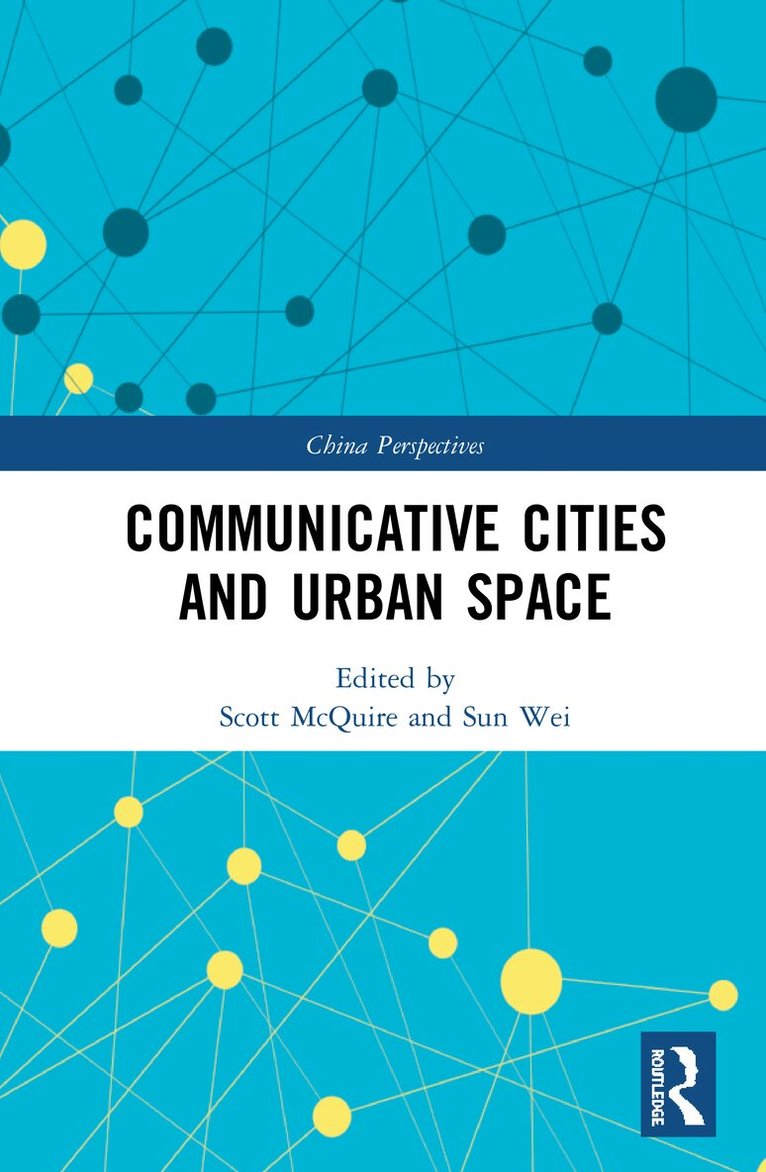
Cities have long been recognized as key sites for fostering new communication practices. However, as contemporary cities experience major changes, how do diverse inhabitants encounter each other? How do cities remember? What is the role of the built environment in fostering sites for public communication in a digital era? Communicative Cities and Urban Space offers a critical analysis of contemporary changes in the relation between urban space and communication.
This volume seeks to understand the situatedness of contemporary communication practices in diverse contexts of urban life, and to explore digitized urban space as a historically specific communicative environment. The essays in this book collectively propose that the concept of the ‘communicative city’ is a productive frame for rethinking the above questions in the context of 21st-century ‘media cities’. They challenge us to reconsider qualities such as openness, autonomy and diversity in contemporary urban communication practices, and to identify factors that might expand or constrict communicative possibilities.
Students and scholars of communication studies and urban studies would benefit from this book.
892 kr
Läs direkt efter köp
Cities have long been recognized as key sites for fostering new communication practices. However, as contemporary cities experience major changes, how do diverse inhabitants encounter each other? How do cities remember? What is the role of the built environment in fostering sites for public communication in a digital era? Communicative Cities and Urban Space offers a critical analysis of contemporary changes in the relation between urban space and communication.
This volume seeks to understand the situatedness of contemporary communication practices in diverse contexts of urban life, and to explore digitized urban space as a historically specific communicative environment. The essays in this book collectively propose that the concept of the ‘communicative city’ is a productive frame for rethinking the above questions in the context of 21st-century ‘media cities’. They challenge us to reconsider qualities such as openness, autonomy and diversity in contemporary urban communication practices, and to identify factors that might expand or constrict communicative possibilities.
Students and scholars of communication studies and urban studies would benefit from this book.
225 kr
Skickas inom 3-6 vardagar
179 kr
Läs direkt efter köp
2 947 kr
Läs direkt efter köp
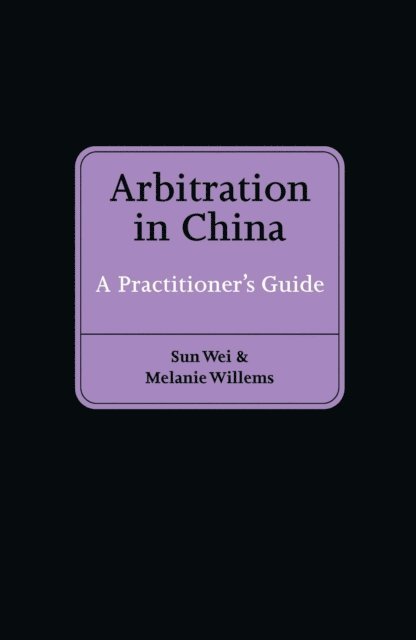
Arbitration in China has been aligned with international norms since the enactment of the Arbitration Law in 1994. The purpose of this book is to assist practitioners by describing the law governing arbitration in China as it is currently applied to practice, both domestically and internationally, taking into account the regime''s numerous features. Among the details affecting arbitration practice and procedure in China covered are the following:
• arbitration agreement as a precondition for any arbitration proceedings;• finality of arbitral awards without any right of appeal;• procedure governing arbitral proceedings;• the extent of permissible judicial review;• arbitrations with a connection to Hong Kong, Macau, or Taiwan;• persistent involvement of local governments in arbitration acceptance and proceedings;• rules on the handling of cases with foreign elements;• guidelines provided in the Supreme People’s Court’s judicial interpretations;• fees;• grounds for objecting to jurisdiction;• mechanisms for multi-party arbitration;• interim injunctions;• formation of arbitral tribunals;• use of expert witnesses;• enforcement of arbitral awards; and• use of mediation.Although focusing predominantly on the practical effects of Arbitration Law provisions, the authors stress practice involving China’s two commissions specifically addressing international matters, the China International Economic and Trade Arbitration Commission (CIETAC) and the Beijing Arbitration Commission (BAC). Among the numerous local commissions functioning under the Arbitration Law, special attention is paid to those in Beijing, Shanghai, and Guangzhou, which (along with CIETAC) accept the greatest number of cases with a foreign element. The book will be invaluable to corporate counsel and other practitioners dealing with Chinese companies. Scholars of comparative arbitration law will also find much here to interest them.
2 947 kr
Läs direkt efter köp
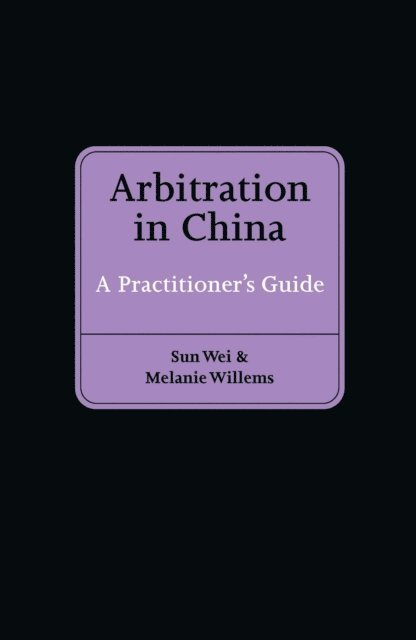
Arbitration in China has been aligned with international norms since the enactment of the Arbitration Law in 1994. The purpose of this book is to assist practitioners by describing the law governing arbitration in China as it is currently applied to practice, both domestically and internationally, taking into account the regime''s numerous features. Among the details affecting arbitration practice and procedure in China covered are the following:
• arbitration agreement as a precondition for any arbitration proceedings;• finality of arbitral awards without any right of appeal;• procedure governing arbitral proceedings;• the extent of permissible judicial review;• arbitrations with a connection to Hong Kong, Macau, or Taiwan;• persistent involvement of local governments in arbitration acceptance and proceedings;• rules on the handling of cases with foreign elements;• guidelines provided in the Supreme People’s Court’s judicial interpretations;• fees;• grounds for objecting to jurisdiction;• mechanisms for multi-party arbitration;• interim injunctions;• formation of arbitral tribunals;• use of expert witnesses;• enforcement of arbitral awards; and• use of mediation.Although focusing predominantly on the practical effects of Arbitration Law provisions, the authors stress practice involving China’s two commissions specifically addressing international matters, the China International Economic and Trade Arbitration Commission (CIETAC) and the Beijing Arbitration Commission (BAC). Among the numerous local commissions functioning under the Arbitration Law, special attention is paid to those in Beijing, Shanghai, and Guangzhou, which (along with CIETAC) accept the greatest number of cases with a foreign element. The book will be invaluable to corporate counsel and other practitioners dealing with Chinese companies. Scholars of comparative arbitration law will also find much here to interest them.