
Suong Van Hoa – författare
Visar alla böcker från författaren Suong Van Hoa. Handla med fri frakt och snabb leverans.
3 produkter
3 produkter
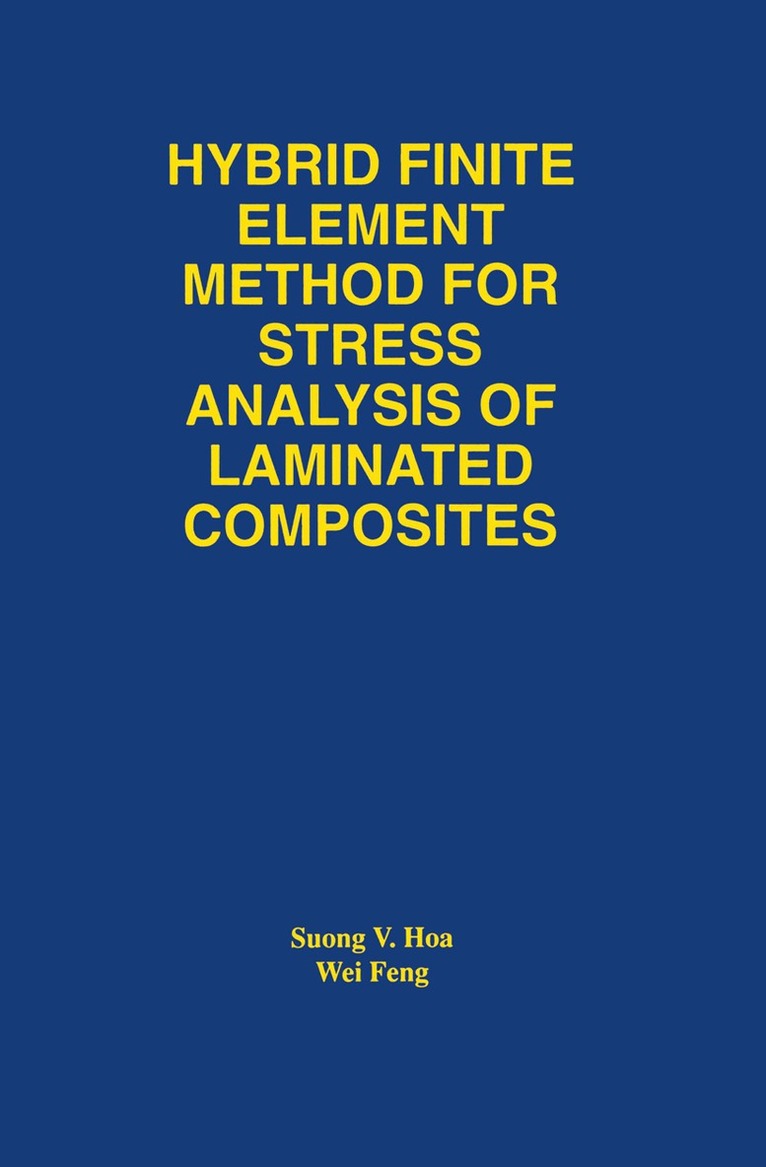
Inbunden, Engelska, 1998
1 622 kr
Skickas inom 10-15 vardagar
This study presents the development of the partial hybrid finite element method for the stress analysis of laminated composite structures. The authors hold that the partial hybrid finite element method is more efficient than the displacement-based finite element method for the stress analysis of laminated composites. Since there is a great need for accurate and efficient calculation of interlaminar stresses for designs using composites, the partial hybrid finite method does provide one possible solution. This work is the culmination of the work of three generations of PhD students in the Concordia Centre for Composites. Particular points of interest include: a new ISO function method and classification of stress modes which allow the systematic determination of stress polynomials; how the hybrid finite elements and global/local approach allow the stress analysis of laminated composites to be five times more efficient than the displacement finite element method; a detailed description of three different types of hybrid finite elements for laminated composites.This study should be of interest to researchers and designers of laminated composites as well as finite element method students and programmers of finite element codes.
Häftad, Engelska, 2014
1 622 kr
Skickas inom 10-15 vardagar
This book has one single purpose: to present the development of the partial hybrid finite element method for the stress analysis of laminated composite structures. The reason for this presentation is because the authors believe that partial hybrid finite element method is more efficient that the displacement based finite element method for the stress analysis oflaminated composites. In fact, the examples in chapter 5 of this book show that the partial hybrid finite element method is about 5 times more efficient than the displacement based finite element method. Since there is a great need for accurate and efficient calculation of interlaminar stresses for the design using composites, the partial hybrid finite method does provide one possible solution. Hybrid finite method has been in existence since 1964 and a significant amount of work has been done on the topic. However, the authors are not aware of any systematic piece of literature that gives a detailed presentation of the method. Chapters of the displacement finite element method and the evolution 1 and 2 present a sununary of the hybrid finite element method. Hopefully, these two chapters can provide the readers with an appreciation for the difference between the displacement finite element method and the hybrid finite element. It also should prepare the readers for the introduction of partial hybrid finite element method presented in chapter 3.
E-bok
PDF, Engelska, 20132 049 kr
Läs direkt efter köp
This book has one single purpose: to present the development of the partial hybrid finite element method for the stress analysis of laminated composite structures. The reason for this presentation is because the authors believe that partial hybrid finite element method is more efficient that the displacement based finite element method for the stress analysis oflaminated composites. In fact, the examples in chapter 5 of this book show that the partial hybrid finite element method is about 5 times more efficient than the displacement based finite element method. Since there is a great need for accurate and efficient calculation of interlaminar stresses for the design using composites, the partial hybrid finite method does provide one possible solution. Hybrid finite method has been in existence since 1964 and a significant amount of work has been done on the topic. However, the authors are not aware of any systematic piece of literature that gives a detailed presentation of the method. Chapters of the displacement finite element method and the evolution 1 and 2 present a sununary of the hybrid finite element method. Hopefully, these two chapters can provide the readers with an appreciation for the difference between the displacement finite element method and the hybrid finite element. It also should prepare the readers for the introduction of partial hybrid finite element method presented in chapter 3.