
Surendra Prasad Mehta – författare
4 652 kr
Läs direkt efter köp
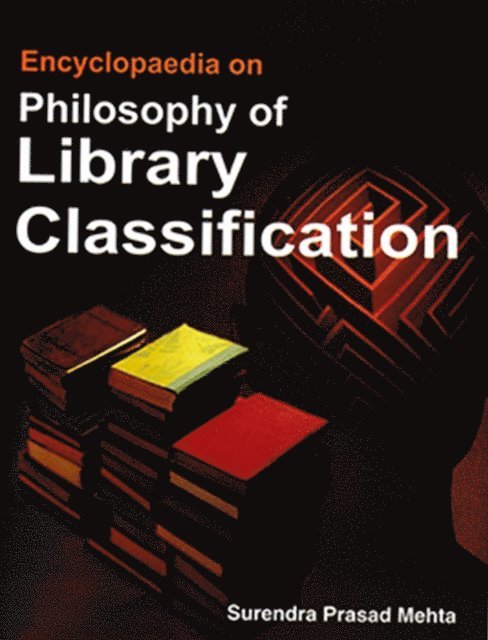
In any Scheme for Classification the sequence of the Main Subjects is not however very important. In the first place each Main Subject will have thousands of books on it forming a single block. Whatever be the sequence of the Main Subjects in the Scheme, these blocks will usually be arranged in a different sequence, in order to satisfy Law 4 of Library Science-Save the Time of the Reader. For example, in a Generalist Library, Literature is the most popular. Therefore, it saves the time of the majority of readers if this block of books is inserted first. Linguistics has only very low priority in the attraction of readers. On the other hand, a subject like History or Economics or Philosophy will attract more readers. Therefore, to satisfy Law 4 of Library Science, these blocks may have to be inserted between the Literature block and the Linguistics block. In other words, a library will have to adopt only a "Broken Sequence" of the Main Subjects. But this need not be done in the catalogue. Secondly, the number of possible sequences of Main Subjects runs to millions. It is impossible to pick one of them as the most helpful sequence. What is wanted is only a reasonably helpful sequence. This book provides a systemic approach to understand this subject. The book will be very helpful for the researchers, veterinarians, students and persons involved in this subject.
4 489 kr
Läs direkt efter köp
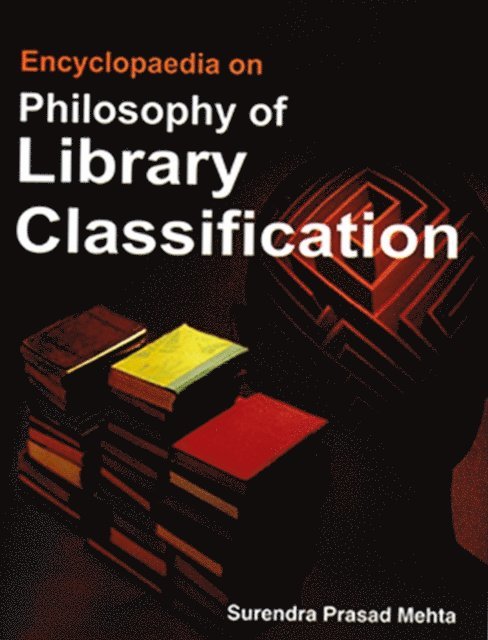
In any Scheme for Classification the sequence of the Main Subjects is not however very important. In the first place each Main Subject will have thousands of books on it forming a single block. Whatever be the sequence of the Main Subjects in the Scheme, these blocks will usually be arranged in a different sequence, in order to satisfy Law 4 of Library Science-Save the Time of the Reader. For example, in a Generalist Library, Literature is the most popular. Therefore, it saves the time of the majority of readers if this block of books is inserted first. Linguistics has only very low priority in the attraction of readers. On the other hand, a subject like History or Economics or Philosophy will attract more readers. Therefore, to satisfy Law 4 of Library Science, these blocks may have to be inserted between the Literature block and the Linguistics block. In other words, a library will have to adopt only a "Broken Sequence" of the Main Subjects. But this need not be done in the catalogue. Secondly, the number of possible sequences of Main Subjects runs to millions. It is impossible to pick one of them as the most helpful sequence. What is wanted is only a reasonably helpful sequence. This book provides a systemic approach to understand this subject. The book will be very helpful for the researchers, veterinarians, students and persons involved in this subject.

4 652 kr
Läs direkt efter köp
In relation to the functions of the catalogue and their influence on other cataloguing principles two working papers were presented at ICCP. The two papers, in fact, illustrate the two contradictory approaches which have their root in the long history of cataloguing codes in relation to the functions of the catalogue and the choice and form of main and added entries. In his working paper, Lubetzky (7963: 139 -143) emphasized the second function (i.e., the collocating function) as the principal element for bringing to gather different editions of the same work. He considered the 'literary unit' (l. e., the 'work') as the basis for description (Lubetzky, 7963:739-740). In this context, different editions and translations of a work should be found together rather than under their own titles. The name of an author must be uniform to bring together all publications by that author. In terms of titles, Lubetzky (7963:147-742) put emphasis on entering publications under the title as found in the fusty publication of the work, or where this was not possible, under the accepted 'conventional title.' This would bring together different appearances of exactly the same work. As indicated in preceding chapters, lack of clear and adequate cataloguing principles concerning the treatment of some basic issues in the online environment often results in retrieval and display problems. Each chapter in the book is self contained and is consistent with the general aim of the book. No doubt, the chapters given in this book shall help the teachers, students and social scientists to understand and explore more in the subject.

4 489 kr
Läs direkt efter köp
In relation to the functions of the catalogue and their influence on other cataloguing principles two working papers were presented at ICCP. The two papers, in fact, illustrate the two contradictory approaches which have their root in the long history of cataloguing codes in relation to the functions of the catalogue and the choice and form of main and added entries. In his working paper, Lubetzky (7963: 139 -143) emphasized the second function (i.e., the collocating function) as the principal element for bringing to gather different editions of the same work. He considered the 'literary unit' (l. e., the 'work') as the basis for description (Lubetzky, 7963:739-740). In this context, different editions and translations of a work should be found together rather than under their own titles. The name of an author must be uniform to bring together all publications by that author. In terms of titles, Lubetzky (7963:147-742) put emphasis on entering publications under the title as found in the fusty publication of the work, or where this was not possible, under the accepted 'conventional title.' This would bring together different appearances of exactly the same work. As indicated in preceding chapters, lack of clear and adequate cataloguing principles concerning the treatment of some basic issues in the online environment often results in retrieval and display problems. Each chapter in the book is self contained and is consistent with the general aim of the book. No doubt, the chapters given in this book shall help the teachers, students and social scientists to understand and explore more in the subject.