Susan Goldin-Meadow - Böcker
Visar alla böcker från författaren Susan Goldin-Meadow. Handla med fri frakt och snabb leverans.
8 produkter
8 produkter
814 kr
Skickas inom 5-8 vardagar
255 kr
Skickas inom 7-10 vardagar
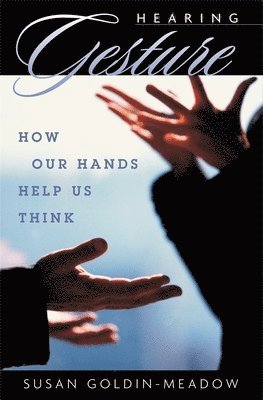
Many nonverbal behaviors—smiling, blushing, shrugging—reveal our emotions. One nonverbal behavior, gesturing, exposes our thoughts. This book explores how we move our hands when we talk, and what it means when we do so.Susan Goldin-Meadow begins with an intriguing discovery: when explaining their answer to a task, children sometimes communicate different ideas with their hand gestures than with their spoken words. Moreover, children whose gestures do not match their speech are particularly likely to benefit from instruction in that task. Not only do gestures provide insight into the unspoken thoughts of children (one of Goldin-Meadow’s central claims), but gestures reveal a child’s readiness to learn, and even suggest which teaching strategies might be most beneficial.In addition, Goldin-Meadow characterizes gesture when it fulfills the entire function of language (as in the case of Sign Languages of the Deaf), when it is reshaped to suit different cultures (American and Chinese), and even when it occurs in children who are blind from birth.Focusing on what we can discover about speakers—adults and children alike—by watching their hands, this book discloses the active role that gesture plays in conversation and, more fundamentally, in thinking. In general, we are unaware of gesture, which occurs as an undercurrent alongside an acknowledged verbal exchange. In this book, Susan Goldin-Meadow makes clear why we must not ignore the background conversation.
963 kr
Skickas inom 7-10 vardagar
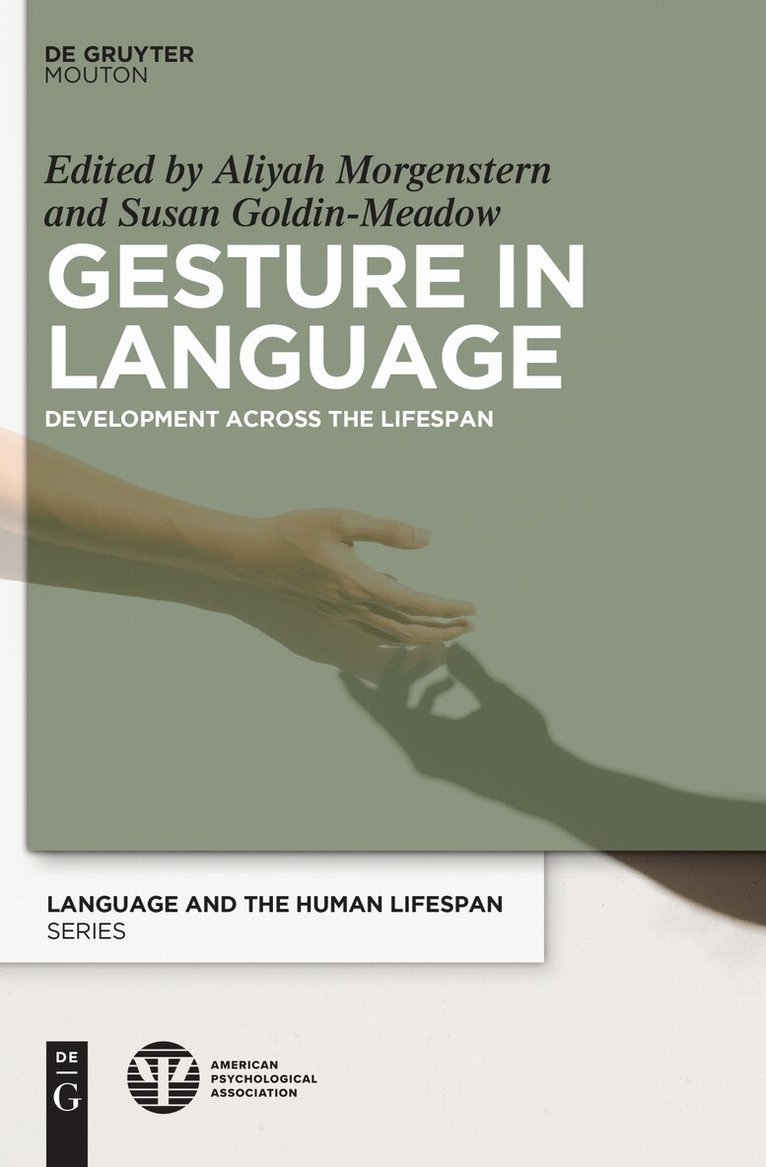
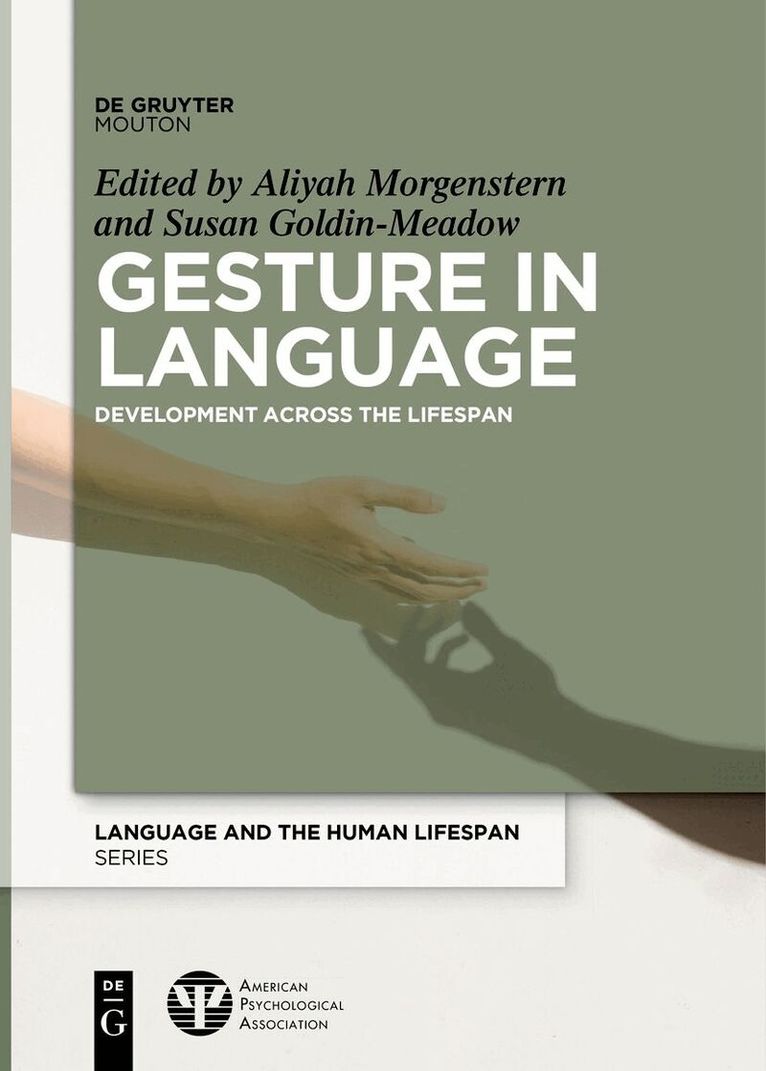
When do human beings begin producing gestures, and how do they evolve throughout our cognitive and social development?This book investigates the rich and complex ways in which gesture precedes language development and then is used in conjunction with language across the lifespan.Some experts argue that gesture is a part of language, while others argue it is a partner to language. But all agree that gesture plays a major role in language development and practices, and therefore must be captured by scientific analyses.This volume explores gesture's many functions--communicative, restorative, cognitive--across cultures and ages, in monolingual and multilingual populations, in students and in teachers.Gestures, verbal productions, signs, gazes, facial expressions, and postures are all part of our socially learned, intersubjective communicative systems that we combine for the purpose of sharing meaning, referring to present and absent entities and events, expressing projects, desires, and feelings, and so much more. Collectively, the chapters demonstrate how gestures contribute to the cognitive and social development of humans within their lifespan, and may also indicate the efficacy of interactional practices and cognitive processes.This book is thought-provoking reading for psycholinguists, cognitive scientists, and all who study language development.
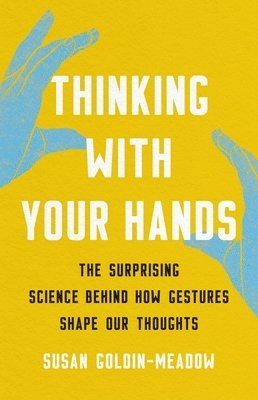
Thinking with Your Hands
The Surprising Science Behind How Gestures Shape Our Thoughts
Inbunden, Engelska, 2023
251 kr
Skickas inom 7-10 vardagar
We all know people who talk with their hands-but do they know what they're saying with them? Our gestures can reveal and contradict us, and express thoughts we may not even know we're thinking.In Thinking with Your Hands, esteemed cognitive psychologist Susan Goldin-Meadow argues that gesture is vital to how we think, learn, and communicate. She shows us, for instance, how the height of our gestures can reveal unconscious bias, or how the shape of a student's gestures can track their mastery of a new concept-even when they're still giving wrong answers. She compels us to rethink everything from how we set child development milestones, to what's admissible in a court of law, to whether Zoom is an adequate substitute for in-person conversation.Sweeping and ambitious, Thinking with Your Hands promises to transform the way we think about language and communication.
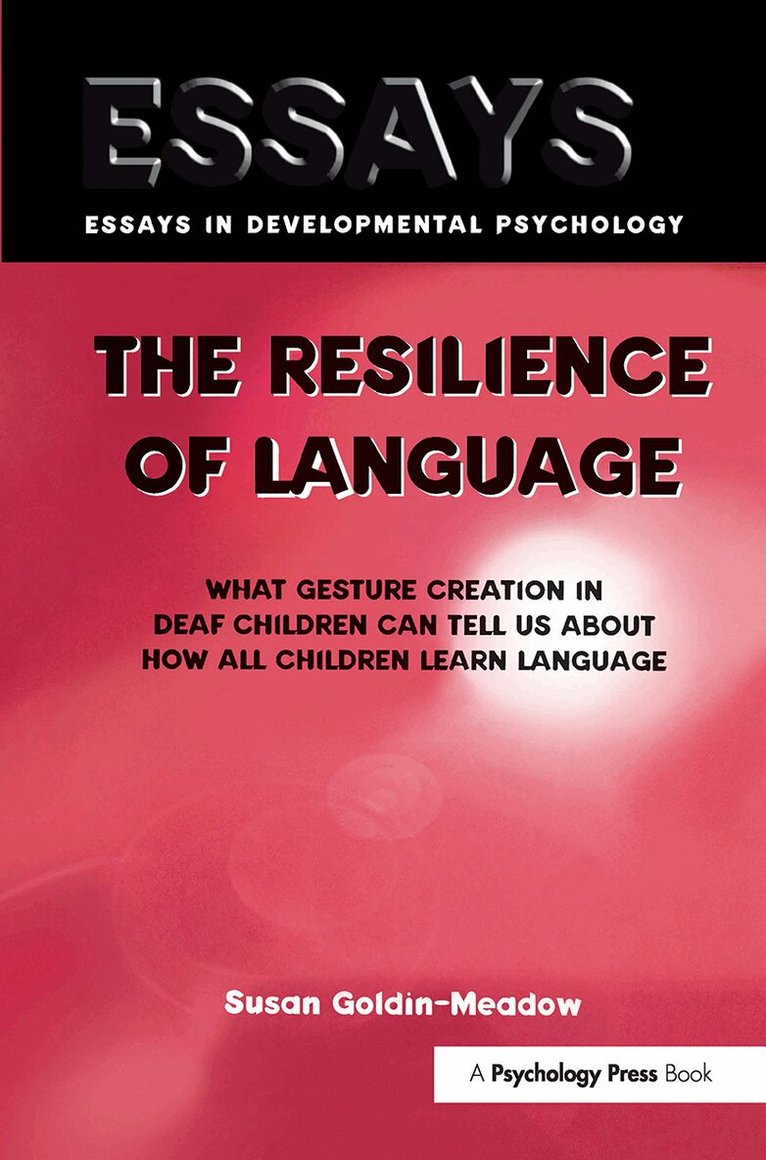
Resilience of Language
What Gesture Creation in Deaf Children Can Tell Us About How All Children Learn Language
Inbunden, Engelska, 2003
2 044 kr
Skickas inom 10-15 vardagar
Imagine a child who has never seen or heard any language at all. Would such a child be able to invent a language on her own? Despite what one might guess, the children described in this book make it clear that the answer to this question is 'yes'. The children are congenitally deaf and cannot learn the spoken language that surrounds them. In addition, they have not yet been exposed to sign language, either by their hearing parents or their oral schools. Nevertheless, the children use their hands to communicate - they gesture - and those gestures take on many of the forms and functions of language. The properties of language that we find in the deaf children's gestures are just those properties that do not need to be handed down from generation to generation, but can be reinvented by a child de novo - the resilient properties of language. This book suggests that all children, deaf or hearing, come to language-learning ready to develop precisely these language properties. In this way, studies of gesture creation in deaf children can show us the way that children themselves have a large hand in shaping how language is learned.
Resilience of Language
What Gesture Creation in Deaf Children Can Tell Us About How All Children Learn Language
Häftad, Engelska, 2005
703 kr
Skickas inom 10-15 vardagar
Imagine a child who has never seen or heard any language at all. Would such a child be able to invent a language on her own? Despite what one might guess, the children described in this book make it clear that the answer to this question is 'yes'. The children are congenitally deaf and cannot learn the spoken language that surrounds them. In addition, they have not yet been exposed to sign language, either by their hearing parents or their oral schools. Nevertheless, the children use their hands to communicate - they gesture - and those gestures take on many of the forms and functions of language. The properties of language that we find in the deaf children's gestures are just those properties that do not need to be handed down from generation to generation, but can be reinvented by a child de novo - the resilient properties of language. This book suggests that all children, deaf or hearing, come to language-learning ready to develop precisely these language properties. In this way, studies of gesture creation in deaf children can show us the way that children themselves have a large hand in shaping how language is learned.
1 666 kr
Skickas inom 5-8 vardagar
Through constant exposure to adult input in interaction, children’s language gradually develops into rich linguistic constructions containing multiple cross-modal elements subtly used together for communicative functions. Sensorimotor schemas provide the "grounding" of language in experience and lead to children’s access to the symbolic function. With the emergence of vocal or signed productions, gestures do not disappear but remain functional and diversify in form and function as children become skilled adult multimodal conversationalists. This volume examines the role of gesture over the human lifespan in its complex interaction with speech and sign. Gesture is explored in the different stages before, during, and after language has fully developed and a special focus is placed on the role of gesture in language learning and cognitive development. Specific chapters are devoted to the use of gesture in atypical populations. CONTENTS Contributors Aliyah Morgenstern and Susan Goldin-Meadow1 Introduction to Gesture in Language Part I: An Emblematic Gesture: Pointing Kensy Cooperrider and Kate Mesh2 Pointing in Gesture and Sign Aliyah Morgenstern3 Early Pointing Gestures Part II: Gesture Before Speech Meredith L. Rowe, Ran Wei, and Virginia C. Salo4 Early Gesture Predicts Later Language Development Olga Capirci, Maria Cristina Caselli, and Virginia Volterra5 Interaction Among Modalities and Within Development Part III: Gesture With Speech During Language Learning Eve V. Clark and Barbara F. Kelly6 Constructing a System of Communication With Gestures and Words Pauline Beaupoil-Hourdel7 Embodying Language Complexity: Co-Speech Gestures Between Age 3 and 4 Casey Hall, Elizabeth Wakefield, and Susan Goldin-Meadow8 Gesture Can Facilitate Children’s Learning and Generalization of Verbs Part IV: Gesture After Speech Is Mastered Jean-Marc Colletta9 On the Codevelopment of Gesture and Monologic Discourse in Children Susan Wagner Cook10 Understanding How Gestures Are Produced and Perceived Tilbe Göksun, Demet Özer, and Seda AkbIyık11 Gesture in the Aging Brain Part V: Gesture With More Than One Language Elena Nicoladis and Lisa Smithson12 Gesture in Bilingual Language Acquisition Marianne Gullberg13 Bimodal Convergence: How Languages Interact in Multicompetent Language Users’ Speech and Gestures Gale Stam and Marion Tellier14 Gesture Helps Second and Foreign Language Learning and Teaching Aliyah Morgenstern and Susan Goldin-MeadowAfterword: Gesture as Part of Language or Partner to Language Across the Lifespan IndexAbout the Editors
307 kr
Skickas inom 3-6 vardagar
Through constant exposure to adult input in interaction, children’s language gradually develops into rich linguistic constructions containing multiple cross-modal elements subtly used together for communicative functions. Sensorimotor schemas provide the "grounding" of language in experience and lead to children’s access to the symbolic function. With the emergence of vocal or signed productions, gestures do not disappear but remain functional and diversify in form and function as children become skilled adult multimodal conversationalists. This volume examines the role of gesture over the human lifespan in its complex interaction with speech and sign. Gesture is explored in the different stages before, during, and after language has fully developed and a special focus is placed on the role of gesture in language learning and cognitive development. Specific chapters are devoted to the use of gesture in atypical populations. CONTENTS Contributors Aliyah Morgenstern and Susan Goldin-Meadow1 Introduction to Gesture in Language Part I: An Emblematic Gesture: Pointing Kensy Cooperrider and Kate Mesh2 Pointing in Gesture and Sign Aliyah Morgenstern3 Early Pointing Gestures Part II: Gesture Before Speech Meredith L. Rowe, Ran Wei, and Virginia C. Salo4 Early Gesture Predicts Later Language Development Olga Capirci, Maria Cristina Caselli, and Virginia Volterra5 Interaction Among Modalities and Within Development Part III: Gesture With Speech During Language Learning Eve V. Clark and Barbara F. Kelly6 Constructing a System of Communication With Gestures and Words Pauline Beaupoil-Hourdel7 Embodying Language Complexity: Co-Speech Gestures Between Age 3 and 4 Casey Hall, Elizabeth Wakefield, and Susan Goldin-Meadow8 Gesture Can Facilitate Children’s Learning and Generalization of Verbs Part IV: Gesture After Speech Is Mastered Jean-Marc Colletta9 On the Codevelopment of Gesture and Monologic Discourse in Children Susan Wagner Cook10 Understanding How Gestures Are Produced and Perceived Tilbe Göksun, Demet Özer, and Seda AkbIyık11 Gesture in the Aging Brain Part V: Gesture With More Than One Language Elena Nicoladis and Lisa Smithson12 Gesture in Bilingual Language Acquisition Marianne Gullberg13 Bimodal Convergence: How Languages Interact in Multicompetent Language Users’ Speech and Gestures Gale Stam and Marion Tellier14 Gesture Helps Second and Foreign Language Learning and Teaching Aliyah Morgenstern and Susan Goldin-MeadowAfterword: Gesture as Part of Language or Partner to Language Across the Lifespan IndexAbout the Editors