Susan Holtz – författare
Visar alla böcker från författaren Susan Holtz. Handla med fri frakt och snabb leverans.
6 produkter
6 produkter
E-bok
PDF, Engelska, 2023824 kr
Läs direkt efter köp
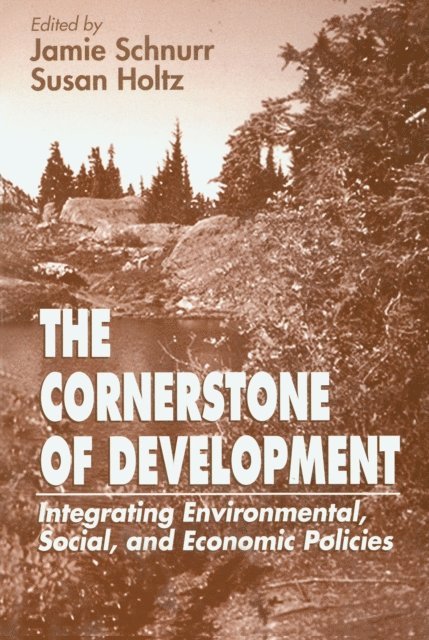
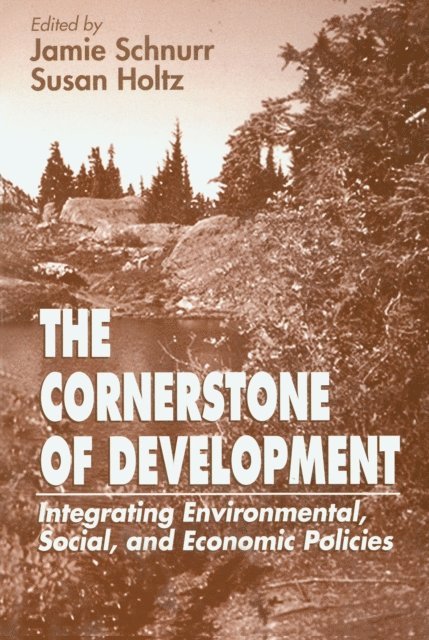
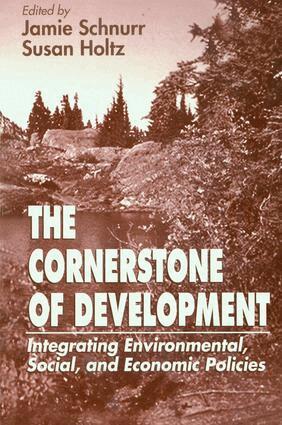
"Sustainable development" quickly became the universal goal for environmentalists in the 1990s, motivated by the 1988 Brundtland Report and the 1992 Earth Summit in Rio. When the time came to bring theory into reality, sustainable development revealed far more complexity than first anticipated.To attain sustainable development in the full sense of the phrase"meeting present needs without compromising the resources needed for future societies"environmental and social concerns would need a constant presence in all major economic decisions.The Cornerstone of Development: Balancing Environmental, Social, and Economic Imperatives profiles many of the first attempts to implement sustainable development initiatives worldwide. The model: Canada''s experience with "multistakeholder" decision-making. Under the guidance of Canada''s National Task Force on Environment and Economy, nationwide and provincial round tables brought government officials together with corporate officers to formulate sustainable development guidelines.Authorized by the Canadian government to serve as an "Agenda 21 organization," the International Development Research Centre (IDRC) subsequently researched the feasibility of adapting the multistakeholder approach to the needs and practices of developing countries. The results are in these pages: valuable case histories from Africa, Latin America, Asia and Canada, each recounting the risks and benefits from integrating environmental, social and economic policies.When IDRC members were asked for ways to address environmental sustainability, they had few examples to follow"and little evidence that such endeavors could be fulfilled. The research and problem-solving efforts they produced are now collected here, for the guidance of other environment/development balance programs worldwide.
E-bok
Engelska, 2023802 kr
Läs direkt efter köp
"Sustainable development" quickly became the universal goal for environmentalists in the 1990s, motivated by the 1988 Brundtland Report and the 1992 Earth Summit in Rio. When the time came to bring theory into reality, sustainable development revealed far more complexity than first anticipated.To attain sustainable development in the full sense of the phrase"meeting present needs without compromising the resources needed for future societies"environmental and social concerns would need a constant presence in all major economic decisions.The Cornerstone of Development: Balancing Environmental, Social, and Economic Imperatives profiles many of the first attempts to implement sustainable development initiatives worldwide. The model: Canada''s experience with "multistakeholder" decision-making. Under the guidance of Canada''s National Task Force on Environment and Economy, nationwide and provincial round tables brought government officials together with corporate officers to formulate sustainable development guidelines.Authorized by the Canadian government to serve as an "Agenda 21 organization," the International Development Research Centre (IDRC) subsequently researched the feasibility of adapting the multistakeholder approach to the needs and practices of developing countries. The results are in these pages: valuable case histories from Africa, Latin America, Asia and Canada, each recounting the risks and benefits from integrating environmental, social and economic policies.When IDRC members were asked for ways to address environmental sustainability, they had few examples to follow"and little evidence that such endeavors could be fulfilled. The research and problem-solving efforts they produced are now collected here, for the guidance of other environment/development balance programs worldwide.
Inbunden, Engelska, 2017
1 982 kr
Skickas inom 10-15 vardagar
"Sustainable development" quickly became the universal goal for environmentalists in the 1990s, motivated by the 1988 Brundtland Report and the 1992 Earth Summit in Rio. When the time came to bring theory into reality, sustainable development revealed far more complexity than first anticipated.To attain sustainable development in the full sense of the phrase"meeting present needs without compromising the resources needed for future societies"environmental and social concerns would need a constant presence in all major economic decisions.The Cornerstone of Development: Balancing Environmental, Social, and Economic Imperatives profiles many of the first attempts to implement sustainable development initiatives worldwide. The model: Canada's experience with "multistakeholder" decision-making. Under the guidance of Canada's National Task Force on Environment and Economy, nationwide and provincial round tables brought government officials together with corporate officers to formulate sustainable development guidelines.Authorized by the Canadian government to serve as an "Agenda 21 organization," the International Development Research Centre (IDRC) subsequently researched the feasibility of adapting the multistakeholder approach to the needs and practices of developing countries. The results are in these pages: valuable case histories from Africa, Latin America, Asia and Canada, each recounting the risks and benefits from integrating environmental, social and economic policies.When IDRC members were asked for ways to address environmental sustainability, they had few examples to follow"and little evidence that such endeavors could be fulfilled. The research and problem-solving efforts they produced are now collected here, for the guidance of other environment/development balance programs worldwide.
Inbunden, Engelska, 2005
2 264 kr
Skickas inom 10-15 vardagar
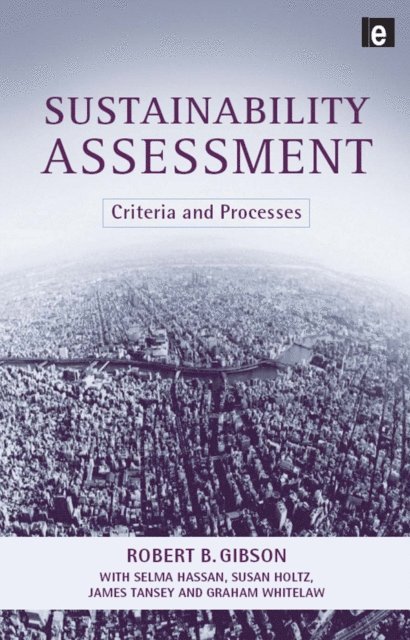
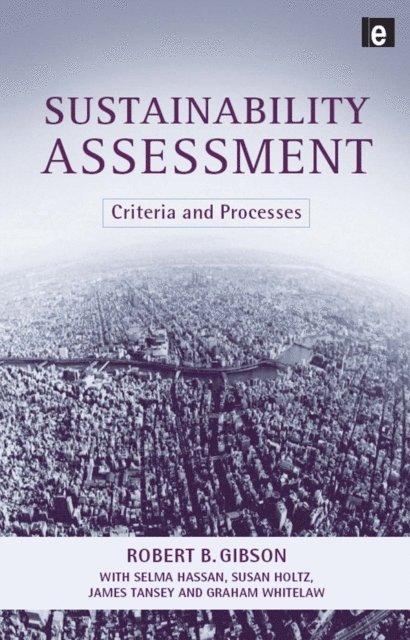
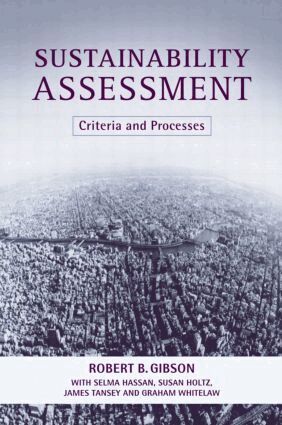
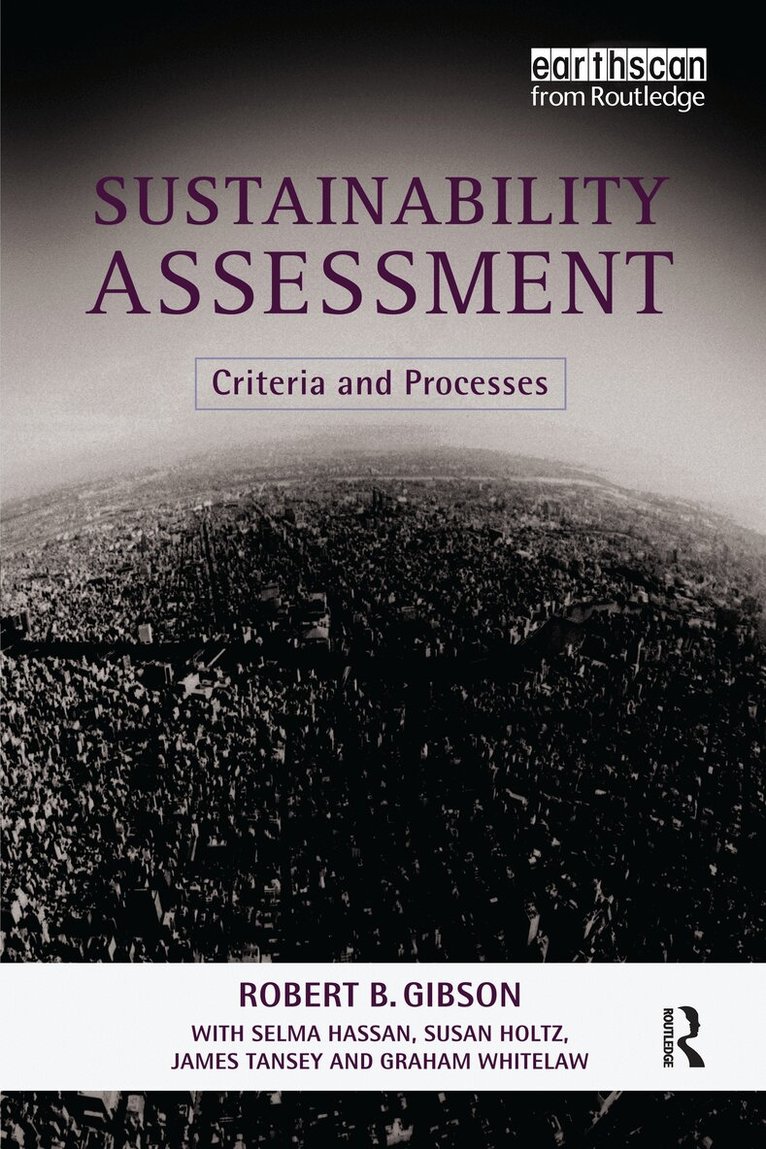
Sustainability assessment is now emerging as a more transparent, comprehensive, integrated and far-sighted approach to decision making. Its basic demand is that all significant undertakings must make a positive contribution to sustainability. To apply this test, decision makers need criteria based on the core requirements of sustainability and the particularities of the context. As well, they need appropriately designed public processes; guidance on the weighing of alternatives, trade-offs and compromises; a supportive policy framework; suitable tools and inspiring examples. Drawing from transdisciplinary theory and practical case experience, the book addresses these matters and many of the surrounding controversies. While sustainability assessment must always be adjusted to particular circumstances, the generic approach set out in this book is applicable virtually anywhere.
Häftad, Engelska, 2005
755 kr
Skickas inom 10-15 vardagar
Sustainability assessment is now emerging as a more transparent, comprehensive, integrated and far-sighted approach to decision making. Its basic demand is that all significant undertakings must make a positive contribution to sustainability. To apply this test, decision makers need criteria based on the core requirements of sustainability and the particularities of the context. As well, they need appropriately designed public processes; guidance on the weighing of alternatives, trade-offs and compromises; a supportive policy framework; suitable tools and inspiring examples. Drawing from transdisciplinary theory and practical case experience, the book addresses these matters and many of the surrounding controversies. While sustainability assessment must always be adjusted to particular circumstances, the generic approach set out in this book is applicable virtually anywhere.
Häftad, Engelska, 2011
77 kr
Skickas inom 5-8 vardagar