Susan Jenkins – författare
Visar alla böcker från författaren Susan Jenkins. Handla med fri frakt och snabb leverans.
6 produkter
6 produkter
Inbunden, Engelska, 2007
2 387 kr
Skickas inom 10-15 vardagar
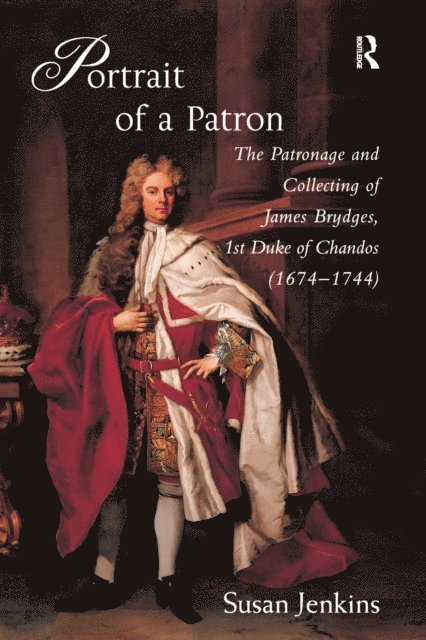
Once described as 'England's Apollo' James Brydges, first Duke of Chandos (1674-1744) was an outstanding patron of the arts during the first half of the eighteenth century. Having acquired great wealth and influence as Paymaster-General of Queen Anne's forces abroad, Chandos commissioned work from leading artists, architects, poets and composers including Godfrey Kneller, William Talman, Sir John Vanbrugh, Sir James Thornhill, John Gay and George Frederick Handel. Despite his associations with such renowned figures, Chandos soon gained a reputation for tasteless extravagance. This reputation was not helped by the publication in 1731 of Alexander Pope's poem 'Of Taste' which was widely regarded as a satire upon Chandos and Cannons, the new house he was building near Edgware. The poem destroyed Chandos's reputation as a patron of the arts and ensured that he was remembered as a man lacking in taste. Yet, as this book shows, such a judgement is plainly unfair when the Duke's patronage is considered in more depth and understood within the artistic context of his age. By investigating the patronage and collections of the Duke, through an examination of documentary sources and contemporary accounts, it is possible to paint a very different picture of the man. Rather than the epitome of bad taste described by his enemies, it is clear that Chandos was an enlightened patron who embraced new ideas, and strove to establish a taste for the Palladian in England, which was to define the Georgian era.
E-bok
Engelska, 2017769 kr
Läs direkt efter köp
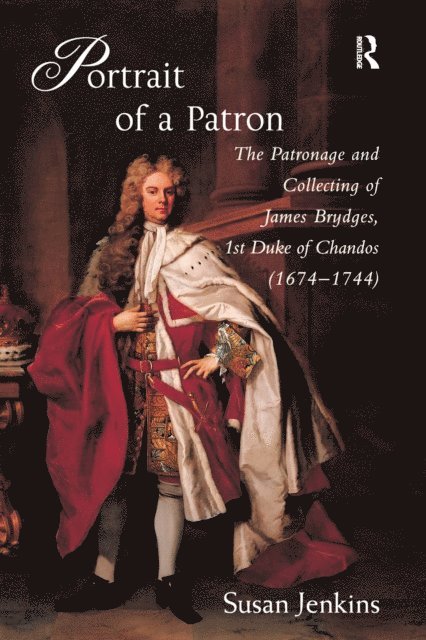
Once described as ''England''s Apollo'' James Brydges, first Duke of Chandos (1674-1744) was an outstanding patron of the arts during the first half of the eighteenth century. Having acquired great wealth and influence as Paymaster-General of Queen Anne''s forces abroad, Chandos commissioned work from leading artists, architects, poets and composers including Godfrey Kneller, William Talman, Sir John Vanbrugh, Sir James Thornhill, John Gay and George Frederick Handel. Despite his associations with such renowned figures, Chandos soon gained a reputation for tasteless extravagance. This reputation was not helped by the publication in 1731 of Alexander Pope''s poem ''Of Taste'' which was widely regarded as a satire upon Chandos and Cannons, the new house he was building near Edgware. The poem destroyed Chandos''s reputation as a patron of the arts and ensured that he was remembered as a man lacking in taste. Yet, as this book shows, such a judgement is plainly unfair when the Duke''s patronage is considered in more depth and understood within the artistic context of his age. By investigating the patronage and collections of the Duke, through an examination of documentary sources and contemporary accounts, it is possible to paint a very different picture of the man. Rather than the epitome of bad taste described by his enemies, it is clear that Chandos was an enlightened patron who embraced new ideas, and strove to establish a taste for the Palladian in England, which was to define the Georgian era.
E-bok
PDF, Engelska, 2017769 kr
Läs direkt efter köp
Once described as ''England''s Apollo'' James Brydges, first Duke of Chandos (1674-1744) was an outstanding patron of the arts during the first half of the eighteenth century. Having acquired great wealth and influence as Paymaster-General of Queen Anne''s forces abroad, Chandos commissioned work from leading artists, architects, poets and composers including Godfrey Kneller, William Talman, Sir John Vanbrugh, Sir James Thornhill, John Gay and George Frederick Handel. Despite his associations with such renowned figures, Chandos soon gained a reputation for tasteless extravagance. This reputation was not helped by the publication in 1731 of Alexander Pope''s poem ''Of Taste'' which was widely regarded as a satire upon Chandos and Cannons, the new house he was building near Edgware. The poem destroyed Chandos''s reputation as a patron of the arts and ensured that he was remembered as a man lacking in taste. Yet, as this book shows, such a judgement is plainly unfair when the Duke''s patronage is considered in more depth and understood within the artistic context of his age. By investigating the patronage and collections of the Duke, through an examination of documentary sources and contemporary accounts, it is possible to paint a very different picture of the man. Rather than the epitome of bad taste described by his enemies, it is clear that Chandos was an enlightened patron who embraced new ideas, and strove to establish a taste for the Palladian in England, which was to define the Georgian era.
E-bok
Engelska, 2019198 kr
Läs direkt efter köp
Check for Understanding: 65 Classroom-Ready Tactics Formative Assessment Made Easy! In Visible Learning, John Hattie describes a powerful strategy to enhance student learning—formative assessment (effect size .90). Implemented with fidelity, the result is assessment-capable learners, a pivotal skill for post-secondary success. “Are my students learning?” Join us in reimagining formative assessment—a fluid, robust, daily practice. Step-by-Step Activation Guide 65 Tactics to Check for Understanding Live-Action Classroom Videos for Each Tactic THE STORY OF FORMATIVE ASSESSMENT Part I – Formatives: What they are and what they are not Part II – Why formative assessment matters Part III – Best practice formative assessment Part IV – Leveraging formative data to enhance teaching and learning 65 CLASSROOM-READY TACTICS Contributing authors share tactics to check for understanding. Includes user-friendly instructions and video clips to model implementation at any grade level, any content area.
Häftad, Engelska, 2019
282 kr
Skickas inom 5-8 vardagar
Del 2 - Royal Armouries Research Series
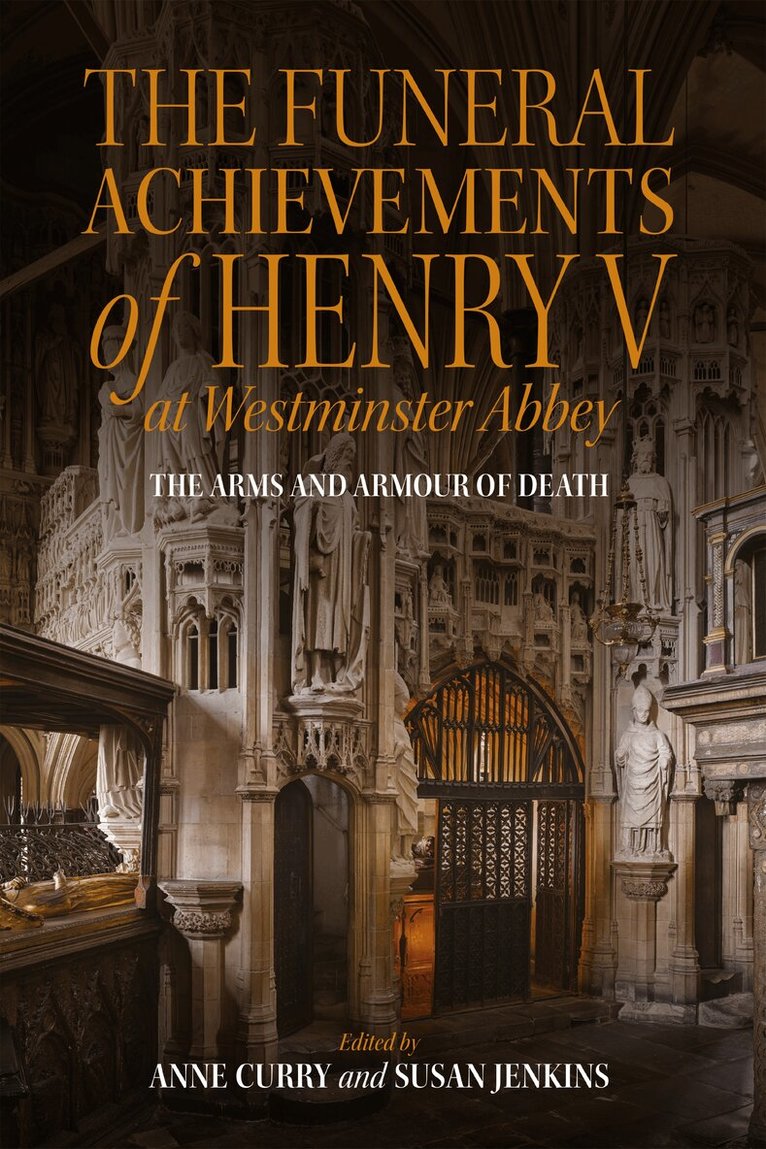
Funeral Achievements of Henry V at Westminster Abbey
The Arms and Armour of Death
Inbunden, Engelska, 2022
1 041 kr
Skickas inom 5-8 vardagar
Ground-breaking new studies of Henry V's chapel, tomb and funeral service have new revelations and insights into the time.Before Henry V set out in 1415 on the campaign which culminated in victory at Agincourt, he made a will laying down precise instructions for a chantry chapel to be constructed in Westminster Abbey after his death, so that he could be buried close to his saintly ancestor Edward the Confessor. Seven years later the king died at Vincennes, and his body was brought back for burial in the Abbey; the elaborate funeral took place on 7 November 1422. His chapel was probably finally completed in the 1440s, and remains a distinctive feature of Westminster Abbey to this day.This book, stimulated by the 600th anniversary of the death of this iconic king, sheds new light on his funeral service and the design of his ornate chantry chapel and tomb. It also considers each of the "funeral achievements" - saddle, helm, shield and sword - traditionally associated with him. Drawing on up-to-date research by experts in each field, with exciting input from new technologies, it investigates the construction and form of the arms and weapons, as well as providing fascinating insights into the material culture and commemoration of royalty in the fifteenth century and beyond.Anne Curry is Emeritus Professor of Medieval History at the University of Southampton. Susan Jenkins is Curator of Westminster Abbey.