Inbunden, Engelska, 2010
5 605 kr
Skickas
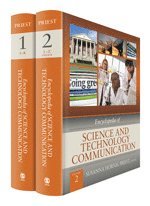
In the academic world, the term "science communication" refers both to a set of professions (such as science journalism and public information work) and to an interdisciplinary scholarly research specialization. Much of this research is aimed at improving our understanding of the best ways to communicate complex information, especially to people who are not scientists. Science communication specialists are concerned with giving people useful information about health, environment, and technology – as well as science itself. In order to do this, we also need to improve our understanding of how people think, form opinions, and process information.Additionally, professional practitioners in science communication are engaged in strategic and ethical decisions every day, such as: How should reporters cover the issue of climate change? Should the views of scientists who do not believe that climate change has been caused by human activity be included alongside the views of those who do, in order to give a "balanced" story, or does this mislead the public into thinking that both of these positions are equally accepted within the scientific community?The Encyclopedia of Science and Technology Communication provides information on the entire range of interrelated issues in this interdisciplinary field in one place, along with clear suggestions on where to begin the search for more. Geared towards undergraduate and graduate students in journalism, communication, mass communication, and media studies, as well as towards working journalists, public information officers, and public relations specialists, this encyclopedia introduces this vast, fascinating field while challenging the reader to question assumptions inherent in communication across disciplinary boundaries.Key Themes Associations and OrganizationsAudiences, Opinions, and Effects Challenges, Issues, and Controversies Changing Awareness, Opinion, And BehaviorCritical Influences and EventsGlobal and International Aspects Government Agencies (US)History, Philosophy, and Sociology of ScienceImportant FiguresJournal Publications Key Cases and Current Trends Law, Policy, Ethics, and BeliefsMajor Infrastructural InitiativesPractices, Strategies, and ToolsProfessional Roles and CareersPublic Engagement ApproachesTheory and ResearchVenues and Channels