T. Graf – författare
Visar alla böcker från författaren T. Graf. Handla med fri frakt och snabb leverans.
3 produkter
3 produkter
Häftad, Engelska, 1981
566 kr
Skickas inom 10-15 vardagar
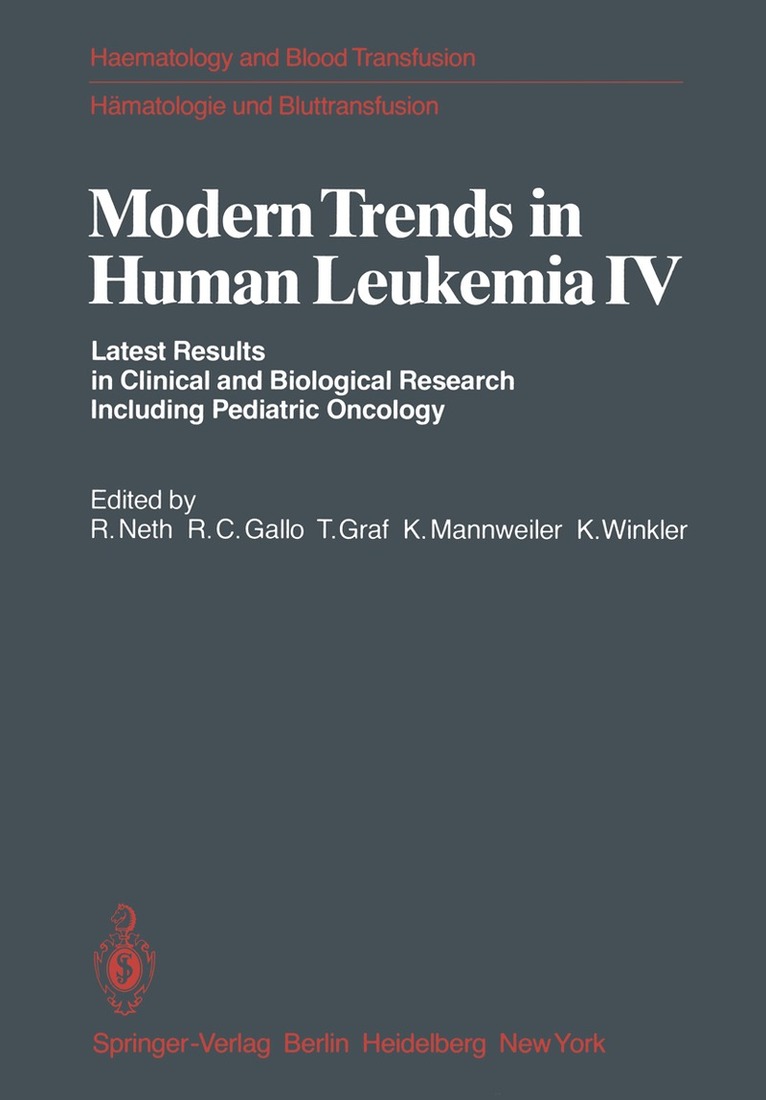
Gut ist eine Lehrart, wo man vom Bekannten zum Unbekannten fortschreitet; schon ist sie, wenn sie sokratisch ist, d.i. wenn sie dieselben Wahrheiten aus dem Kopf und Herzen des Zuhorers herausfragt. Bei der ersten werden dem Verstand seine Uberzeugungen in Form abgefordert, bei der zweiten sie ihm abgelockt. Professor Friederich Schiller Jena, in a letter written on 23 February 1793 to his friend and supporter Korner, father of the poet Theodor Korner. Established clinicians and scientists as weil as students aga in tried the Wilsede experiment for three days and nights and learned from each other. In our fourth Wilsede meeting on "Modern Trends in Human Leukemia" we concentrated once again on questions re gar ding the practical application of research and its benefits to the patient. The main emphasis of leukemia research has changed since the first Wilsede meeting in 1973. Virology is no longer the sole interest. Advances in immunology and cell genetics and a better understanding of Dr. h. c.Alfred Toepfer speeking with participants of the meeting in Wilsede XXI Arrival and discussion of participants in front of the meeting pI ace "De Emmenhoff" XXII Personal and scientific discussion in Wilsede June 1980 Fotos: R. Vols XXIII the mechanisms regulating normal and pathological blood cell differen- tiation have had a considerable impact on the direction of leukemia research.
E-bok
PDF, Engelska, 2012708 kr
Läs direkt efter köp
Del 101 - Current Topics in Microbiology and Immunology
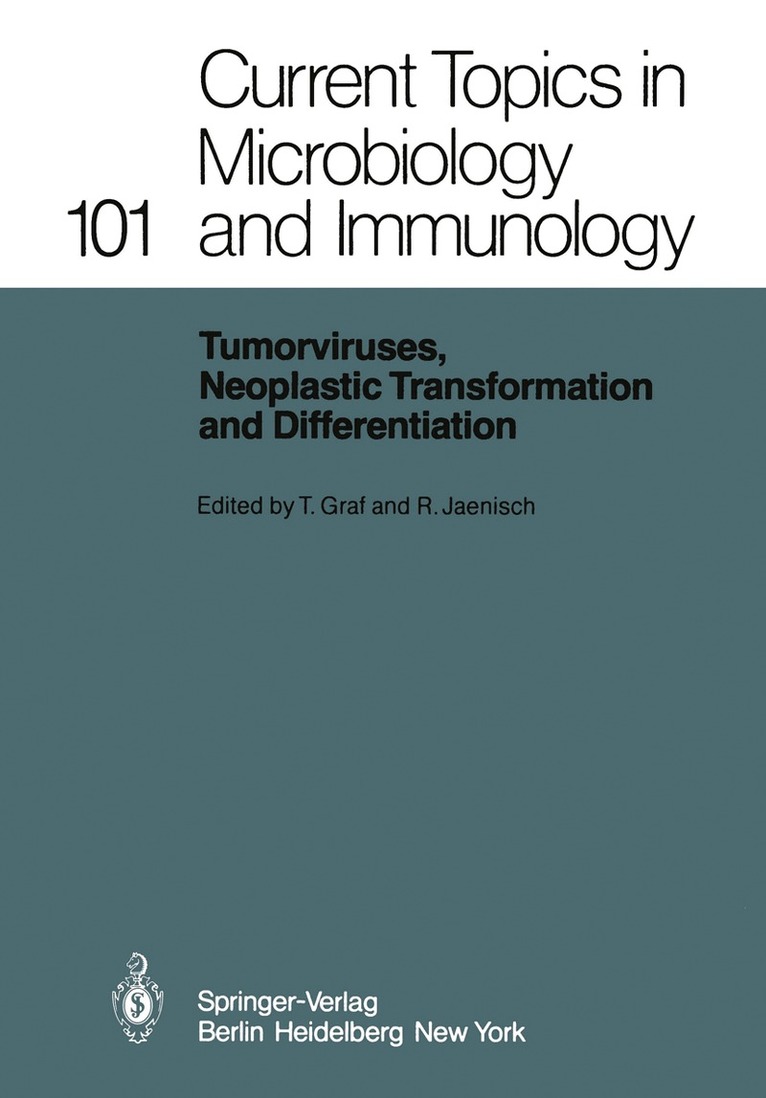
Tumorviruses, Neoplastic Transformation and Differentiation
Häftad, Engelska, 2011
1 125 kr
Skickas inom 10-15 vardagar
If tumor viruses did not exist in nature they might have been created by scientists interested in basic mechanisms of develop- ment, differentiation, and tumorigenesis. In contemporary euka- ryotic cell biology tumor viruses playa similar role to that which bacteriophages once had for the molecular biology of prokary- otes. Tumor viruses provide extremely useful probes for the above cellular processes since their life cycle is genetically pro- grammed and can be followed at DNA, RNA, and protein levels. The experimental systems reviewed in this volume utilize a wide variety of viruses. A comprehensive introduction to this field has recently been published in the volumes of Molecular Biology o/Tumor Viruses: DNA Tumor Viruses, 2nd edition, edited by J. Tooze; and Molecular Biology o/Thmor Viruses: RNA Tumor Viruses, 2nd edition, edited by R. Weiss, N. Teich, H. Varmus, and J. Coffm, by Cold Spring Harbor Laboratories in 1980 and 1982. Polyoma and SV40 viruses (see the chapter by A. Levine) and adenoviruses (see the chapter by W. Doerfler) are double- stranded DNA-containing viruses.Polyoma and SV40 are struc- turally related viruses which contain a genome of approximately 5 kilo basepairs, while the DNA of adenovirus is about 7 times more complex. These DNA tumor viruses are understood at a genetic and molecular level which is comparable to our know- ledge of A and T4 bacteriophages. Retroviruses, the subject of the remaining four chapters, con- tain a single-stranded RNA genome of 5-8 kilobases.