Takashi Kamihigashi – författare
Visar alla böcker från författaren Takashi Kamihigashi. Handla med fri frakt och snabb leverans.
7 produkter
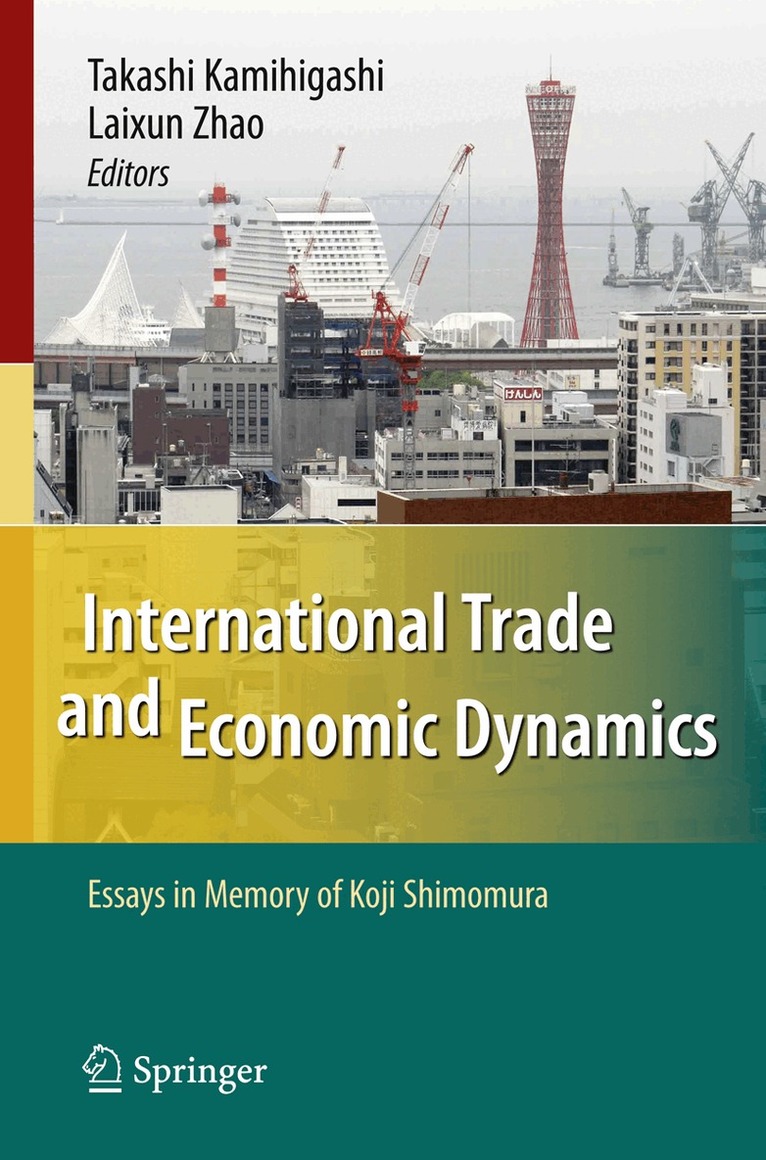
International Trade and Economic Dynamics
Essays in Memory of Koji Shimomura
Av Takashi Kamihigashi, Laixun Zhao
Inbunden, 2008
1127 kr
Lägg i varukorg
Renowned trade theorist Koji Shimomura passed away in February 2007 at the age of 54. He published nearly 100 articles in international academic journals. The loss of this extremely productive economist has been an enormous shock to the economic profession. This volume has emerged from the great …
International Trade and Economic Dynamics
Essays in Memory of Koji Shimomura
Av Laixun Zhao, Takashi Kamihigashi
E-bok, 2008
1502 kr
Lägg i varukorg
Renowned trade theorist Koji Shimomura passed away in February 2007 at the age of 54. He published nearly 100 articles in international academic journals. The loss of this extremely productive economist has been an enormous shock to the economic profession. This volume has emerged from the great …
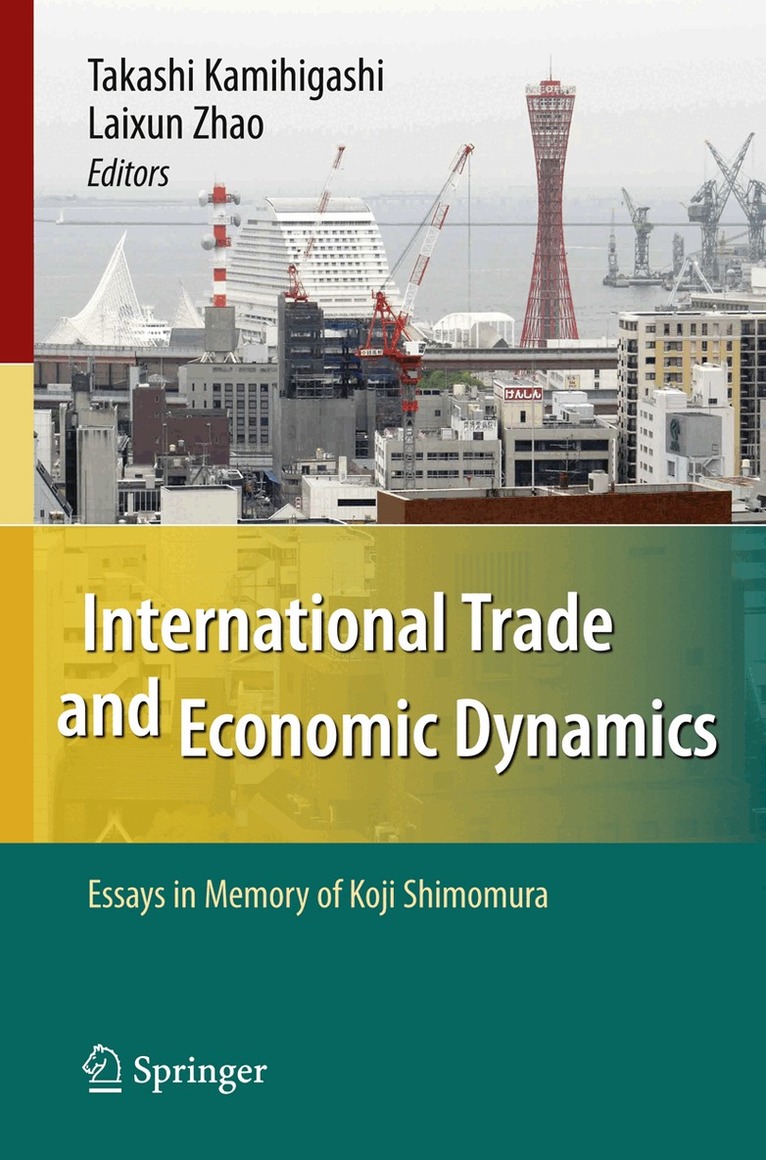
International Trade and Economic Dynamics
Essays in Memory of Koji Shimomura
Av Takashi Kamihigashi, Laixun Zhao
Häftad, 2010
1127 kr
Lägg i varukorg
Renowned trade theorist Koji Shimomura passed away in February 2007 at the age of 54. He published nearly 100 articles in international academic journals. The loss of this extremely productive economist has been an enormous shock to the economic profession. This volume has emerged from the great …
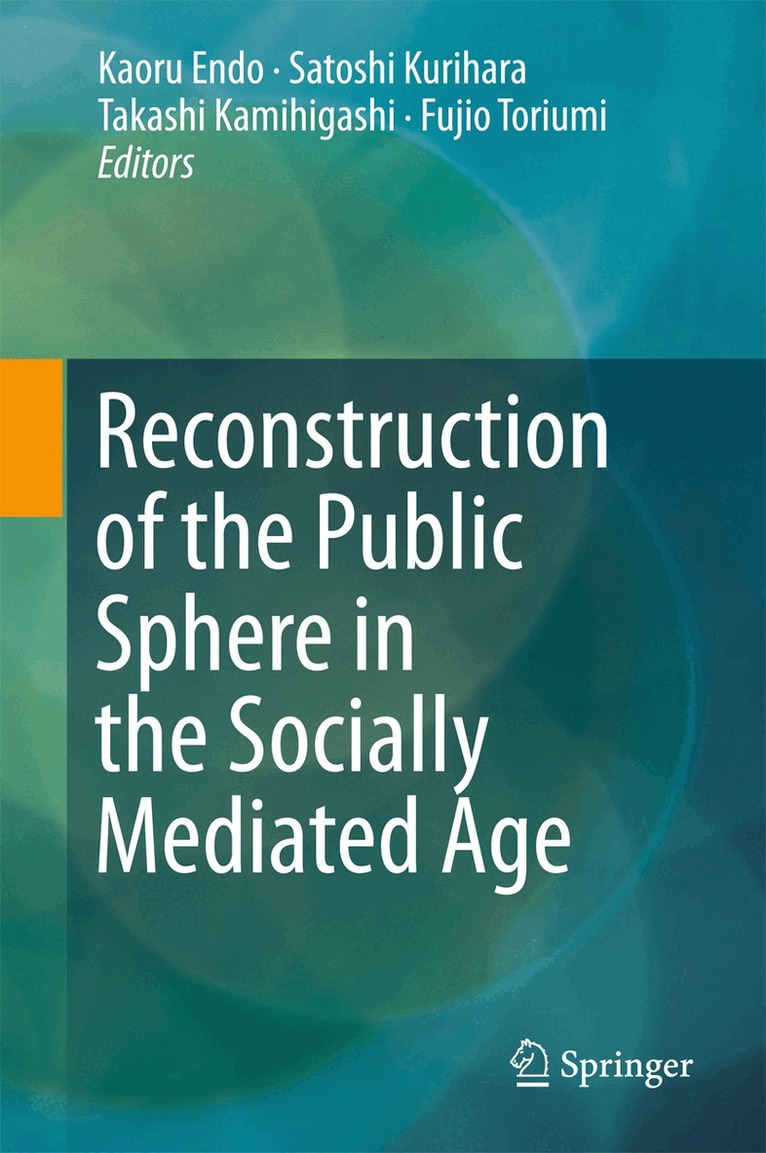
Reconstruction of the Public Sphere in the Socially Mediated Age
Av Kaoru Endo, Satoshi Kurihara m. fl.
Inbunden, 2017
551 kr
Lägg i varukorg
The aim of this book is to establish a basis for resolving the various issues facing modern society by exploring the field of Computational Social Science, which fuses the social and natural sciences. Today, society is threatened by problems concerning the environment, population growth, hunger and …
Reconstruction of the Public Sphere in the Socially Mediated Age
Av Fujio Toriumi, Takashi Kamihigashi m. fl.
E-bok, 2017
734 kr
Lägg i varukorg
The aim of this book is to establish a basis for resolving the various issues facing modern society by exploring the field of Computational Social Science, which fuses the social and natural sciences. Today, society is threatened by problems concerning the environment, population growth, hunger and …
Reconstruction of the Public Sphere in the Socially Mediated Age
Av Kaoru Endo, Satoshi Kurihara m. fl.
Häftad, 2018
551 kr
Lägg i varukorg
The aim of this book is to establish a basis for resolving the various issues facing modern society by exploring the field of Computational Social Science, which fuses the social and natural sciences. Today, society is threatened by problems concerning the environment, population growth, hunger and …
Microstructure of the First Organized Futures Market
The Dojima Security Exchange from 1730 to 1869
Av Yasuo Takatsuki, Takashi Kamihigashi
Inbunden, 2027
2058 kr
Kommande
This book is the first comprehensive account of the rules and practices─the microstructure─of the Dojima Security Exchange (DSE), the world’s first futures market. Despite worldwide interest in the DSE and its relevance to modern financial markets, it is only briefly touched upon as the earliest …