Takashi Yoshida – författare
Visar alla böcker från författaren Takashi Yoshida. Handla med fri frakt och snabb leverans.
8 produkter
8 produkter
Making of the "e;Rape of Nanking"e;
History and Memory in Japan, China, and the United States
E-bok
Engelska, 2006407 kr
Läs direkt efter köp
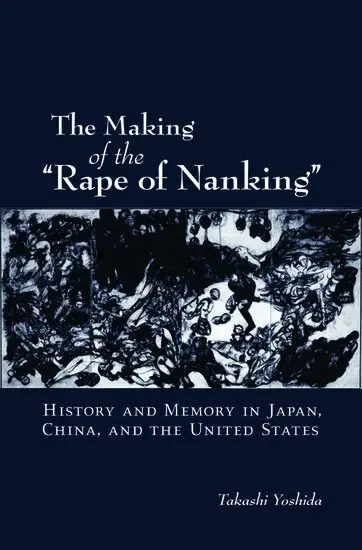
On December 13, 1937, the Japanese army attacked and captured the Chinese capital city of Nanjing, planting the rising-sun flag atop the city''s outer walls. What occurred in the ensuing weeks and months has been the source of a tempestuous debate ever since. It is well known that the Japanese military committed wholesale atrocities after the fall of the city, massacring large numbers of Chinese during the both the Battle of Nanjing and in its aftermath. Yet the exact details of the war crimes--how many people were killed during the battle? How many after? How many women were raped? Were prisoners executed? How unspeakable were the acts committed?--are the source of controversy among Japanese, Chinese, and American historians to this day. In The Making of the "Rape of Nanking Takashi Yoshida examines how views of the Nanjing Massacre have evolved in history writing and public memory in Japan, China, and the United States. For these nations, the question of how to treat the legacy of Nanjing--whether to deplore it, sanitize it, rationalize it, or even ignore it--has aroused passions revolving around ethics, nationality, and historical identity. Drawing on a rich analysis of Chinese, Japanese, and American history textbooks and newspapers, Yoshida traces the evolving--and often conflicting--understandings of the Nanjing Massacre, revealing how changing social and political environments have influenced the debate. Yoshida suggests that, from the 1970s on, the dispute over Nanjing has become more lively, more globalized, and immeasurably more intense, due in part to Japanese revisionist history and a renewed emphasis on patriotic education in China. While today it is easy to assume that the Nanjing Massacre has always been viewed as an emblem of Japan''s wartime aggression in China, the image of the "Rape of Nanking" is a much more recent icon in public consciousness. Takashi Yoshida analyzes the process by which the Nanjing Massacre has become an international symbol, and provides a fair and respectful treatment of the politically charged and controversial debate over its history.
Häftad, Engelska, 2009
345 kr
Skickas inom 5-8 vardagar
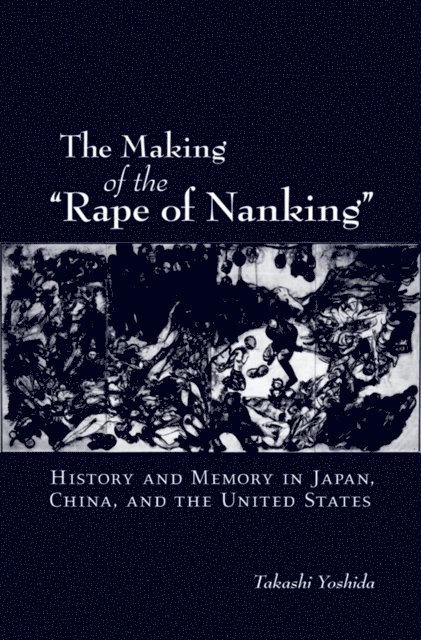
On December 13, 1937, the Japanese army attacked and captured the Chinese capital city of Nanjing, planting the rising-sun flag atop the city's outer walls. What occurred in the ensuing weeks and months has been the source of a tempestuous debate ever since. It is well known that the Japanese military committed wholesale atrocities after the fall of the city, massacring large numbers of Chinese during the both the Battle of Nanjing and in its aftermath. Yet the exact details of the war crimes--how many people were killed during the battle? How many after? How many women were raped? Were prisoners executed? How unspeakable were the acts committed?--are the source of controversy among Japanese, Chinese, and American historians to this day. In The Making of the "Rape of Nanking Takashi Yoshida examines how views of the Nanjing Massacre have evolved in history writing and public memory in Japan, China, and the United States. For these nations, the question of how to treat the legacy of Nanjing--whether to deplore it, sanitize it, rationalize it, or even ignore it--has aroused passions revolving around ethics, nationality, and historical identity. Drawing on a rich analysis of Chinese, Japanese, and American history textbooks and newspapers, Yoshida traces the evolving--and often conflicting--understandings of the Nanjing Massacre, revealing how changing social and political environments have influenced the debate. Yoshida suggests that, from the 1970s on, the dispute over Nanjing has become more lively, more globalized, and immeasurably more intense, due in part to Japanese revisionist history and a renewed emphasis on patriotic education in China. While today it is easy to assume that the Nanjing Massacre has always been viewed as an emblem of Japan's wartime aggression in China, the image of the "Rape of Nanking" is a much more recent icon in public consciousness. Takashi Yoshida analyzes the process by which the Nanjing Massacre has become an international symbol, and provides a fair and respectful treatment of the politically charged and controversial debate over its history.
Making of the "e;Rape of Nanking"e;
History and Memory in Japan, China, and the United States
E-bok
PDF, Engelska, 2009407 kr
Läs direkt efter köp
On December 13, 1937, the Japanese army attacked and captured the Chinese capital city of Nanjing, planting the rising-sun flag atop the city''s outer walls. What occurred in the ensuing weeks and months has been the source of a tempestuous debate ever since. It is well known that the Japanese military committed wholesale atrocities after the fall of the city, massacring large numbers of Chinese during the both the Battle of Nanjing and in its aftermath. Yet the exact details of the war crimes--how many people were killed during the battle? How many after? How many women were raped? Were prisoners executed? How unspeakable were the acts committed?--are the source of controversy among Japanese, Chinese, and American historians to this day. In The Making of the "Rape of Nanking Takashi Yoshida examines how views of the Nanjing Massacre have evolved in history writing and public memory in Japan, China, and the United States. For these nations, the question of how to treat the legacy of Nanjing--whether to deplore it, sanitize it, rationalize it, or even ignore it--has aroused passions revolving around ethics, nationality, and historical identity. Drawing on a rich analysis of Chinese, Japanese, and American history textbooks and newspapers, Yoshida traces the evolving--and often conflicting--understandings of the Nanjing Massacre, revealing how changing social and political environments have influenced the debate. Yoshida suggests that, from the 1970s on, the dispute over Nanjing has become more lively, more globalized, and immeasurably more intense, due in part to Japanese revisionist history and a renewed emphasis on patriotic education in China. While today it is easy to assume that the Nanjing Massacre has always been viewed as an emblem of Japan''s wartime aggression in China, the image of the "Rape of Nanking" is a much more recent icon in public consciousness. Takashi Yoshida analyzes the process by which the Nanjing Massacre has become an international symbol, and provides a fair and respectful treatment of the politically charged and controversial debate over its history.
Inbunden, Engelska, 2000
2 174 kr
Skickas inom 10-15 vardagar
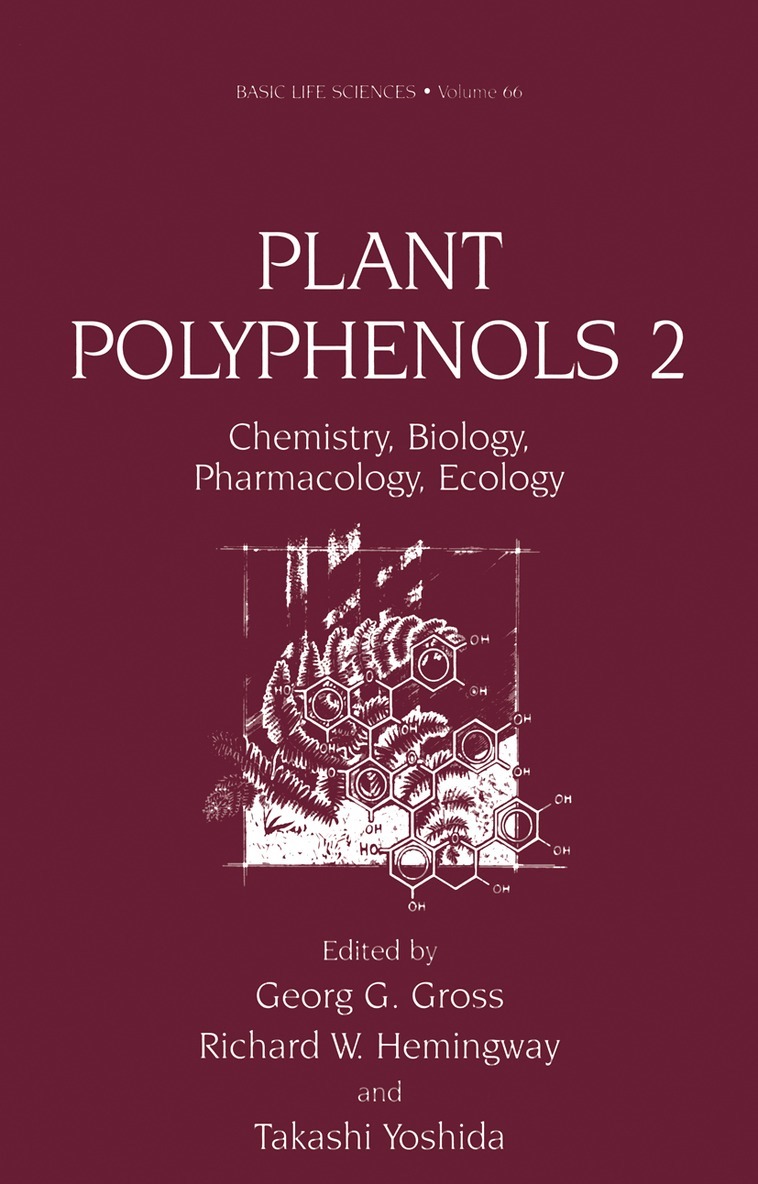
rd This book has been developed from the proceedings of the 3 Tannin Confer ence honoring Professor Edwin Haslam, Department of Chemistry, University of Sheffield, for his efforts and outstanding contributions to the field of plant polyphe nols. The meeting was held in Bend, Oregon, July 20-25, 1998, with the objective of promoting collaboration between chemists and biologists to improve our under standing of the biological significance and to expand possibilities for use of plant polyphenols. Special efforts were made to summarize current research on the in nd fluence ofthese compounds on human health. As in our 2 Tannin Conference held in Houghton, Michigan, June 1991, we strove to build the "international" charac ter of this meeting and were rewarded by an attendance of over 150 guests from 23 countries who enjoyed more than 50 lectures and 60 presentations. Our thanks go to all those who contributed to our meeting. A special thanks is extended to Professor G. Wayne McGraw, Department of Chemistry, Louisiana College, Pineville, Louisiana, who served as the financial manager of our meeting. He, his wife Bobbie McGraw, and Helen Hemingway worked hard to make this meeting run as smoothly as possible. We also would like to thank the Bend Chamber of Commerce, Central Oregon Community College, The Riverhouse, Interstate Tours, Wanderlust Tours, and the people of Bend for welcoming our group to Central Oregon.
Del 66 - Basic Life Sciences
Plant Polyphenols 2
Chemistry, Biology, Pharmacology, Ecology
Häftad, Engelska, 2013
2 239 kr
Skickas inom 10-15 vardagar
rd This book has been developed from the proceedings of the 3 Tannin Confer ence honoring Professor Edwin Haslam, Department of Chemistry, University of Sheffield, for his efforts and outstanding contributions to the field of plant polyphe nols. The meeting was held in Bend, Oregon, July 20-25, 1998, with the objective of promoting collaboration between chemists and biologists to improve our under standing of the biological significance and to expand possibilities for use of plant polyphenols. Special efforts were made to summarize current research on the in nd fluence ofthese compounds on human health. As in our 2 Tannin Conference held in Houghton, Michigan, June 1991, we strove to build the "international" charac ter of this meeting and were rewarded by an attendance of over 150 guests from 23 countries who enjoyed more than 50 lectures and 60 presentations. Our thanks go to all those who contributed to our meeting. A special thanks is extended to Professor G. Wayne McGraw, Department of Chemistry, Louisiana College, Pineville, Louisiana, who served as the financial manager of our meeting. He, his wife Bobbie McGraw, and Helen Hemingway worked hard to make this meeting run as smoothly as possible. We also would like to thank the Bend Chamber of Commerce, Central Oregon Community College, The Riverhouse, Interstate Tours, Wanderlust Tours, and the people of Bend for welcoming our group to Central Oregon.
E-bok
PDF, Engelska, 20122 822 kr
Läs direkt efter köp
rd This book has been developed from the proceedings of the 3 Tannin Confer ence honoring Professor Edwin Haslam, Department of Chemistry, University of Sheffield, for his efforts and outstanding contributions to the field of plant polyphe nols. The meeting was held in Bend, Oregon, July 20-25, 1998, with the objective of promoting collaboration between chemists and biologists to improve our under standing of the biological significance and to expand possibilities for use of plant polyphenols. Special efforts were made to summarize current research on the in nd fluence ofthese compounds on human health. As in our 2 Tannin Conference held in Houghton, Michigan, June 1991, we strove to build the "international" charac ter of this meeting and were rewarded by an attendance of over 150 guests from 23 countries who enjoyed more than 50 lectures and 60 presentations. Our thanks go to all those who contributed to our meeting. A special thanks is extended to Professor G. Wayne McGraw, Department of Chemistry, Louisiana College, Pineville, Louisiana, who served as the financial manager of our meeting. He, his wife Bobbie McGraw, and Helen Hemingway worked hard to make this meeting run as smoothly as possible. We also would like to thank the Bend Chamber of Commerce, Central Oregon Community College, The Riverhouse, Interstate Tours, Wanderlust Tours, and the people of Bend for welcoming our group to Central Oregon.
Häftad, Engelska, 2014
337 kr
Skickas inom 11-20 vardagar
Takashi Yoshida provides a historical analysis of war and peace museums from the late nineteenth century to the present and traces the historical development of a pacifist discourse in postwar Japan that centred on Japan’s war crimes and responsibility during the so-called Fifteen Year War, which began in 1931 with Japan’s invasion of Manchuria and ended in 1945 with the nation’s defeat. Prior to the defeat, a culture of war gripped the Japanese empire. Every segment of Japanese popular culture during the war bore witness to the flood of patriotism. In this book Yoshida attempts to demonstrate that the acceptance of Japanese wartime aggression and atrocities as historical facts remains evident to this day in the culture of peace museums in Japan. Those who have little knowledge of contemporary Japan often hastily conclude that the Japanese have been united and monolithic in the way they feel the war should be remembered. This book seeks to challenge that assumption.
Inbunden, Engelska, 2014
811 kr
Skickas inom 3-6 vardagar
Takashi Yoshida provides a historical analysis of war and peace museums from the late nineteenth century to the present and traces the historical development of a pacifist discourse in postwar Japan that centred on Japan’s war crimes and responsibility during the so-called Fifteen Year War, which began in 1931 with Japan’s invasion of Manchuria and ended in 1945 with the nation’s defeat. Prior to the defeat, a culture of war gripped the Japanese empire. Every segment of Japanese popular culture during the war bore witness to the flood of patriotism. In this book Yoshida attempts to demonstrate that the acceptance of Japanese wartime aggression and atrocities as historical facts remains evident to this day in the culture of peace museums in Japan. Those who have little knowledge of contemporary Japan often hastily conclude that the Japanese have been united and monolithic in the way they feel the war should be remembered. This book seeks to challenge that assumption.