Takayoshi Higuchi – författare
Visar alla böcker från författaren Takayoshi Higuchi. Handla med fri frakt och snabb leverans.
3 produkter
3 produkter
E-bok
PDF, Engelska, 2012672 kr
Läs direkt efter köp
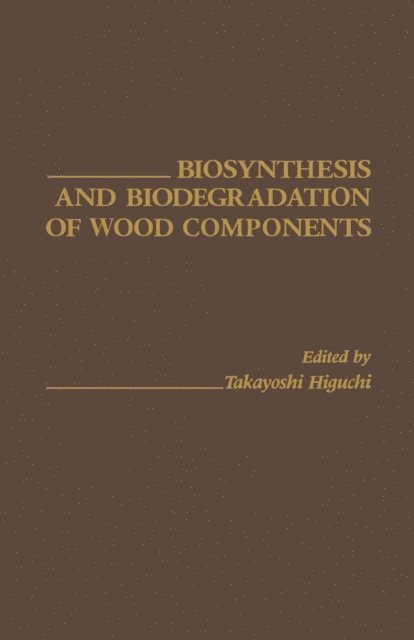
Biosynthesis and Biodegradation of Wood Components is a comprehensive account of the biosynthesis and biodegradation of wood and wood components. Topics covered range from the localization of polysaccharides and lignins in wood cell walls to the metabolism and synthetic function of cambial tissue, along with the function of cell organelles in the biosynthesis of cell wall components. The biosynthesis of plant cell wall polysaccharides is also discussed. This book is comprised of 22 chapters and begins with an overview of the structure of wood, with emphasis on three aspects of sections of wood: the cross or transverse section, the tangential section, and the radial section or face. The following chapters deal with the structure and chemistry of the major components of wood cell walls; the metabolism and synthetic function of cambial tissue; the function of organelles involved in biosynthesis; and the biosynthesis both of the major cell wall components of wood (cellulose, hemicelluloses, and lignins) and of wood extractives. The microbial degradation of cell wall components and aromatic extractives of wood is also considered, together with the microorganisms involved in lignin biodegradation as well as the physiology and biochemistry of degradation by white-rot fungi. This monograph will be of interest to biochemists as well as students and researchers in biochemistry.
E-bok
PDF, Engelska, 20121 841 kr
Läs direkt efter köp
Progress in wood chemistry has been related mainly to chemical wood pulping and bleaching and chemical utilization of wood and wood extractives. Meth ods of wood analysis were developed by Schorger (proximate analysis in 1917) and Dore (summative analysis in 1919), and standard methods based on Schorger''s method, e.g., TAPPI standards (Technical Association of the Pulp and Paper Industry), have been widely used for chemical analysis of woods in many countries. Thus it is generally known that wood is composed of about 50% cellulose, 20-35% of lignin, 15-25% of hemicelluloses, and variable amounts of extractives. Chemical characterization and efficient utilization of these wood components have been studied in laboratories of wood chemistry and technology in universities and government institutions. In the last decade, biochemistry and molecular biology of microorganisms, animals, and plants have greatly progressed. At the same time wood has been recognized as a unique renewable ecomaterial produced by trees using solar energy. In addition, many desirable properties of wood and wood components as biomaterial that affects physiology and psychology in humans have recently attracted attention.
Häftad, Engelska, 2011
1 523 kr
Skickas inom 10-15 vardagar
Progress in wood chemistry has been related mainly to chemical wood pulping and bleaching and chemical utilization of wood and wood extractives. Meth ods of wood analysis were developed by Schorger (proximate analysis in 1917) and Dore (summative analysis in 1919), and standard methods based on Schorger's method, e.g., TAPPI standards (Technical Association of the Pulp and Paper Industry), have been widely used for chemical analysis of woods in many countries. Thus it is generally known that wood is composed of about 50% cellulose, 20-35% of lignin, 15-25% of hemicelluloses, and variable amounts of extractives. Chemical characterization and efficient utilization of these wood components have been studied in laboratories of wood chemistry and technology in universities and government institutions. In the last decade, biochemistry and molecular biology of microorganisms, animals, and plants have greatly progressed. At the same time wood has been recognized as a unique renewable ecomaterial produced by trees using solar energy. In addition, many desirable properties of wood and wood components as biomaterial that affects physiology and psychology in humans have recently attracted attention.